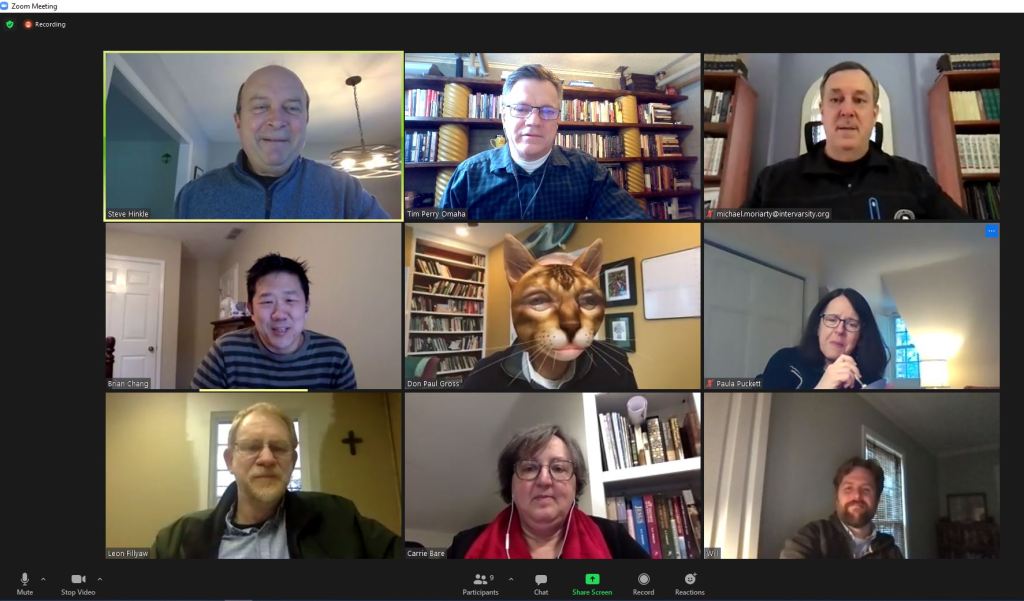
My Third Team

Staff directors always think about two teams. The team you’re ON. And the team you LEAD. The team I’m on is the South-Central Regional Leadership Team (above). These are the folks who do the same job I do across a 17 state chunk of the U.S. Together with our Regional Director we lead a strategic plan to develop InterVarsity’s mission on campus among Faculty, Graduate and Professional Students. We meet weekly via zoom. We used to meet annually for several days in Nashville – retreating together, working on vision, direction, strategic planning and leadership development. We have to do that now virtually. That’s the team I’m ON. Evidently our boss experienced that feline hi-jacking that’s recently gone viral (yes he did this to himself)!
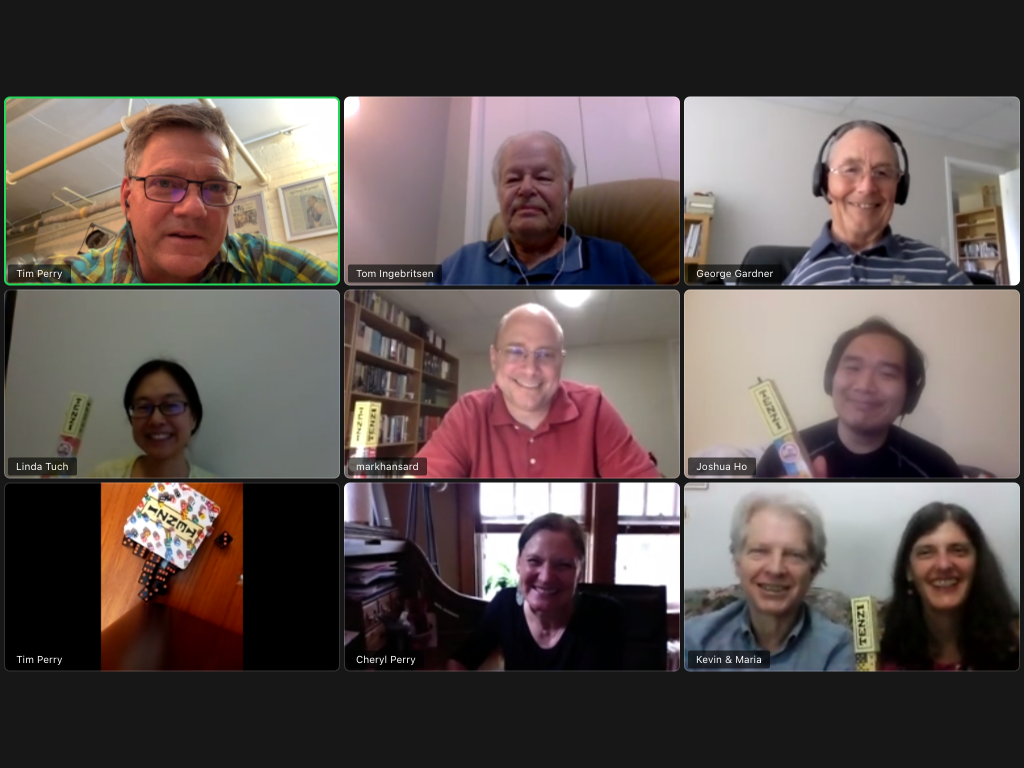
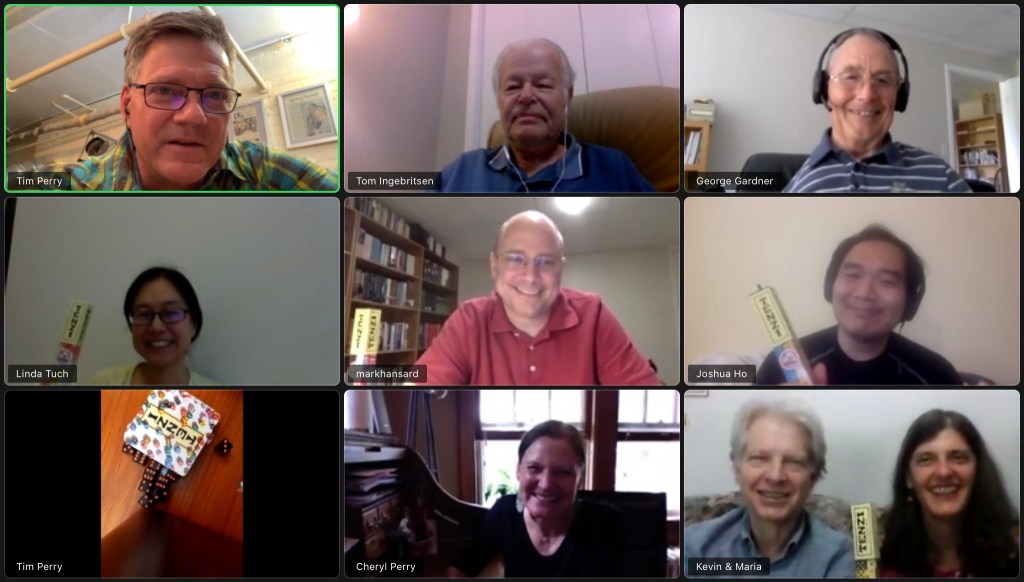
We were playing Tenzi – via zoom!

Here’s the team I LEAD (most of them … missing Jake and George). We work directly on a dozen or so campuses building faculty and student fellowships. Our geography is mildly ridiculous compared to our Region – only Nebraska, Kansas, Iowa and Missouri. This is where my Third Team comes in.

GFM isn’t the only InterVarsity ministry that connects with faculty and students. We’d be crazy not to collaborate with the undergrad side of InterVarsity’s ministry. Undergrad IV is spread all over my four-state territory. The Undergrad entity known as the Central Region overlaps exactly with my four-state Area. The undergrads have a team of Area Directors for Nebraska, Kansas, Iowa and Missouri. You guessed it. I consider them my third team. I don’t supervise them. They don’t report to me. But I’d be crazy to ignore them. Here we are hanging out together last month talking ministry collaboration.

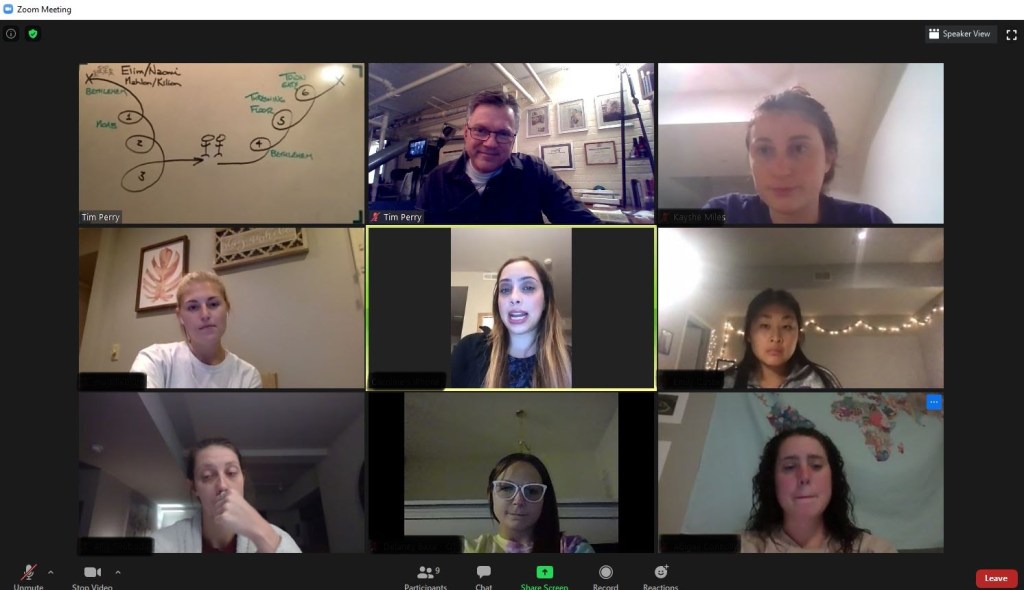
Since coming to this leadership position three years ago, I’ve been pretty intentional about my Third Team. My Third Team is led by Kathy Haug. She and Will Chu, her Associate Regional Director, graciously give me access to their Area Director team. Before the pandemic I used to actually hang out with them if I came to their town. Three people in the screen above actually live in my town! We’re practically family by now. They’re probably getting tired of me to be honest!

Stuff I’ve done with my Third Team in the past couple of years:

  • Met with Kathy (RD) twice a year to talk ministry collaboration.
  • Starting two years ago began thinking though a combined staff conference for UFM/GFM in our four states.
  • One on one conversations with all the undergrad Area Directors (once or twice a year).
  • Joined the undergrads for a Prospective Staff Weekend (shared staff recruiting structures).
  • Our two teams share a staff member who is matrixed – George Stulac is a GFM staff member in St. Louis AND George is a Spiritual Formation resource for the undergraduate ministry.
  • Kathy invites me to her AD meetings once a year – talking strategy and collaboration.
  • This past year we pulled off our first combined staff conference with both our teams present. See my post from December.

Since our shared Staff Conference, our teams are working together this spring on growing our faculty ministry. Faculty Meet-ups and Square Inch Stories are a couple of new tools we’re putting on a shared work-bench in our four states moving forward. Stay tuned for the details, but here’s the strategy: team up in our approach to faculty members in particular. The undergrad side is committing to involving faculty members in their planting strategies. In most cases, undergrad student groups need to have a faculty or staff sponsor in order to affiliate a group with a university or college. GFM can help faculty discover and network with each other. New corners on new campuses can be planted. And possibly new faculty Bible studies and fellowships can be established.

What that looks like here in Nebraska is a possible Faculty Meet and Greet event that GFM and undergrad IV work on together. On the GFM side we’ve been trying to grow an Omaha Area Faculty ministry for about a year. Even though we’re on three of the same campuses, GFM isn’t fully aware of faculty members our undergraduates know and partner with. Additionally, GFM has no presence further down I-80, but drive to Lincoln, Grand Island, or Hastings and you’ll find our undergrad team mates planting and growing ministries. The left hand just doesn’t know what the right hand is doing. We can fix that!
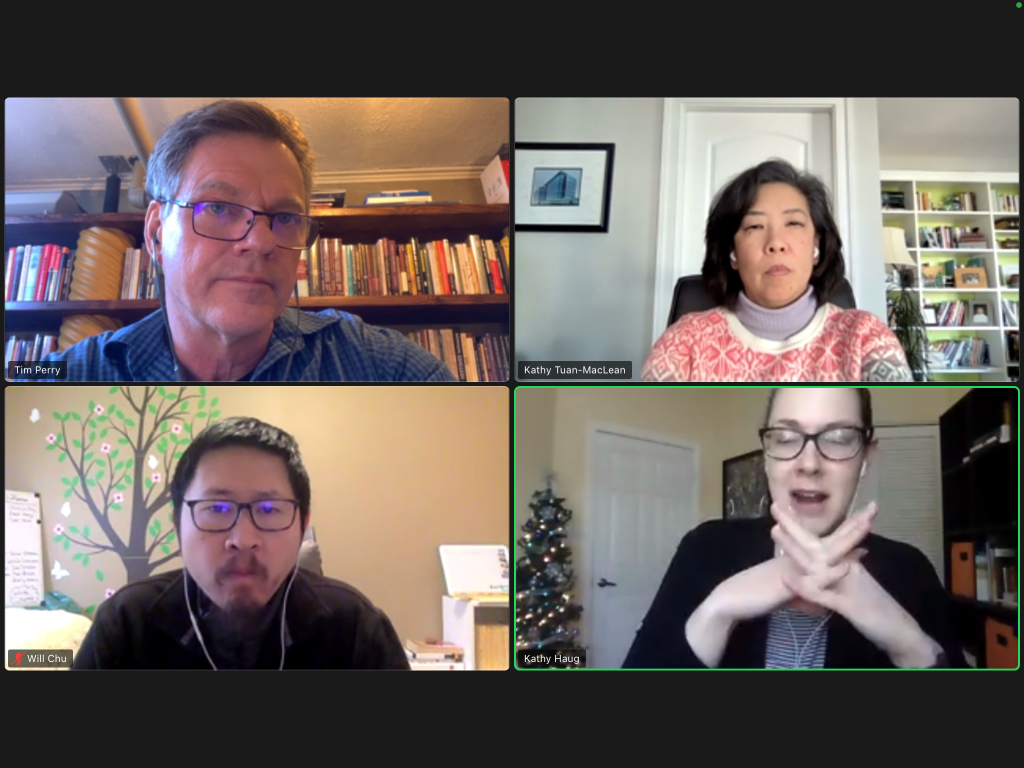
This zoom session is as good as it gets. I’m meeting up with the undergrad Regional leaders (Kathy and Will) AND the three of us are dreaming and scheming with Kathy Tuan MacLean – InterVarsity’s National Director of Faculty Ministry. KTM is helping us identify where we have collaborative hot-spots in the coming months. In addition to a Faculty Meet and Greet in Nebraska, we also identified another strategic location – Kansas. GFM has a well developed faculty ministry at Kansas State University. Yet there’s even more potential when you consider Kansas University in Lawrence, a faculty group we have at Emporia State plus what our undergraduate team mates can bring to the table in other places like Kansas City or Wichita. We’re in the early stages of planning a state-wide faculty event for early August.

Pray for our collaborative work in the coming months. There’s still so much uncertainty about when our campuses will recover from the pandemic, but the beauty of virtual events is that they’re much easier and cheaper to pull off. And it looks like virtual events might be here to stay! Thanks for your partnership!

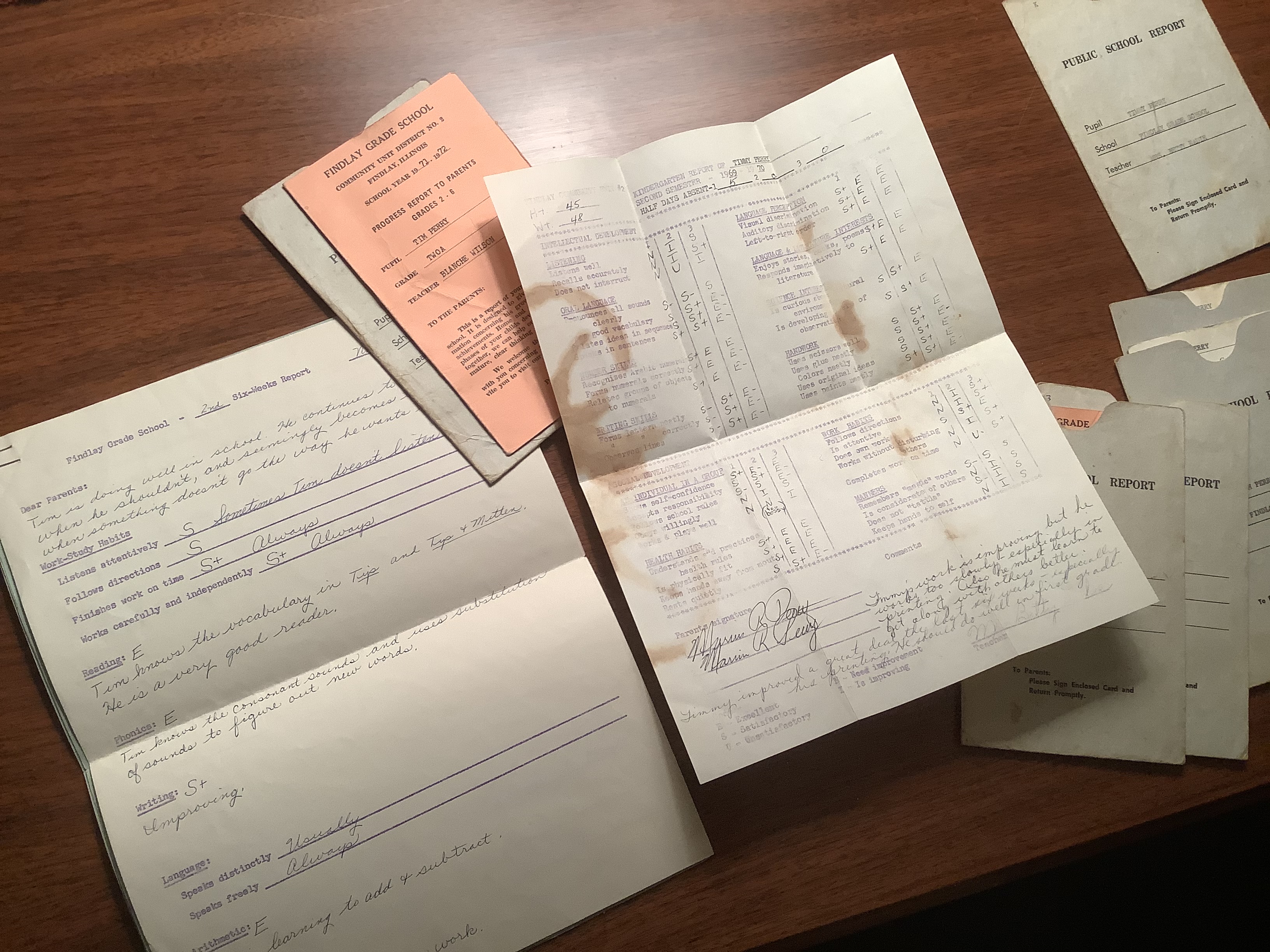
Timmy talks too much…

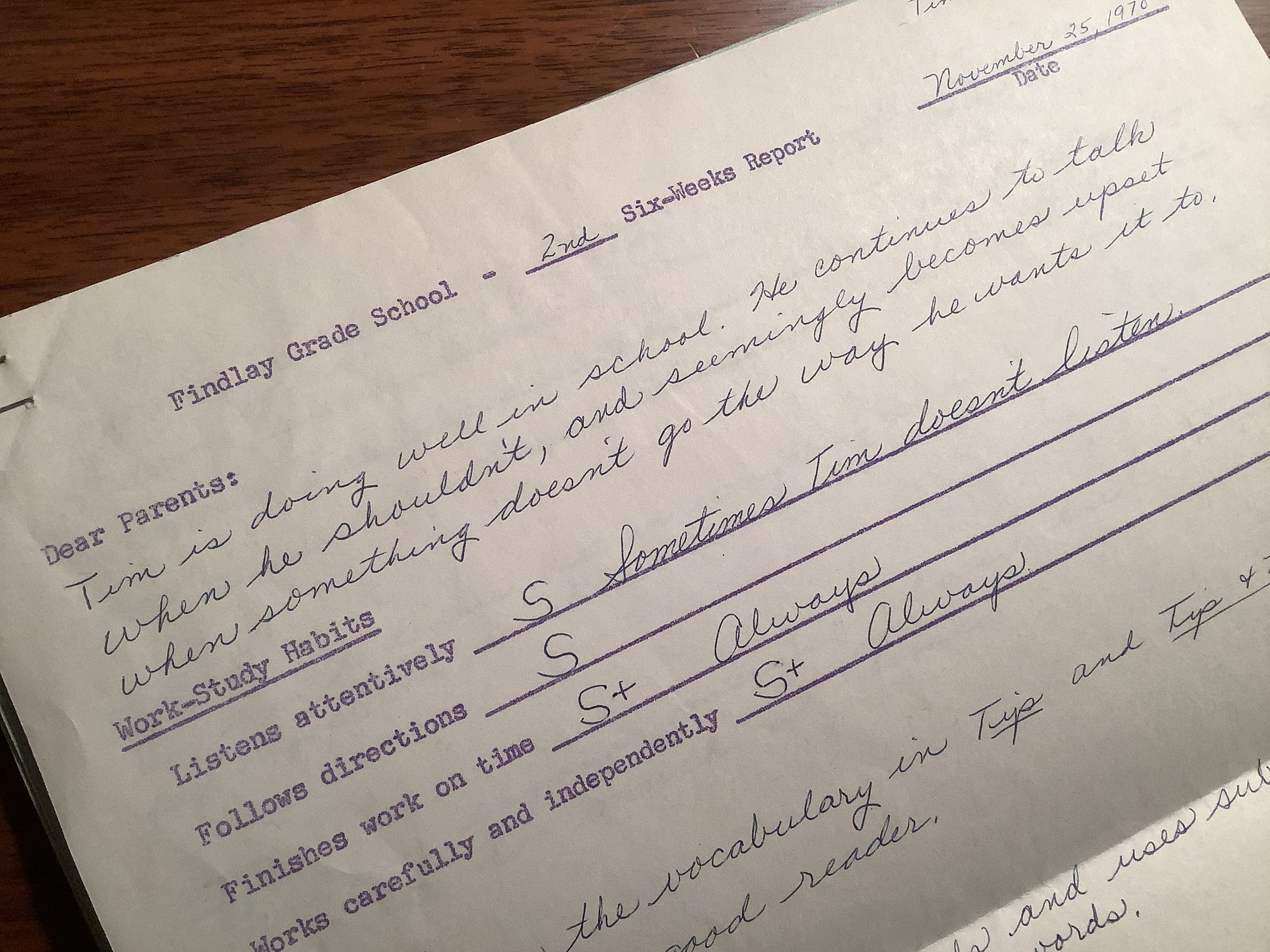
I like learning. I have a degree in Mechanical Engineering and a Master of Divinity degree. I like to read. And I like to build book shelves for the books I like to read. I’ve always liked school, book-learning as well as learning new skills. When my parents passed away in 2011, all manner of memorabilia made it’s way to me- my kindergarten through junior high report cards among them! I remember trying to show my kids how solid my grades were even as a youngster, but what they noticed instead were the teacher’s written comments.

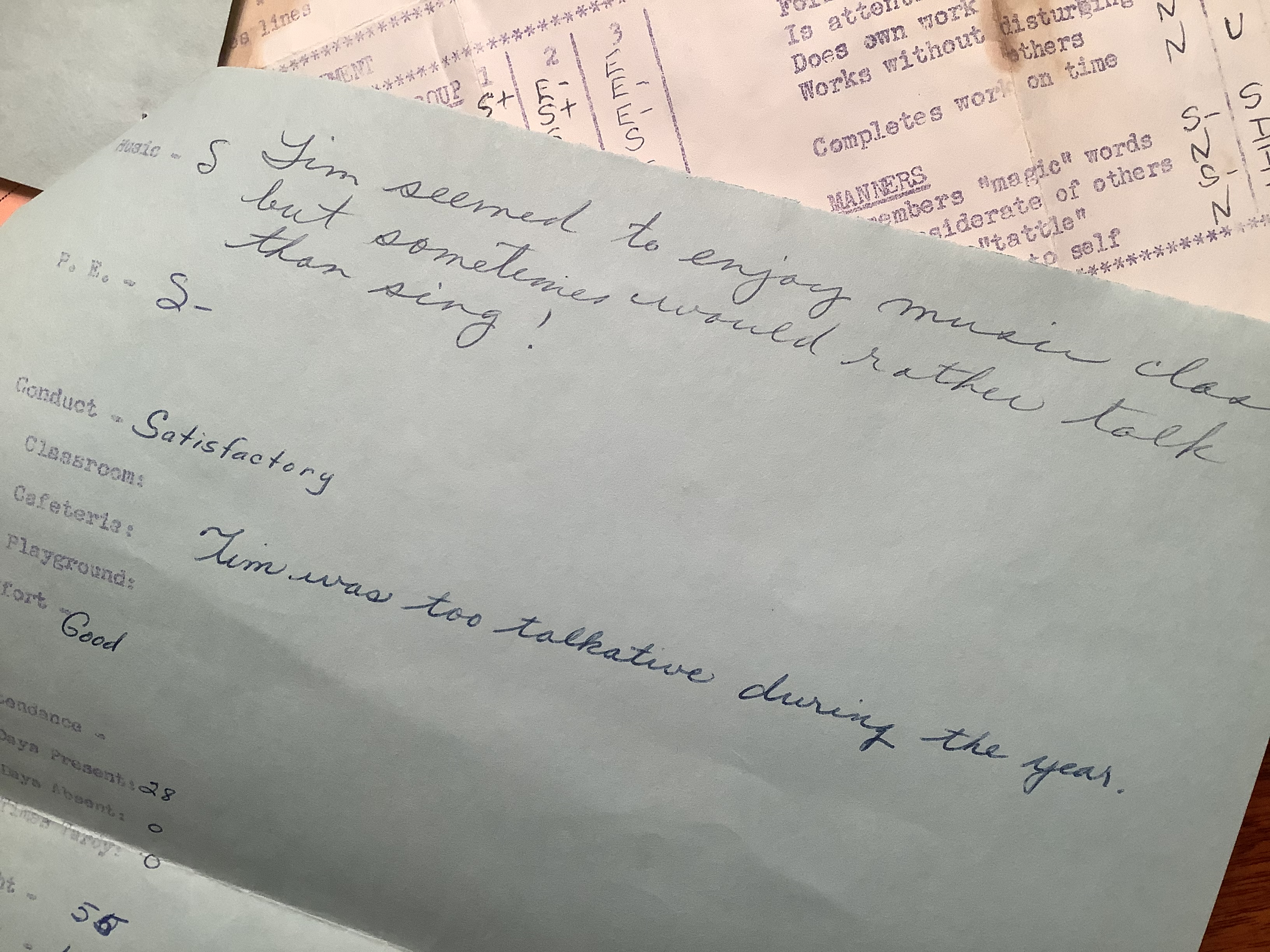
“Timmy talks too much!” Says so right here, Dad, on your kindergarten report card! Wait, your first grade teacher says you needed to work on getting along with your classmates better. And that your printing could be neater. And that you liked music class but spent more time talking than singing! Dad!

Ok, maybe I like learning so much because… there was always a need for me to grow up, get along better with others (and stop talking without permission). One curious thing I noticed about my report cards is that in the first few weeks of being in a new grade level, it would say “Timmy could use some real improvement in ________________ (subject).” But by the time the last report period came out: “Timmy has made a lot of progress this year – we’re very satisfied with his achievement. I highly recommend he move up to the next grade level.” I always seemed to make great strides that last 6 week grading period. Hmmm.

I’m taking two classes this spring.

Because I love learning (and my bookshelves still have some open spaces) I signed up for a course about racism, and a training class for marriage counseling. I probably should explain both. One thing I love about InterVarsity Graduate Faculty Ministry is that I get to be around people who teach, research, write and lecture on fascinating subjects in every discipline you could imagine from plasma-physics to sociology. When I noticed GFM was co-sponsoring a course on the subject of race (for faculty members) I jumped on board. Making sense of the historical and political context we live in has never seemed more urgent to me than now. I’ve exposed myself to no small amount of reading and training on race, gender and class throughout my ministry career and seminary training. But the current unrest of our country among people groups I am called to minister makes me want deeper explanations. 2020 troubled me greatly. It still does.

Why Does Blackness Matter? is being offered through a partnership between InterVarsity Faculty Ministries and The Veritas Forum. If you’re seriously curious about the course content, you can get a look at the syllabus at the link down below. It’s a deep, revisionist dive into the American story evaluating the impact of slavery and its many ongoing economic and social bi-products. It’s not only a story about the glaring racism that has historically caused such episodic damage. It’s also a bigger story about systemic injustice with stubborn roots that have never been fully dealt with. Racism is just the presenting surface, racialization is the underground network of causal tributaries – quite alive and well in today’s America.

I hope you pray for our country regularly. I’m still trying to learn how to do that myself. The needs seem to get deeper and darker the older I become. The Kingdom of Jesus has it’s work cut out if it’s to heal the wounds still festering in a nation divided by race and class. Pray for my learning. If it was true of me that I talked too much when I weighed 48 lbs and was 45 inches tall, I’m sure it’s true I still have a lot of listening and learning to do before God is finished with me.

Oh, yeah, the second class. Can’t go into a lot of details just yet, but I have been getting requests to officiate weddings! The marriage counseling course is so I can be an official Prepare and Enrich facilitator and administer their assessment tool with engaged couples. And exactly which engaged couples am I referring to? Stay tuned.

There’s no story here!

So how can you keep harping on Ruth, Tim, when it’s such a humble plot? Plot has to sizzle! Once you realize this is a story about a widow who has had everything taken away from her, displaced from her homeland, with an extremely grumpy attitude… what’s left?

Let me know your support plans for 2021

Click here to be taken to Tim’s donation page

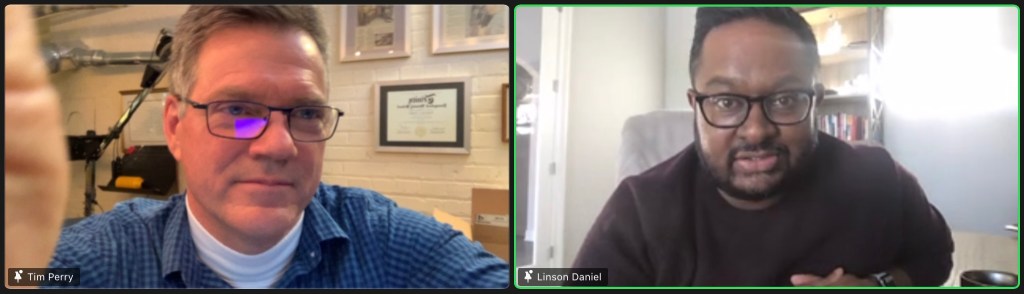
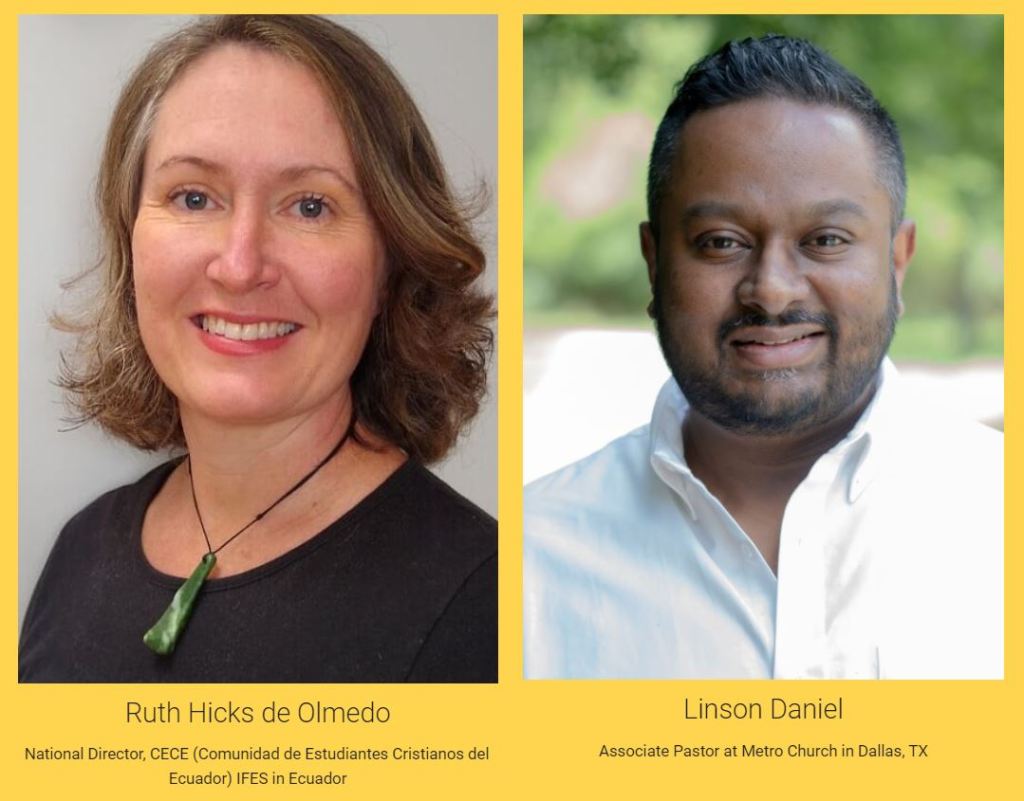
Here at the end of perhaps the suckiest year I’ve ever survived I give you Linson Daniel, our retreat speaker from Regional staff conference, preaching Ruth chapter 2 and 3. Go where God is at work. Do the work that is there. Watch what God does.

So, Tim, I’m not exactly in the market for another sermon, Thank you…

I’m so glad you pointed that out. But trust me. You need to listen to what Linson has to say in this message. If Covid has unraveled your sense of God’s presence and mission in your life, you need to follow Ruth’s example of GOING. “Get Going!” is what Ruth would tell you if you’re stuck, displaced, and throbbing from losses. God is already present. God’s word has already created a context of safety for the risks you feel you need to take. God is there and working himself. Go!

Click here to watch Linson’s talk! Do it!

So one last reminder here if you’re waiting to the bitter end to either send a gift or let me know what your 2021 plans are. The links are above. Hope that you are enjoying the last few days of the year with loved ones you can safely gather with. Let’s hope and pray for a better 2021! Thanks so much for your prayers and support this year!

Friendly reminder…

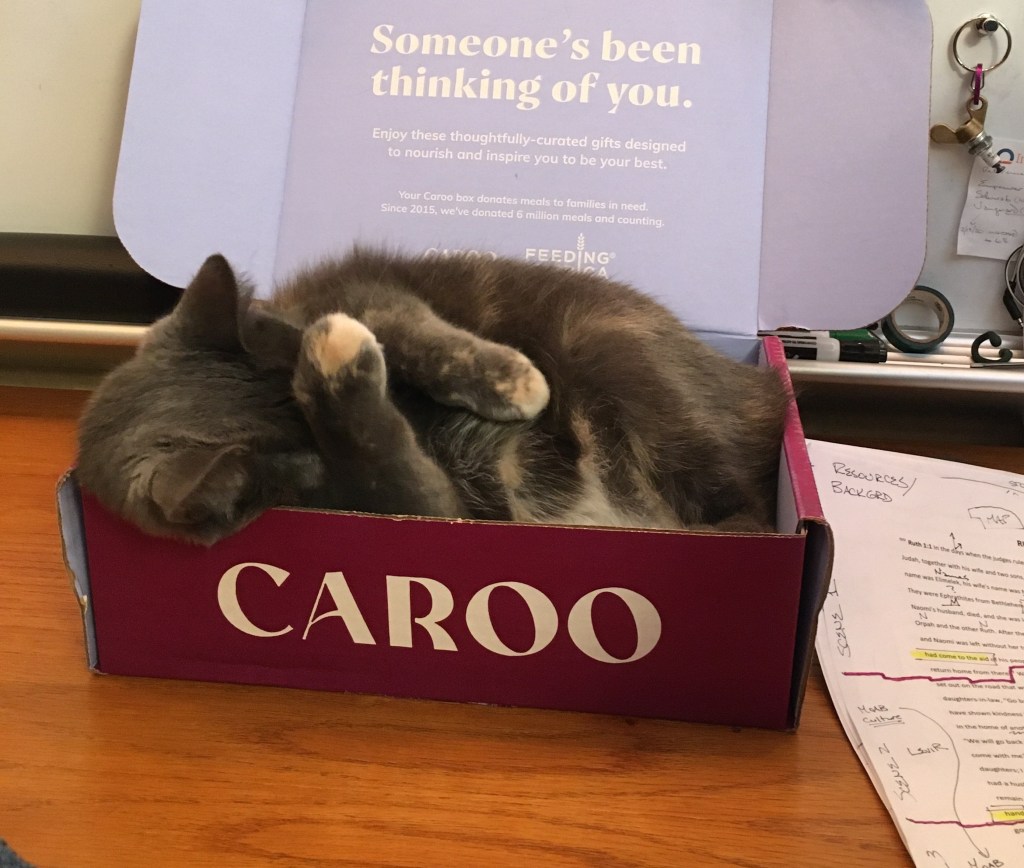
I don’t care about the snacks, just give me the box. -Aspen

Before I get into this post, I want to encourage you to take a minute to fill out my Ministry Partnership form at the following link. Thank you to those who have. Please keep them coming! It’s super important for me to hear from all my ministry partners at this time of the year. Please let me know how you plan to partner with me in 2021.

Click here to be taken to the response form.

Follow this link to be taken to Tim’s donation page at InterVarsity.

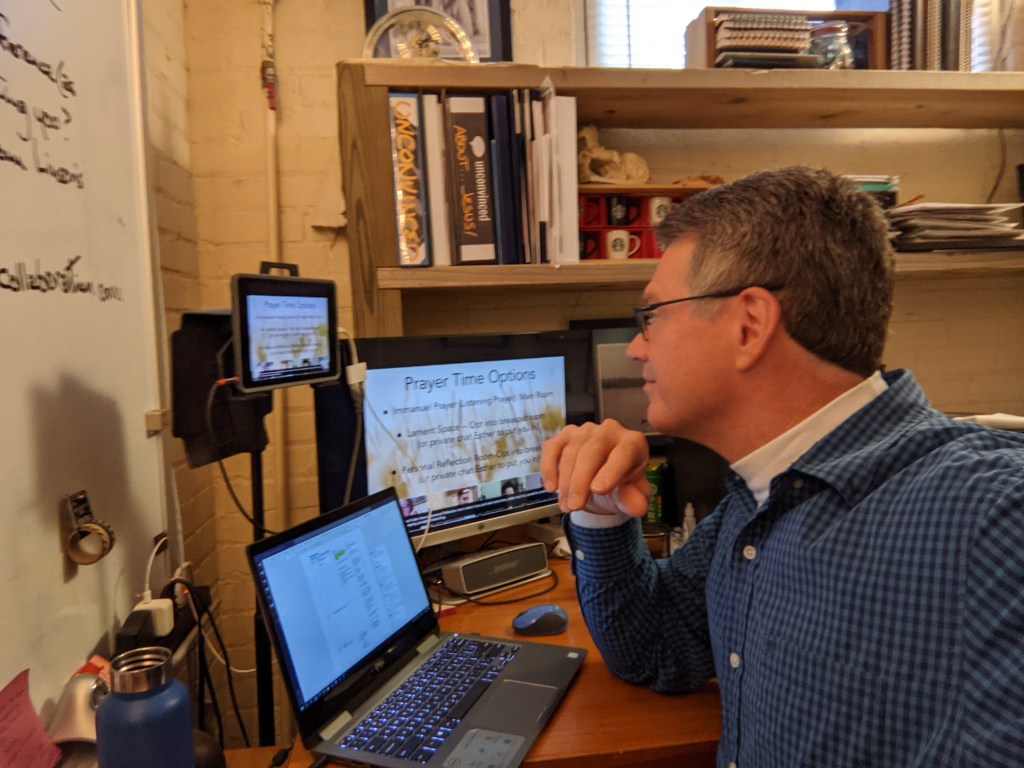
I’m coming to you on the second day of a joint Graduate and Undergraduate staff conference happening via zoom sessions. This is a first for our two ministry streams since I’ve been back on staff with InterVarsity. I’ve attended the undergrad Regional staff events in the past two years. But this year we’re actually sharing the event. Here’s a quick look at our theme and speakers.

Grief, Providence and Habits of Hope – GFM/UFM Combined Central Staff Conference

It’s been terrific! The idea for a combined staff conference was in the pipeline for three years. When my undergrad Staff Director counterpart and I talked about it, we were envisioning an in-person event at a retreat center. Lot’s of time for our teams to mingle. Shared plenary sessions and meals. In our own spaces for some of the schedule. As our target date drew near, however, we realized that this event was either going to get post-poned OR re-invented. It’s actually been sooo good to be together even in a virtual format.

This year like never before staff need refreshment and perspective on ministry and personal hardship. We’ve worked pretty hard this semester to virtualize ministry in digital spaces and sustain momentum where possible. Staff are fatigued from all the displacement, loss and improvisation. Our planning team landed on the book of Ruth as a message we could all use!

Themes that have come out of our time so far:

  • God’s profound presence in the midst of hardship and scarcity
  • Experiencing God’s goodness through the people he brings along side us
  • Risk-taking in seasons of transition and displacement
  • Doing what can be done when we show up even if its “just gleaning”
  • God’s incredible ordering of events when we see nothing but loss
  • Steps of obedience still need to be taken – work still needs to be done
  • The hardest work and biggest risks happen in the safety of God’s rule

As we came together yesterday, Ruth chapter 1 met us on a note of lamentable loss. Things go from bad to worse so fast for Naomi – you wonder “Is there’s really any story here at all?” I got to lead virtual bible study with 55 of my colleagues. They tore into the text with a vengeance – just like InterVarsity staff are wired to do.

This morning the tone changed quite a bit as we moved into chapters 2-3 in Ruth. Naomi is overshadowed in the narrative by Ruth who twice responds to the invitation to GO… Go to the fields to glean. And GO to the threshing floor to propose to Boaz! Ruth is as missional and risk-taking as Naomi was depleted and hapless. Our staff teams need the example of both women to stay healthy and focused. Honesty about our pain and losses with a willingness to let go of our idealism. And… an energetic drive that says yes to new possibilities God is engineering beyond our imagination.

A positive shared experience like this has been a big step forward but we need to keep taking steps. This afternoon we spent time thinking about how our teams can more effectively collaborate in our four state region. Building awareness and trust is a must, as is follow-up. Pray for GFM and Undergrad InterVarsity as we move forward into what God has for us. Pray for our last session tonight in Ruth chapter 4 where we see Naomi’s impossible dream come true for her family. Pray for our teams to learn to dream together and experience a fuller harvest of God’s kingdom on campuses in the coming months.

Thanks so much for your partnership!

Your ministry partnership.

Many of you know where this post is headed even before you read it! Every ministry out there (like Tim’s InterVarsity thing) is trying to get your attention at the end of the year. So let me knock this out quickly! I know you’re busy and like the rest, contending with a thick layer of Covid-induced weirdness!

First, gratitude.

Thanks so much for all those out there reading my posts, thinking about Graduate Faculty Ministries and praying for our work. You are the proverbial Aaron and Hur of our mission – Exodus 17. Nothing of significance can happen without God’s unique empowerment of our work. That happens when you pray.

Second, more gratitude.

Our work happens when (and only if) it’s supported by donations. The fact that you and others steward your resources to include InterVarsity IS absolutely vital to our mission. When (and only if) resources are present, staff like me are freed up to run zoom staff meetings, pray together with faculty and student leaders, study the bible together in online communities and do the many things we’re called to do in spite of covid’s limiting impact. Thank you! Thank you for including us in your giving budget. Thank you for sacrifices you may be making in order to send donations. Thank you for moving Graduate Faculty Ministry forward through your giving.

Last thing. Would you please give me 3 minutes?

Click here to be taken to Tim’s 2021 Ministry Partnership response form.

It’s extremely helpful to know how you’d like to partner with me in the coming year. To do that as quickly and paperlessly as possible, would you be willing to bounce over to the google form and fill it out? I realize life is probably crazy right now, but this is really the best time of the year to bug you about this.

I’m really helped by knowing…

  • How would you like to hear from me – do you prefer texts or email?
  • How you’d like to partner with me financially if you know that at this point.
  • Any changes in your contact information.
  • The names of people you know who would be good for me to network with.

This year especially I need to find two kinds of people: EITHER people who could begin some form of financial support, OR people currently giving who could increase their support some- even just a 10% bump. That might sound crazy given the pandemic we’re experiencing. But my reality is that 2020 has been a difficult year of losing support financially. I’m making some progress on finding new donors, but not fast enough. Increases from existing donors is also a way of stabilizing ministry for me. If your response involves sending a gift now, click here to be taken to Tim’s donation page at InterVarsity. If you need help with that, just fill out the ministry response form for now. Thanks!

Please pray for my ministry budget this coming year. Most immediately I’m trying to wipe out a deficit that has crept into my 2020 numbers (see previous post). Pray for me to find new sources of support. Of course pray (like we’re already praying) that the pandemic would grind to a stop, the economy would recover, and we could all get back to a “better normal” than we’re living now!

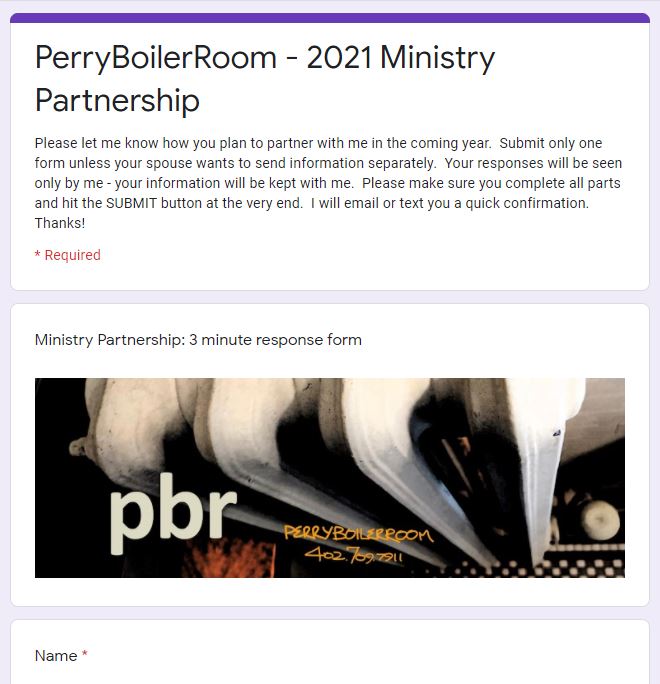
Here’s what the top of the Google-form looks like when you click thru.

Thanks so much! Looking forward to hearing from you. I’ll repost this form throughout December in case you can’t get to it right now.

First Things First

So what happens when donations fall behind budget, Tim? Great question. So glad you asked. Fortunately I haven’t been in this position much due to careful management and consistent donations. During the first couple of years of joining InterVarsity Staff, everyone works at building up enough budget to make longer term ministry sustainable. If you run ahead of what is being spent out of your budget, it positions you for a possible pay raise. But if you run behind, you carry your deficit till donations rebound, you recruit more donors or you cut expenses (usually a pay cut).

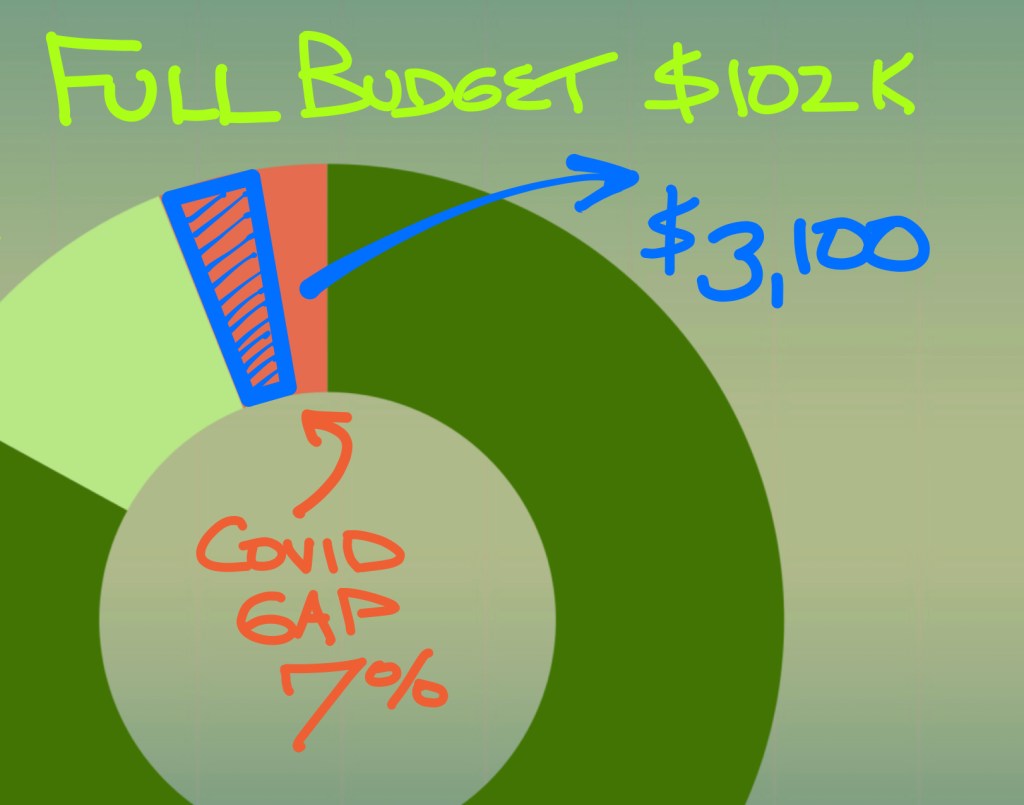
As I’ve been hinting, Covid has taken a bite out of what already is a faith-stretching challenge. Every year the basic goal in my case is to find enough giving units to cover a $102K budget and add on top of that the resources I need for developing new ministry in my territory. Without Covid, I started 2020 with no deficit and with a need to find about $12K in new support. With Covid, I’ve needed to find an additional $7-8K.

First things first, I need to close my “covid gap”. InterVarsity is helping me with a matching grant to make up the deficit as quickly as possible. The match began on November 1st and will be in effect till Jan 31st, 2021.

What does the match really mean?

For NEW support dollars I find between Nov 1st and Jan 31st, 2021, InterVarsity will match dollar for dollar up to $7,000. This will kill off my deficit and help me find new amounts of sustained support. Till now I’ve been reaching out to selected individuals to see if they’d like to help. I’ve found $3,900 from 6 sources! I’m over half way there (Pickto Chart)! The remaining $3,100 I hope will come in from another dozen or so people I’ve asked (as well as response to this blog post).

How could I help you?

First, I’m hoping and praying that if God has placed you on my support team, you’ll continue giving as you have been. My 80-ish active donors are basically keeping me in place, enabling me to do ministry and be paid for it. I’m so grateful for the core of my team who are just rock solid! I THANK YOU. MY FAMILY THANKS YOU!

There are two ways you can further help if you are one of those rock solid supporters and you have the ability. 1- any additional one-time amount you give on top of your usual donation will go to the covid relief match. 2- if you increase your monthly or annual amount that you are able to give, the difference will also be matched dollar for dollar.

I’m pretty sure the covid gap will be going away by the end of Jan 31st. I’ll still need to keep building my budget on top of that. Getting rid of my covid gap means that I’ll get out of deficit and back on my way to building my long-term ministry budget.

If you are an informed ministry partner, reading the blog and praying for me, but have not been able to donate, now would be a great time to jump on board if you’re able to help.

Click here to be taken to Tim’s donation page.

Thanks so much for what you do to make it possible for me to lead and serve in Graduate Faculty Ministries. Hope you and your family will have have a safe and meaningful Thanksgiving. If you have any questions about helping out please email me at this link:

tim.perry@intervaristy.org

Be blessed and stay well!

Are you a Naomi or a Mara?

Last week I had the best night of IV staff work I’ve experienced since the pandemic began! A group of Creighton OT2 students invited me to teach their small group in Oct/Nov. I brought them the story of Naomi (aka the book of Ruth). It’s the perfect pandemic narrative.

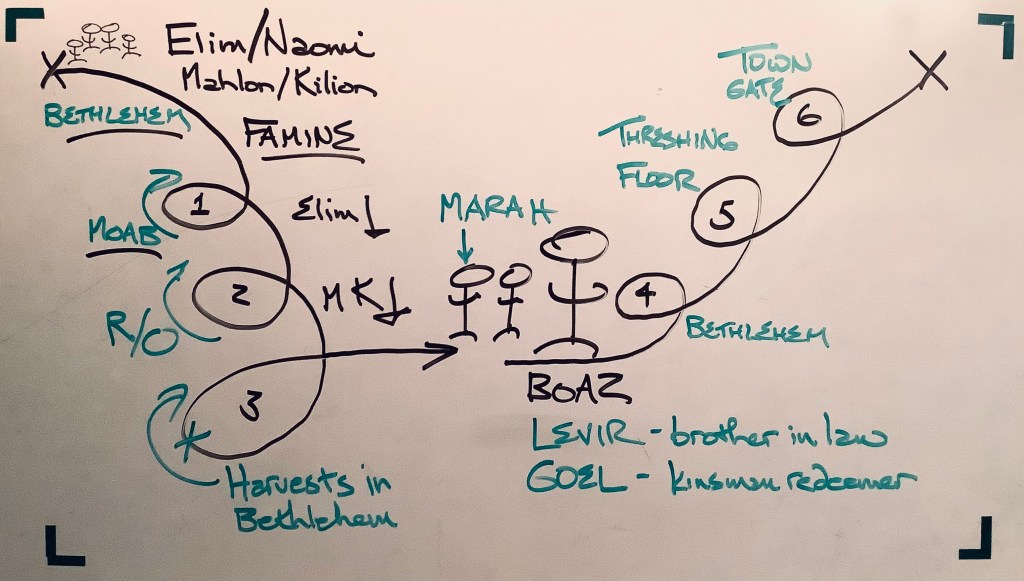
What’s with the loops?

This is one way to look at the story-line of the book of Ruth. I learned it as the Lowry Loop waaaay back in Homiletics lab. A character is moving along minding her own business, then out the blue something drops from the sky that threatens life. In Naomi’s case it was a famine. But it wasn’t just an isolated threat – it became a Quadruple Whammy!

Just like covid, an unwelcome antagonist unleashed multiple waves of undeserved punishment. Have you ever wondered why trials never happen as singlets? They always come two-for-the-price-of-one or in a convenient four-pack (like Costco uni-sex, one-size-fits-all underwear).

Naomi’s family lost their livelihood to a famine. They moved to a neighboring country with a foreign language and a very foreign god. Then things really got interesting… Naomi’s husband dies. Naomi has to marry her two sons off to Moabite women (what Jewish mother in her right mind would do that). Then her two sons die one after the other. And she’s left literally with nothing that would give a Jewish woman a hope or a future.

Are you sure this was a great pick for your group?

The students I’m studying Ruth with are Occupational Therapists in training. These are the people who put you back together after you have a stroke or some other accident or medical disaster. These students already know the book of Ruth when you stop and think about it. Naomi found herself after Lowry Loop #3 in a paralysis, stuck in a living situation she would have never picked for herself. Waiting for a vaccine.

There were a total of 9 of us who studied the book of Ruth. Here’s our group when we did chapter 4. A few striking pandemic-relief realities we found in the lives of Naomi and Ruth:

  1. Trials will always come. Just count on them. Not if… When… they come will you hold life loosely enough to let God move you through them? They will hurt. You will lose things.
  2. Will hardship mar your identity? Or will character pull you through the pandemic and make you a better person on the other side? Naomi’s name means “pleasant”. When she crawled back to Bethlehem after her humiliation she said, “Don’t call me Naomi, call me Mara.” Mara means “bitter”. She blamed God for her losses and was ready to let her pandemic redefine her personality. Is anyone reading this?
  3. God provides the redemptive turn. It may take a while. God’s goal isn’t your paralysis. Your plot-line will bend back in a redemptive direction.
  4. There were 6 redemptive turns (at least) in the Naomi and Ruth’s story. Moab DID provide food and stability following the famine. Ruth and Orpah WERE good women for Naomi’s sons. The grain harvests DID return to Bethlehem. Etc…
  5. God’s favorite redemptive turns come in the form of people. God is never interested in just giving you the stuff you need. It’s so much more fun for him to give you the PEOPLE you need. Naomi needed Ruth and Orpah. She and Ruth needed Boaz and his good favor. Naomi needed her friends back in Bethlehem (even if they were tempted to gossip about her). Ruth needed Boaz. They all needed baby Obed at the end of the story!

So, how’s your pandemic going?

Are your losses still dogging you? Are you still in pain about anything? How do you feel about God letting this happen to you and those you care about? What’s interesting about Naomi’s story-line is that in spite of her crappy attitude, God doesn’t allow her to change her name from Naomi to Mara. Don’t let covid wear your personality down and change you from a Naomi to a Mara! Ask God to show you WHO you need and don’t be so worried about not having WHAT you need. At the end of the story when little Obed is peeing in her lap, Naomi’s girlfriends are laughing at her with joy. “Naomi has a son.” (Naomi, you do know that’s Ruth’s baby…)

When you think of my ministry, first of all, pray for these terrific Occupational Therapy Doctoral students! They are working incredibly hard to one day put themselves in a place of skilled healing in the lives of countless wounded people. They’ll be God’s people in a place of redemptive turn. They’ll get to see God use them to move life forward. Pray for their training. Pray for their relationship with Jesus to grow during these years of intense work. Pray for them as they each deal with their own pandemic antagonists.

Working on finding more donors….

Secondly, when you think of me, pray for God to bring more supporters to my ministry. I’m currently trying to address a deficit that has been developing since early last spring. As of October 31st, I need to resolve an $11K budget deficit! In posts to follow I’ll update you on how I’m doing with closing the Covid Gap. Between now and the end of the year I’ll be asking everyone supporting my work to let me know how they plan to partner with me in 2021. Please reply me when you get those posts!

My God bless you and keep you. Have a terrific and safe Thanksgiving!

Click here to donate to Tim’s work.

Prophetic Lament

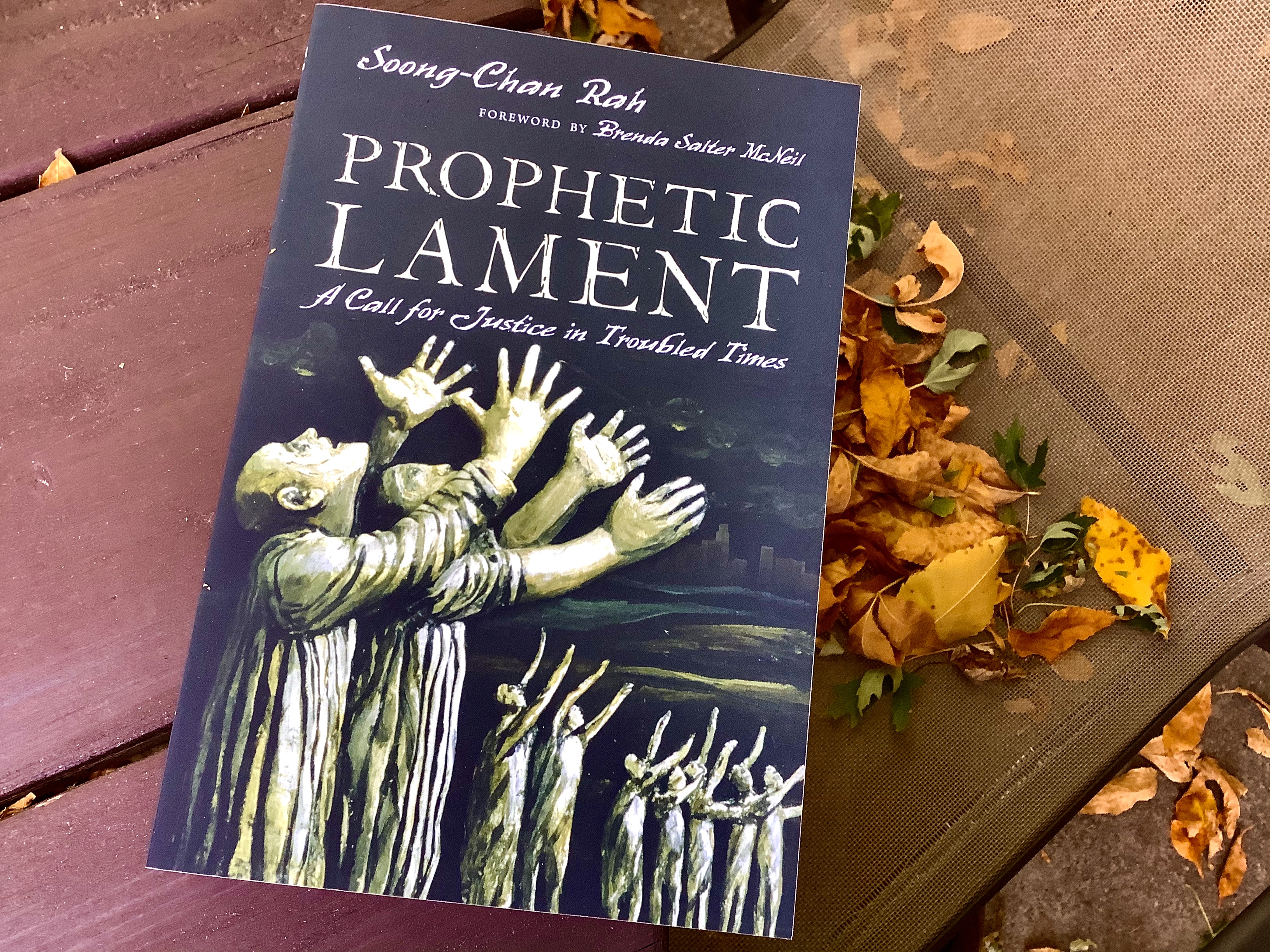
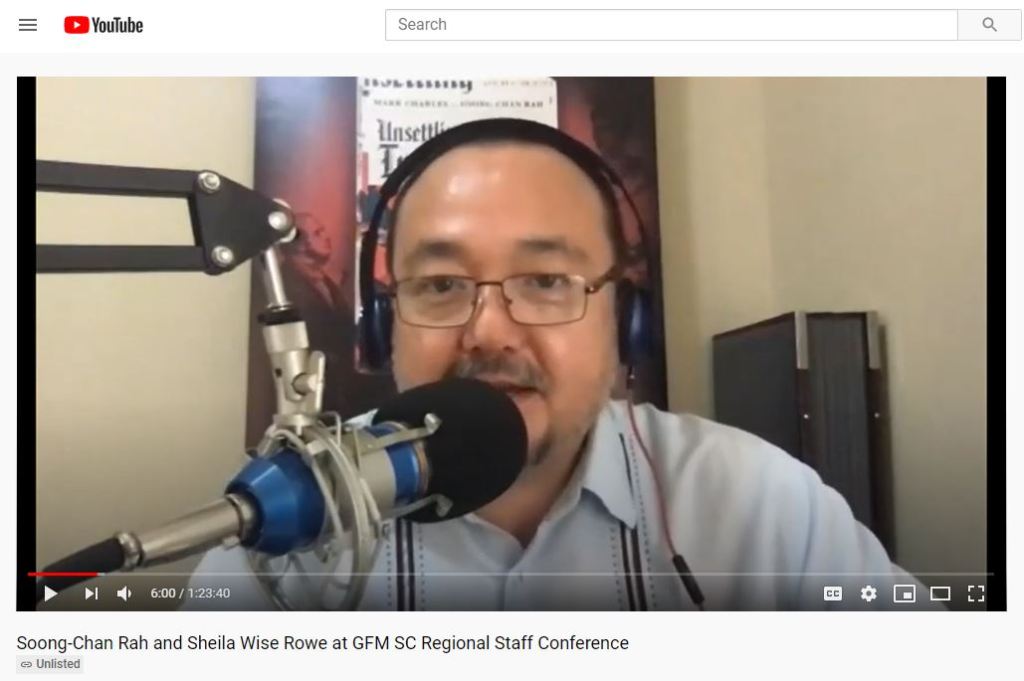
In this post I’ll share a talk with you that our Regional Staff Team experienced this summer when we convened virtually for a three day conference. The link to the video in this post below will take you to author and Northpark Theological Seminary professor Soong-Chan Rah. About 47 of us were gathered around the broader theme of social justice and race relations. In light of what our campuses, our ministry and our nation is enduring this 2020 – Year of Covid, Year of Cultural Unrest, Year of Financial Threat – turns out we heard from two of the most relevant voices God could have brought to our badly itching ears!

24 minutes. I think you should watch this.

The first talk is Soong-Chan unraveling themes, partly from his 2015 book Prophetic Lament (commentary on the Old Testament book of Lamentations) and partly from his new release Unsettling Truths. Soong-Chan takes a few minutes to greet some InterVarsity homies. You can fast forward to three and a half minutes into his talk where he digs into Lamentations. [Sheila Wise Rowe takes over after Soong-Chan with a talk on her book Healing from Racial Trauma. See previous posts.]

Click Here to be taken to You-Tube

Probably not the juiciest book-plug you’ve heard all week, but I’ve been really excited about Soong-Chan’s talk and his book and the book of Lamentations! It’s helping me make sense of what I’m seeing all around me as I try to keep myself from coming off the rails in 2020.

IF… you watch Soong-Chan’s talk, let me also invite you to a google doc I’ve been using for watch parties I’ve sponsored. You’ll want to be on the google doc on your lappy while you’re watching Soong-Chan on your phone. I’ve outlined his talk there and left some spaces for viewers to leave their thoughts next to a few discussion questions. Feel free to leave your comments anonymously. I’d love to know what more people think of this!

Discussion Guide

Soong-Chan Video on Lamentations

Hope you are finding a way to get outside this fall. Its been the most pleasant autumn I remember in my 14 years here in Omaha! Take care!

Two students!

We’re rebuilding our GFM group at Creighton. If you would have told me two years ago that I’d be relaunching the group of 20 students we had then, with just two students this fall, I wouldn’t have guessed it in my wildest pandemic imagination. Pandemics can be hard on group moral! Maybe you’ve been experiencing that in your communities.

Last year we were struggling to maintain momentum in the School of Pharmacy and Health Professions (the flywheel effect in reverse if you will). We had a really encouraging New Student Outreach. We’d met about a dozen new students in addition to the dozen or so who were active the year before. This time last year little did I realize we wouldn’t see a single student at an in-person activity all year! No kidding.

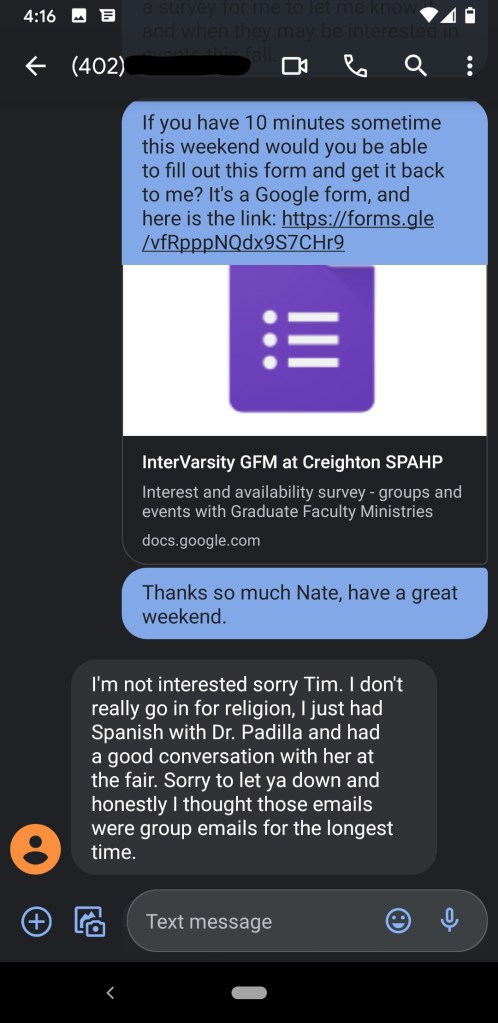
Vapid expectations crept through my efforts to restart “the group” this August. No Student Activity Fair hosted by Creighton. No new student contacts to speak of. Just an aging list of last year’s contacts. Three students indicated that they would not be returning to the group, but were starting a group of their own with pharmacy colleagues. (That’s actually terrific – they have a national organization they can connect with that is just focused on Pharmacy). I got the text seen above from No-Religion-Nate (hope you have a nice life, Nate, not sure why you signed up last year in the first place). I heard back from Lela – a student who attended GFM once her first year, but withdrew from the OTD program last fall. Crickets from 14 others after three attempts.

And then there was Madison. And Kayshe ( long a, silent e ). Thank you Lord!

Two students! That’s our group at this point. I’m very grateful for them both and very encouraged with their positive outlook. Madison and Kayshe have zoomed with me for the past three weeks. Just getting to know them, sharing some GFM vision with them and discerning how I can invest in their leadership. They are a part of a group that has started on its own this fall. Pretty much just students in their class (OT-2s). I felt it best to just coach them and see what kind of resources I can give them for the group they are already in. I’ve still made no contacts with new students!

Tim, how is your team doing? (a fly-over)

Kevin / Univ of Iowa / Iowa City: In his 41st year on staff, reaching grad students and some faculty, meeting totally via zoom this fall, also teaching a class the university is doing at a local prison!

Jake / Univ of Kansas / Lawrence: Just finished a year-long chaplain residency program at St. Luke’s in Kansas City, has been part time with GFM this past year, has had a terrific year of MPD with his budget in great shape, also rebuilding his group after key students moved on from last spring.

GFM Central Area playing Tenzi on zoom at our Regional Staff Conference.

Mark / K-State / Manhattan: Working with several faculty groups, recently connecting with an ecumenical campus minister group reading an engaging book about Jesus, and when he’s not busy with other things…he’s writing a book (something about God and Star Trek).

Linda / Washington Univ / St. Louis: New staff member as of this spring, is herself alumnus of GFM at Harvard, she and her team mate are rebuilding the Wash-U grad student fellowship, and when she’s not helping her husband be a Wash-U professor, she’s serving a local non-profit called St. Louis Bicycle Works.

Tom / Iowa State / Ames: Leads a faculty ministry, is an emeritus professor at ISU in biological sciences, in addition to GFM ministry Tom teaches an ISU honors seminar each year called Faith and Science. He’s gearing up for another session next spring.

George / K-State / Manhattan: Currently the the one leading our team in Back to Face to Face Ministry! George does a thing called Bike Night, reaching international students through food, the Gospel and bike repair! He and his wife also host Brunch and Bible on Saturday mornings in their home!

Josh / Washington Univ / St. Louis: Is Linda’s team mate in leading the grad student part of our ministry at Wash-U, works full time in a lab in addition to volunteering his time with GFM, loves making (and selling and delivering) his own dumplings! Covid has thus far deprived me of tasting them, but I really like Josh anyway and am so glad he’s on our team!

George / Washington Univ / St. Louis: Yes, two Georges. Yes, three staff at Wash-U. This George leads faculty groups including groups at Lindenwood and St. Louis Metro, partners with our undergrad ministries at St. Louis University and Webster. All of his groups have gone virtual since last spring. George has a 15 year old grandson named Warren who is battling leukemia.

This was Zoom in 2012.

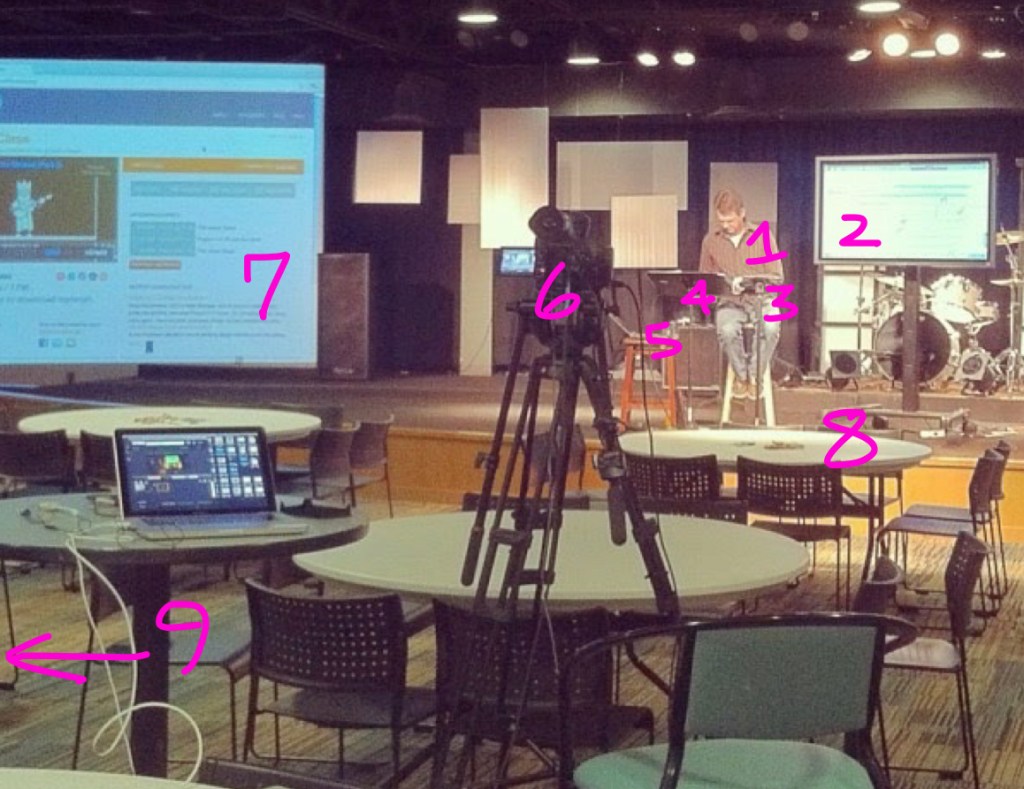
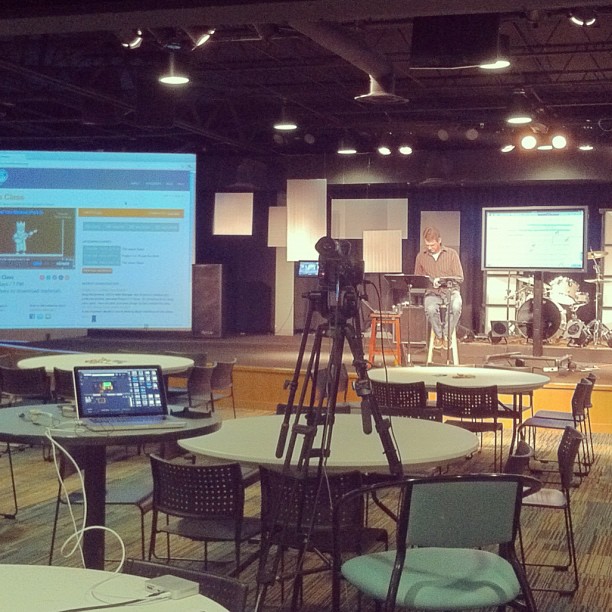
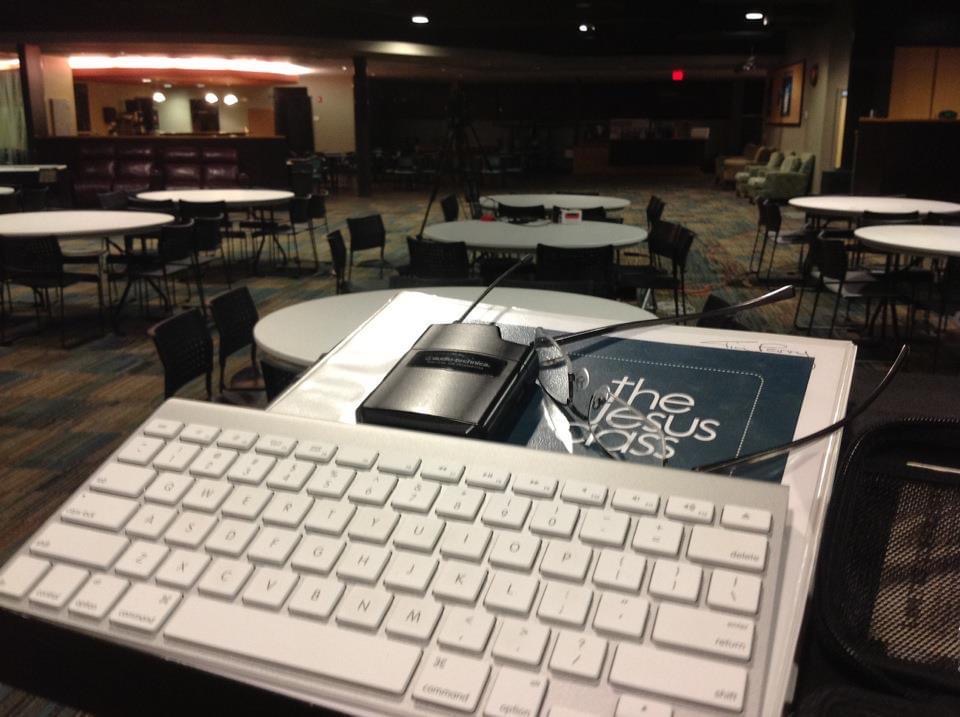
So here’s a picture I dug out of my CCC files from when I used to teach The Jesus Class. Jesus Class was a manuscript study on the Gospel of Mark – probably my favorite thing to teach ever. Back then we were trying to stream our events and classes online. People signed up for the class live and in person (at the Student Center apparently) but we were also trying to engage an entire online audience as well. I think this section of the Jesus Class had about a dozen in person participants and about 20 more online. Here’s what it took to do this in October 2012 (pink numbers from the pic):

  1. One teacher. That’s me up on an empty stage in an empty room prepping for that evening’s session.
  2. A plasma screen. Think of it as Screen Share – The participant would see me (like the person on the evening news) with this screen to the left of my shoulder.
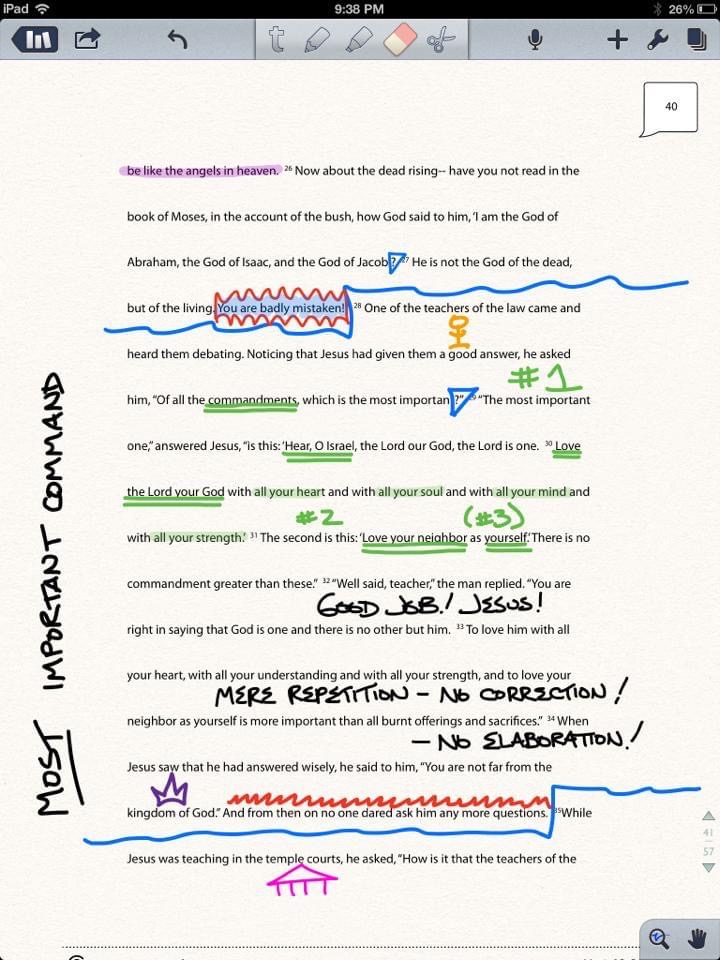
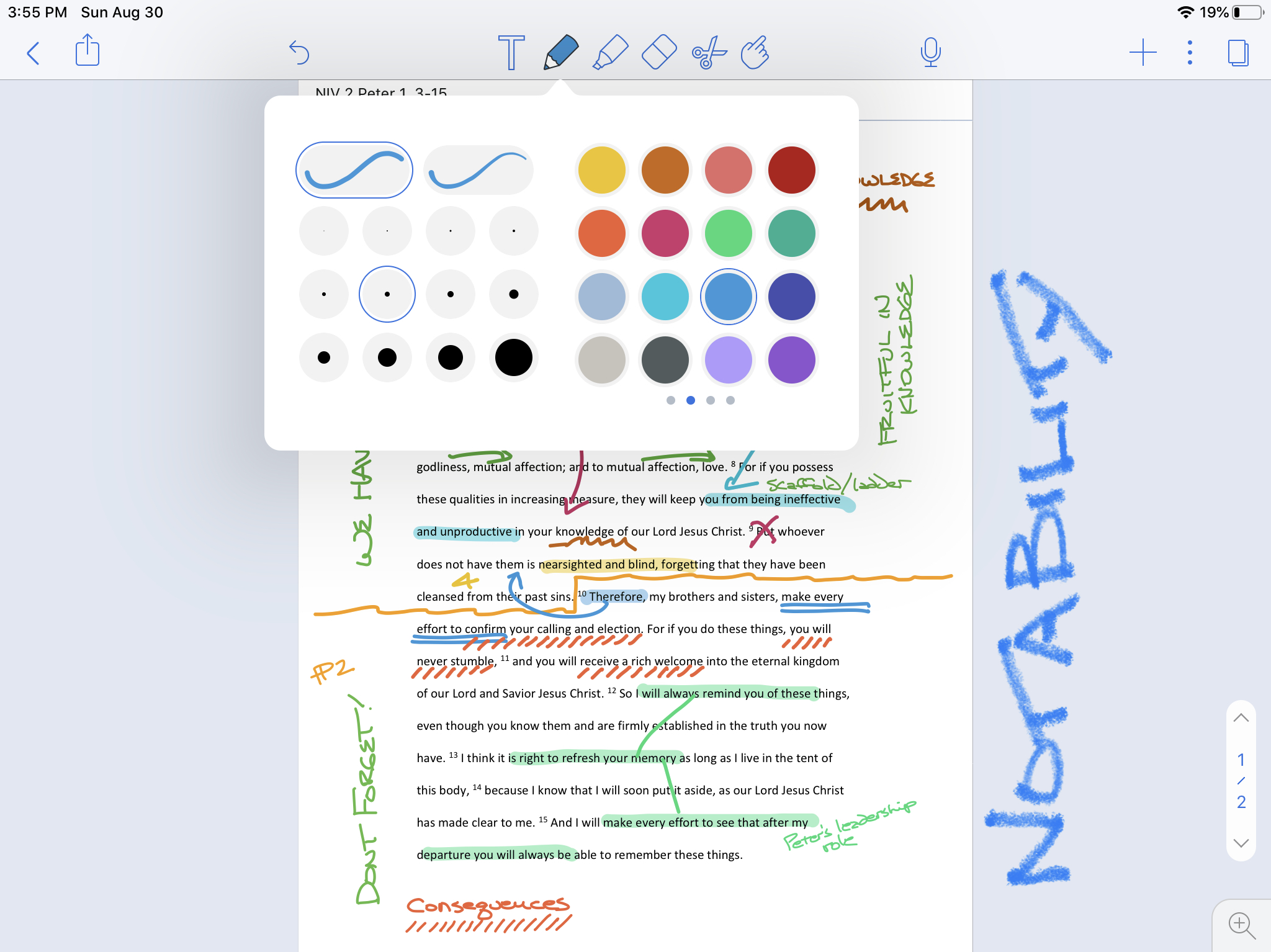
  3. That would be my i-Pad (which I still use to this day doing zoom sessions). What I wanted my live class and my online class to see was on my i-Pad. A PowerPoint slide deck. A manuscript of Mark’s gospel I could mark up with Notability. Resource sheets I wanted people to be able to refer to.
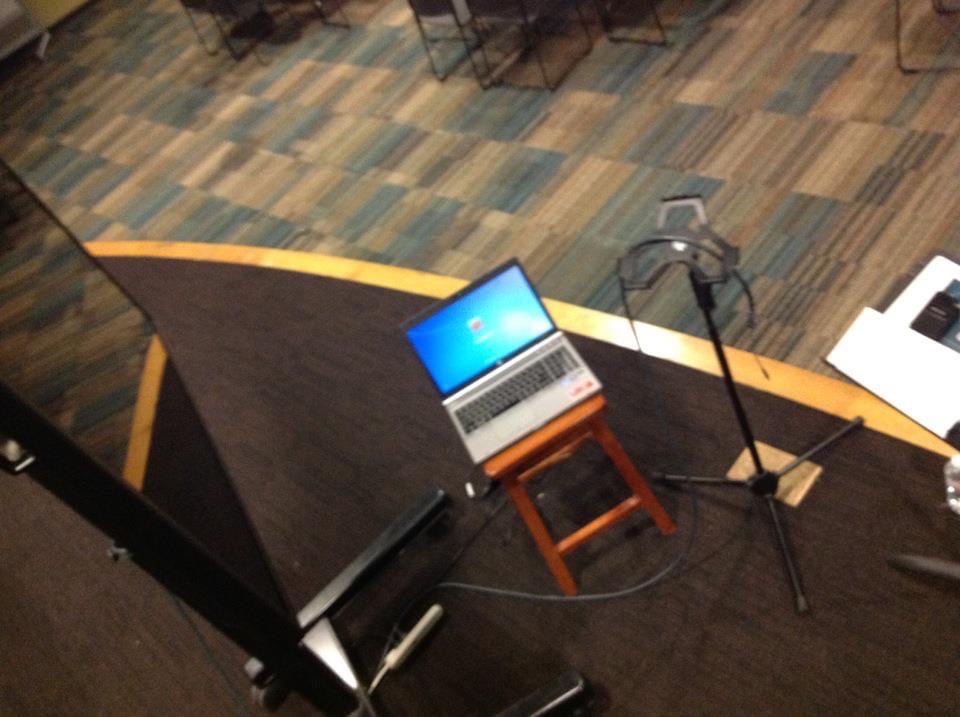
  4. A black metal music stand. Anything I ever did in a church required a black metal music stand. (I still use one with my Nordic Track when I work out).
  5. My lappy open to the web-page the class was being streamed to. I could read and respond to the chat from online participants. There was no video of my participants sitting in front of their devices like the Brady Bunch.
  6. Camera pointed at me and my plasma screen. This is the video feed for the online participant. A camera operator was there with me.
  7. The screen on the wall for my live participants sitting in the room (same thing as the plasma screen.)
  8. Tables that my live students would be seated at. Zoom has chat-rooms, conference rooms have tables.
  9. My sound and lighting guy was perched at the back of the room making sure everyone could see and hear and sending the audio feed to the camera operator who was streaming the feed.

Quite a few moving parts! We did this for 90 minutes a week. For 8 weeks straight. The in person audience was the glue for the rest of the class. Students were learning inductive study with a manuscript while learning the Gospel of Mark. The good old days!

Zoom these days…

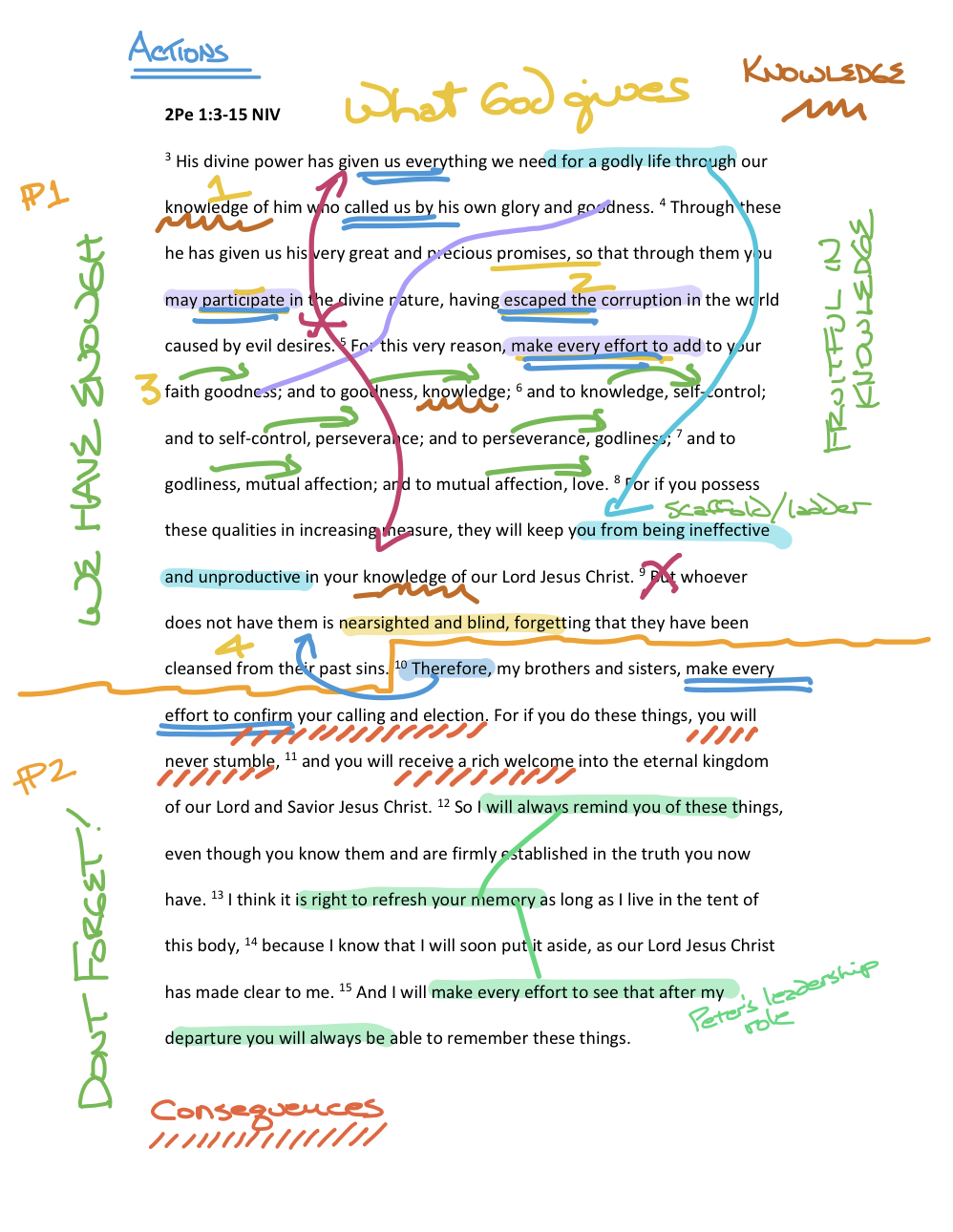
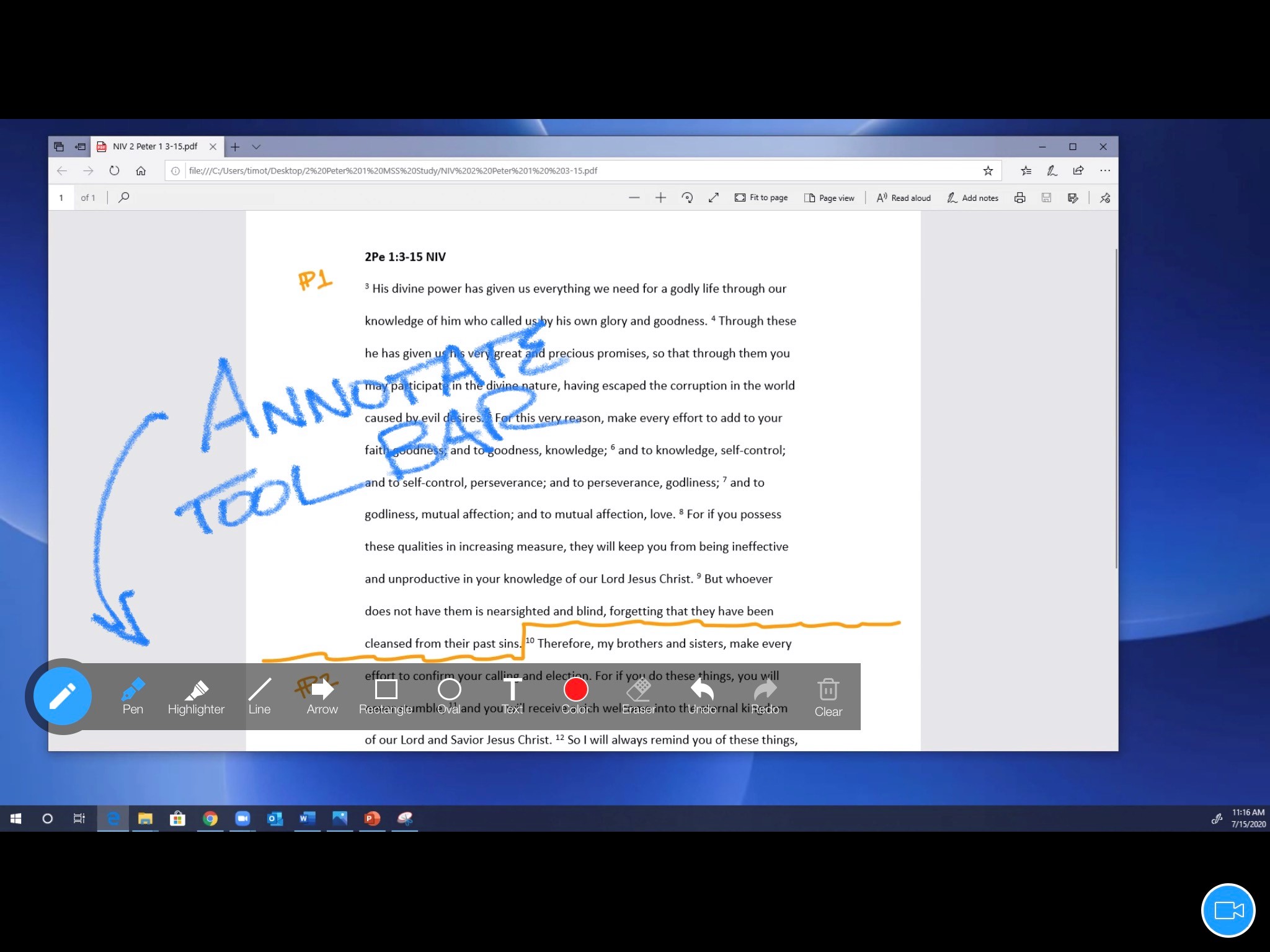
Compare that with my virtual bible study experience this summer. As a part of our GFM Regional Staff Conference, I was asked to lead a 45 minute bible study in Second Peter. Talk about moving parts! Here’s what it looked like compared to vintage Jesus Class:

  • Our virtual study had 47 participants logged in from 17 different states. It was a job-related conference – the participants did have to be there!
  • I recruited an overall bible study leader, a technical assistant (to manage chat rooms) and 6 small group leaders.
  • I had a small group leaders meeting in preparation for the study and went over a detailed teaching plan.
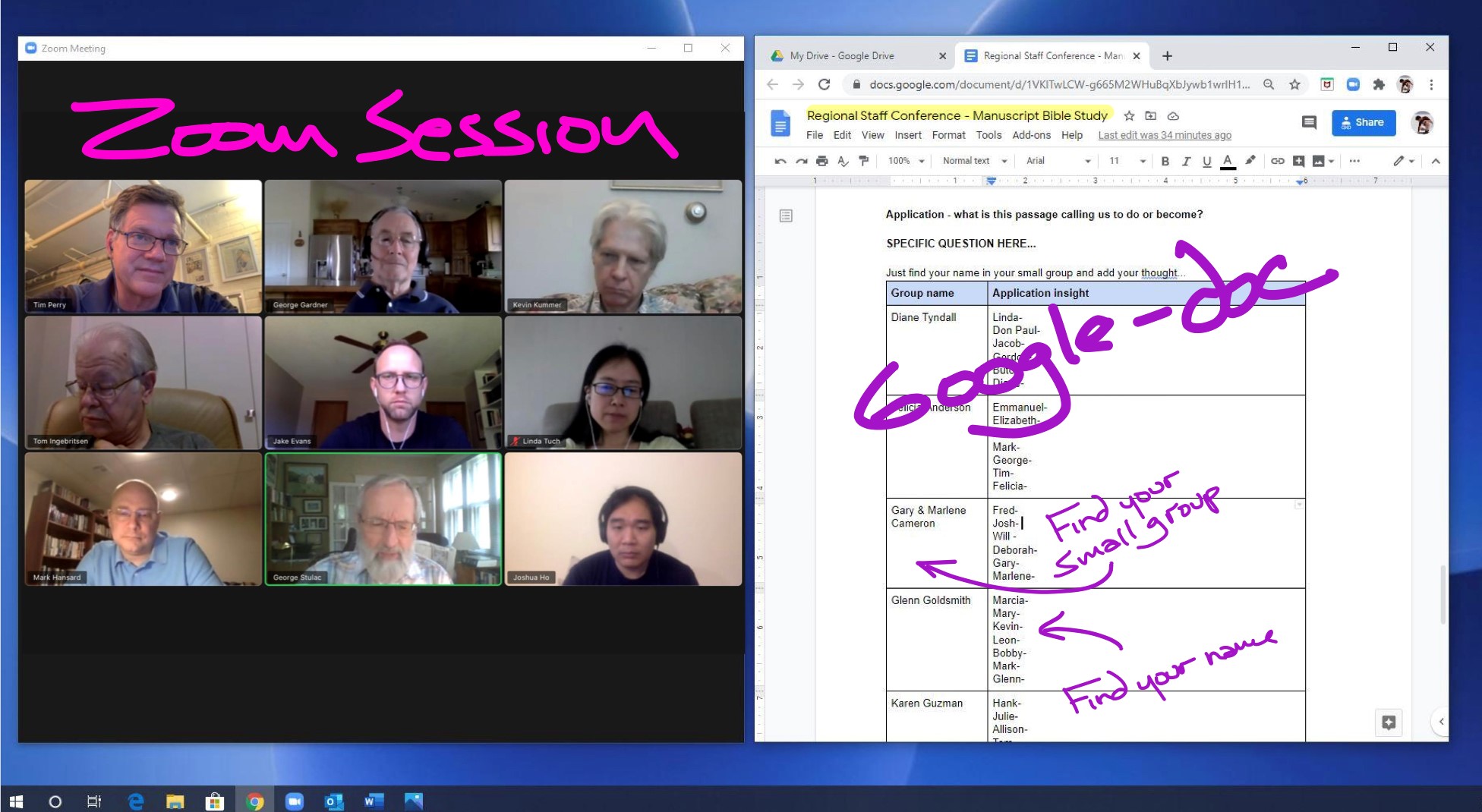
  • I rehearsed the chat room transitions and screen sharing we’d be doing. We went over the Google-doc everyone would be using.
  • Before the study we sent everyone an unmarked electronic copy of the manuscript and gave them access to the Google-doc.
  • When the study happened it was great fun to see everyone (somewhere) on the screen. The main facilitator/leader was able to camp out near the Google-doc and see all the interaction being logged in via the chat rooms.
  • We spent about half the time in small groups and had a great application session with everyone together blitzing the Google-doc. Check it out if you want to see the archive of the whole study!

Some features come with the Zoom model we weren’t able to leverage 8 years ago in Jesus Class. First of all, everyone has to show up in Zoom! Just streaming the feed from an event is pretty much the same thing as passive video-watching. With Zoom fellow participants can actually see you on the screen, you do have to show up!

Contribution is also more intentional in the Zoom environment. I do remember getting some comments from participants in Jesus Class. They would send their observations and questions in via the live chat. But a well laid out Google-doc draws people in much more. Boxes get filled in. As opposed to waiting for individuals to talk or finish their comment before someone else can contribute, the feedback table in a Google-doc is always being populated with input. Even marking up a manuscript in Zoom is possible in real time.

I’d be interested in your experiences with Zoom meetings, prayer gatherings and Bible studies. This is pretty much how most of our groups are now interacting. Let me know what you think.