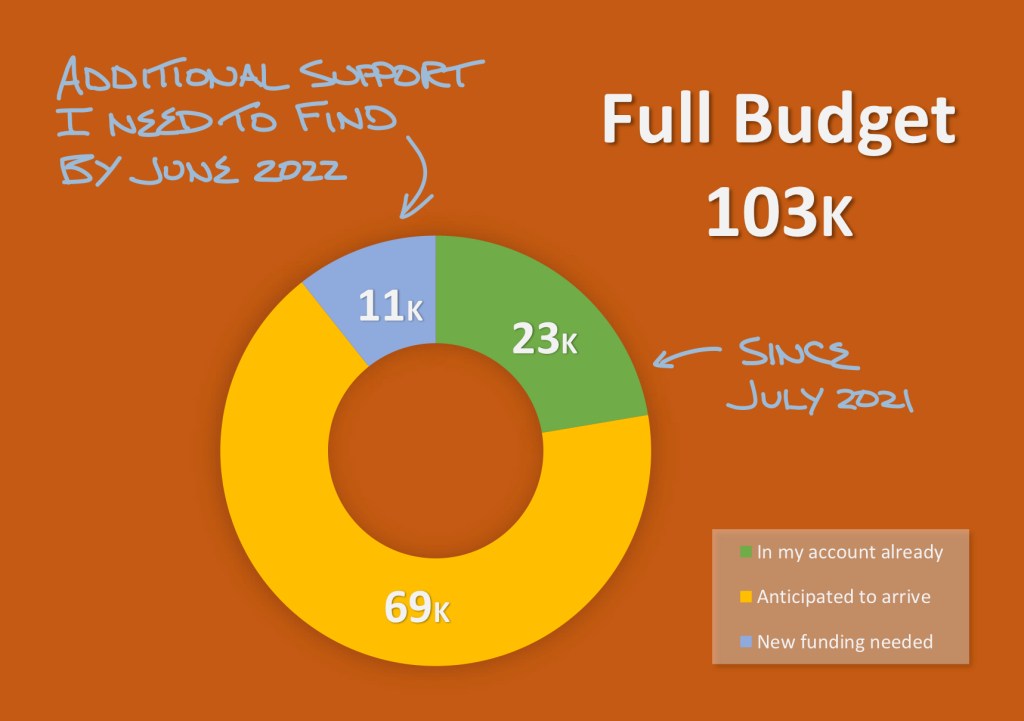
Each November we make sure you know how our funding is looking for the year. The first thing I’m always struck with when running the numbers for Fall support projections, is that there is an awesome community of people out there who supplies my entire budget every year! That’s a lot of dollars when you add up my salary, benefits, and ministry expenses. If you’re an active donor to my ministry, you’re part of a community of 91 people who give financially so I can do InterVarsity’s mission with faculty and graduate students. Thank you! I don’t deserve you, and I know it! I need all 91 of you (and then some) to make budget each year. I hope you know how blessed I am by you.
InterVarsity’s fiscal year runs from July 1st to June 30th each year.
If you are Green…
Each year my ministry account gets reset on July 1st. The clock starts over! You are in the green part of the donut most likely if you are a scheduled giver who contributes monthly. Greens are great because every month I get to see the results of your partnership with me. Thank you! Thank you for working me into your monthly giving budget. Most greens give not only to me, but several other causes as well. The consistency of your gifts helps me know I can keep doing this from year to year! Go Green!
If you are Gold…
Money savvy readers will realize that some Golds are just Greens as their gifts keep coming into the account. Fair enough. But you could also make the gold part of the donut by being an annual donor. Golds like to give in larger amounts – usually once a year. Many golds give around this time of the year because they plan their giving around the calendar year-end. If you’re gold, it’s helpful for you to get a reminder around now so you can transact your gift before calendar year end. Just hop on that link above and you’ll be taken to my donation page at InterVarsity. Thank you Gold!
Ok, about Blue…
Why does it seem like EVERY faith-ministry donut has a blue chunk? I long for the day when all I have is a Green-Gold donut to talk about in November. This isn’t that year. The blue chunk represents new support dollars I need to find before the end of my fiscal year come June 2022. Two things happened this past year in the blue zone. Covid wiped out about $8K from my support system. Some donors couldn’t or didn’t give due to their circumstances. Some of those donors have bounced back. Last year at this time, InterVarsity offered me a gift match to help recover those losses. The match filled in a deficit and helped me find 9 new donors! What looked like a very discouraging year, actually finished in the black in June.
This year I’ve got a blue chunk again but partly for a new reason. I think I have continued to lose some support since July 1st, but not at all like the previous months of the pandemic. I also have increased my budget to accommodate a much needed pay raise (my first since taking this job 4 years ago).
How can I help with your BLUE, Tim?
If you are a current donor and would like to increase your giving amount, that would be a terrific way to help me beat the blue! Consider a percentage bump of somewhere between 5 to 10 percent. If everyone in green/gold bumped their giving by even 5 percent, I’d almost be able to cover half of the gap.
If you haven’t been able to give to my budget, maybe you could start as a new donor in the coming calendar year. You can use that same link above to jump on my donation page and get started. I’ll also be working over the coming months to find new supporters. If you’re a Green/Gold and you know someone who might like to partner with InterVarsity by all means introduce me! I’d be happy to buy us all lunch and talk about it!
Thanks so much for your prayers and for your giving! I hope you’ve been able to enjoy a wonderful time with your family here at Thanksgiving. If we haven’t caught up in a while, drop me an email. Let me know how I can encourage you and pray for you!
Every discipline, every industry, every profession has its own version of BCP. Best Current Practice. Or simply, Best Practices. Theorists are the ones researching new technologies, studying stubborn problems, uncovering new ways to think about old challenges. Practitioners are the ones making it work in the field. Standard practice follows innovation and theoretical work. BCP is driven by pragmatics. Find what works. Find what works better than anything else. Then make everyone do it that way. Best practices are “successful, reliable and safe”. Until Jesus gets ahold of them, that is. Matthew 5, part 2 is what happens when Jesus’ definition of righteousness confronts Pharisaic BCP.
Matthew 5, Part 1 is Jesus reframing what it means to be the people of God living in the blessings of his kingdom. God favors a surprising sort of person. In part two, the surprises continue. What God expects of people in his kingdom is not just righteousness (right relationships, right actions and decisions). That was nothing new to Jesus’ audience. It was the DEGREE of righteousness that blew them away. Without a righteousness that exceeds the righteousness of the Pharisees, Jesus says, you won’t even get in the front door! If there was ever a people group excessive about righteousness, it was famously the scribes, Pharisees and teachers of the law. Jesus has reframed the conversation entirely away from industry best practice. And its troubling that Jesus did so, NOT by saying that the Pharisees had made righteousness too hard, but somehow too EASY! What does it mean to actually practice faith, obey God’s word and live out what God desires for his people? Jesus is reframing.
The chapters leading up to the Sermon on the Mount are a terrific set-up! Spoiler alerts everywhere! John the Baptist says “Repent, for the kingdom of heaven has come near… prepare the way for the Lord, make straight paths for him.” It would be quite a let down for Jesus to show up and simply baptize the status quo! The good news Jesus announced about this kingdom came with demonstrations of power – his teaching, his healing and his forgiving of sin. The baptism of Jesus is meant in his own words as a “fulfillment of all righteousness.” What will this new righteousness look like?
Here’s how we’ll approach Part 2. Let’s look at what Jesus says first about righteousness and the law. Then we’ll consider seven test-case scenarios (if you will) of where true righteousness and BCP clash. You know the routine by now. Print a fresh manuscript, mark it up, then come back for a few discussion questions.
1- Read Matt 5: 17-20. Why does Jesus have to begin with the disclaimer found in v 17?
2- The Law and the Prophets was actually shorthand for the entire Old Testament. What are Jesus’ interests in the law? What is he trying to prevent? What is he trying to do?
3- Jesus implicates those with leadership and teaching responsibilities in relation to the law. Who is he talking about?
4- What does Jesus mean by asserting that entering the kingdom of heaven is a matter of righteousness? What would make ones righteousness greater than that of a Pharisee?
5- Read Tim Keller’s word study on Righteousness at the link below. He states that “righteousness is a life of right relationships… right with God and therefore committed to putting right all other relationships in life.” How could this definition help us understand why Jesus found pharisaic righteousness so deficient?
Jesus takes us further into his mind about true righteousness. The righteousness his audience knew was an accepted best-practice version he relentlessly confronts. “You have heard (BCP)… but I say to you (true kingdom righteousness).” Here’s an exercise you can do over the course of a week.
Get seven 3×5 notecards and title each of the seven case-studies (one per card). In my manuscript I’ve labeled them, Reconciliation, Lust, Divorce, Oaths, etc. You might title them differently.
Identify the Best Current Practice thinking that Jesus is confronting. What must have been the accepted understanding in order for Jesus to confront each one the way he is?
How does Jesus REFRAME the prevailing best current practice? What is new?
Lastly, what kind of life are kingdom people to have as their goal? What kind of world are we hungering and thirsting for?
At the end of the week, consider re-reading Matt 5 and looking again at your case studies. On the back of each card journal about the following questions:
Does true righteousness in this area (anger, reconciliation, lust, oaths, etc) matter today? Why? What is one specific way Jesus invites me to a higher, better, and more complete righteousness?
Let’s wrap up the fall travelogue with this post. My third trip was to the schools in Iowa where we have GFM staff. Iowa State in Ames was a shorter stop. Lunch at Aunt Maude’s with Tom and a faculty member friend of his. Tom and Don are collaborating on a Veritas Forum event with Dr. John Lennox they hope to bring to Ames next spring. More on Tom, and his friend, and on Veritas Forum in a coming post.
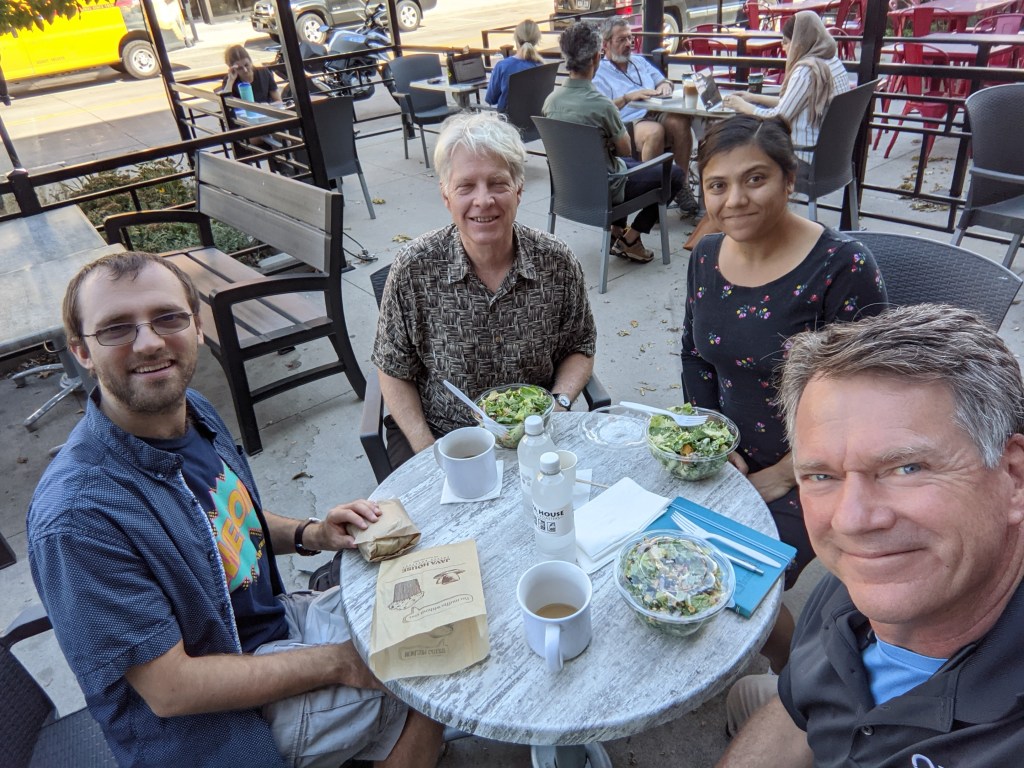
Kevin Kummer and two of his student leaders, Dylan and Soumya
My other campus is the University of Iowa in Iowa City. I got to enjoy significant time with my staff colleague Kevin and his students out in front of The Java House. I think I’ve mentioned Java House and Heirloom Salad Company, in a previous post. We had a delightful lunch with Dylan and Soumya. Each week Kevin leads the Impact Group (bible study) and each month these two student leaders lead First Friday (large group meeting). You can get a feel for some of the group snooping InterVarsity GCF at U Iowa on Facebook. They’ve been featuring different students each month in a thing they call What’s Your Story?
We were studying Daniel chapter 3 with Saera and Ufuoma. How do we respond to the constant pressure of our culture to make money and possessions an idol? What did Daniel and his three friends model that we can pattern our lives after? Kevin ended the study with a prayer from what looked like a very old IVP book!Saera and Ufuoma mining Daniel 3
“Lord, what big people are your saints! Or is it that we are most of us so small?
I wonder what are the links, the connections, between heroic faithfulness in crisis -paying the highest price and faithfulness in my domesticated latter-day discipleship? ‘As now, so then,’ Hudson Taylor used to say: What am I preparing now in strength of will, habits of obedience, willingness to suffer, if such a call came to me?
Such calls do come. They are there daily in the newspapers, sometimes not far from home. Courage, Lord, seems for them an aspect of faith. To those who trust you you give what is needed: with the danger will come the courage.
After all, Lord, you know all about it. You are no stranger to ‘the highest price’. May your suffering evoke my loving; may my loving inspire true faithfulness; not only for unknown tomorrows but for today. Amen.”
Have you ever wondered, “What am I reading when I read the Sermon on the Mount?” The Beatitudes for example- what are they? What is Jesus doing by giving this list of character attributes and the rewards that go with each? This is NOT what people in Jesus’ day would have thought the blessing and favor of God should look like. Jesus is re-framing. Consider another mountain-top prophet, of Old Testament days, at the end of his ministry expounding on what it meant to follow Yahweh and receive his blessings.
Here is Moses on Mount Nebo right before he is laid to rest by Yahweh and replaced by Joshua. The nation of Israel is gathered on the eve of entering the Promised Land. Moses is coaching the elders and families, reminding them of the most important things about a life of faithfulness under Yahweh’s provision and rule.
“If you fully obey the LORD your God and carefully follow all his commands I give you today, the LORD your God will set you high above all the nations on earth. All these blessings will come on you and accompany you if you obey the LORD your God: You will be blessed in the city and blessed in the country. The fruit of your womb will be blessed, and the crops of your land and the young of your livestock– the calves of your herds and the lambs of your flocks. Your basket and your kneading trough will be blessed. You will be blessed when you come in and blessed when you go out. The LORD will grant that the enemies who rise up against you will be defeated before you. They will come at you from one direction but flee from you in seven. The LORD will send a blessing on your barns and on everything you put your hand to. The LORD your God will bless you in the land he is giving you. The LORD will establish you as his holy people, as he promised you on oath, if you keep the commands of the LORD your God and walk in obedience to him. Then all the peoples on earth will see that you are called by the name of the LORD…”
(Deuteronomy 28:1-10 NIV)
“See, I set before you today life and prosperity, death and destruction. For I command you today to love the LORD your God, to walk in obedience to him, and to keep his commands, decrees and laws; then you will live and increase, and the LORD your God will bless you in the land you are entering to possess. But if your heart turns away and you are not obedient, and if you are drawn away to bow down to other gods and worship them, I declare to you this day that you will certainly be destroyed. You will not live long in the land you are crossing the Jordan to enter and possess. This day I call the heavens and the earth as witnesses against you that I have set before you life and death, blessings and curses. Now choose life, so that you and your children may live and that you may love the LORD your God, listen to his voice, and hold fast to him.”
(Deuteronomy 30:15-20 NIV)
Did you see it? In Moses’ mind, what was absolutely critical for living in the shadow of Yahweh’s blessing? How do you STAY the unique people of God in context? In a word, OBEDIENCE. You stay close to God and his favor by hearing and obeying his word (the covenant/law). Again, Moses coaches, “This commandment is not too hard for you, neither is it far off. … the word is very near you. It is in your mouth and in your heart, so that you can do it.” You will be makarios (blessed and happy) IF you remember and do God’s word. That’s what it means to love God. That is the path to the good life. So when Jesus fires up his sermon on his mount, he RE-frames what it means to be the people of God living under the blessings of his rule. Where Moses talked about the Promised Land, Jesus talked about the Kingdom of Heaven. Moses gave them the law and told them to obey it, Jesus redefines the path of obedience. And he goes one further. He opens the Kingdom of Heaven to more than just the covenant people of old testament law.
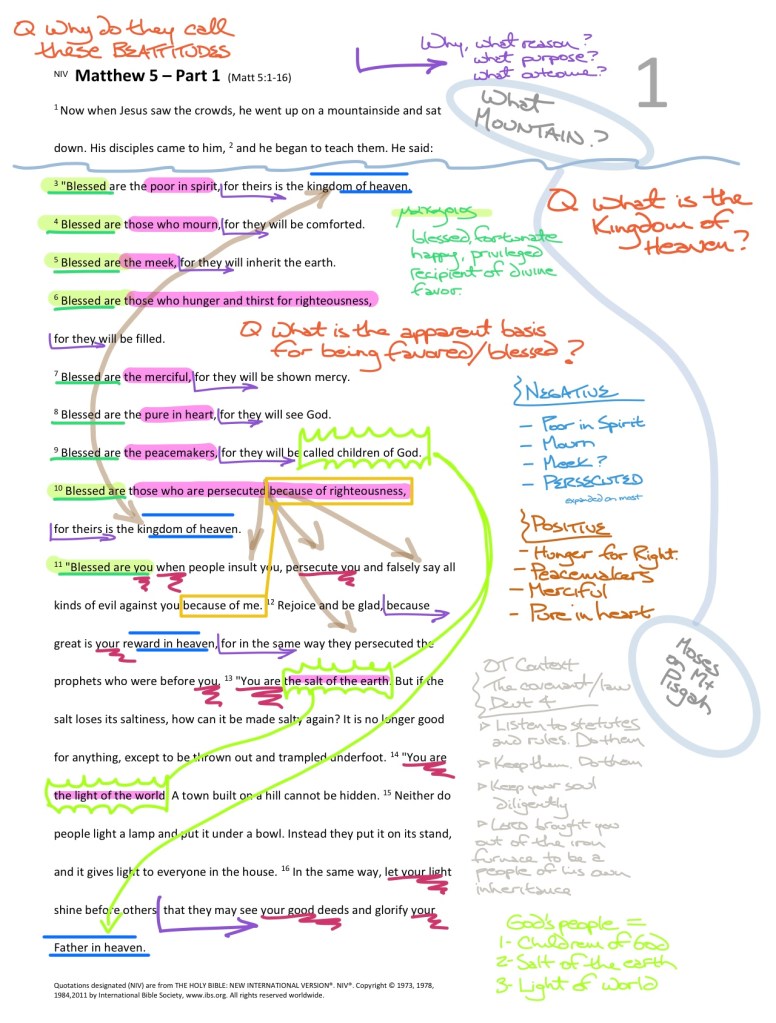
Let’s look at Matthew 5 in two chunks. The first part reframes what it means to be the people of God (Beatitudes, Salt and Light vv 1-16). The second part reframes what true righteousness looks like (a separate study of Matt 5:17 – Matt 6:4). Here’s a manuscript and some inductive questions for part 1.
1. The words “blessed are” appear nine times. Makarios is the Greek word being translated blessed. Blessed. Fortunate. Happy. Privileged recipient of divine favor. What do you notice about the people Jesus says are makarios? Who are they?
2. Why are the makarios favored? Is it because of the attributes they are identified with (blessed are the pure in heart, for example, because they keep themselves that way).? Or is it in spite of these same attributes (even though they are poor in spirit, they are favored anyway because God wants them to be blessed)? Because of? In spite of? Explain.
3. Some attributes of the makarios seem positive – aspirational (the merciful, pure in heart, etc). Some definitely do not (mourning, persecution). What seems to be the basis of being blessed regardless?
4. Take each beatitude one at a time. What is the connection between the person being blessed/favored, and the specific benefit of that blessing. Why are the poor in spirit given the kingdom of heaven? How is it the pure in heart see God? Etc.
5. It is perfectly natural to assume that when Jesus says, “Blessed are, the poor in spirit… those who mourn… the meek” etc, that he is referring directly to the people he’s speaking to (his disciples plus loads and loads of people drawn to his teaching, healing and forgiving power). When we read the beatitudes today, should we assume the same thing? Are we to see ourselves in this list as a community of Christ’s followers? Are we to seek these attributes in the same way we cultivate the fruits of the Spirit (all of which reflect the character we should long for)? Why or why not?
6. If you have the time, skim Matthew chapters 3 and 4. In the Sermon on the Mount Jesus is going to mention the Kingdom of Heaven. A lot! How would Matthew’s readers understand what the kingdom of heaven is about?
7. Jesus elaborates most about persecution. What is unique about this particular attribute of the makarios?
8. Jesus identified his audience with the very characteristics their lives presented to him. He saw the poor in spirit, the meek, the merciful, pure in heart, the persecuted, etc. When we look at this list, how does it shape our understanding of life in God’s kingdom today? How might we need to reframe what it means to be blessed by God?
9. Theologian D. Martin Lloyd Jones has said of the beatitudes, “All Christians are meant to manifest all of these characteristics.” Do you agree or disagree? Explain.
10. Read vv 13-16. Two more attributes of kingdom people are described. What does each add to what it means to live under God’s favor and rule?
11. In the kingdom of heaven, God blesses his people. His people are in turn to bless and benefit the world through their impact. What threats today keep God’s people from being effective salt and light? What challenges in your context make this difficult?
12. “Moses told us our enemies would be defeated before us. You’re telling us we’re going to be persecuted for following you.”Jesus has reframed what it means to be welcomed into the kingdom of heaven. If you are an Israelite wondering if he is the Messiah, how might your expectations be disappointed?
13. How does this view of the beatitudes reframe for you what being a Christian means? What is one way you feel you need to cultivate your faith differently? What is one thing about the community you belong to you wish were more salty and visible to the world?
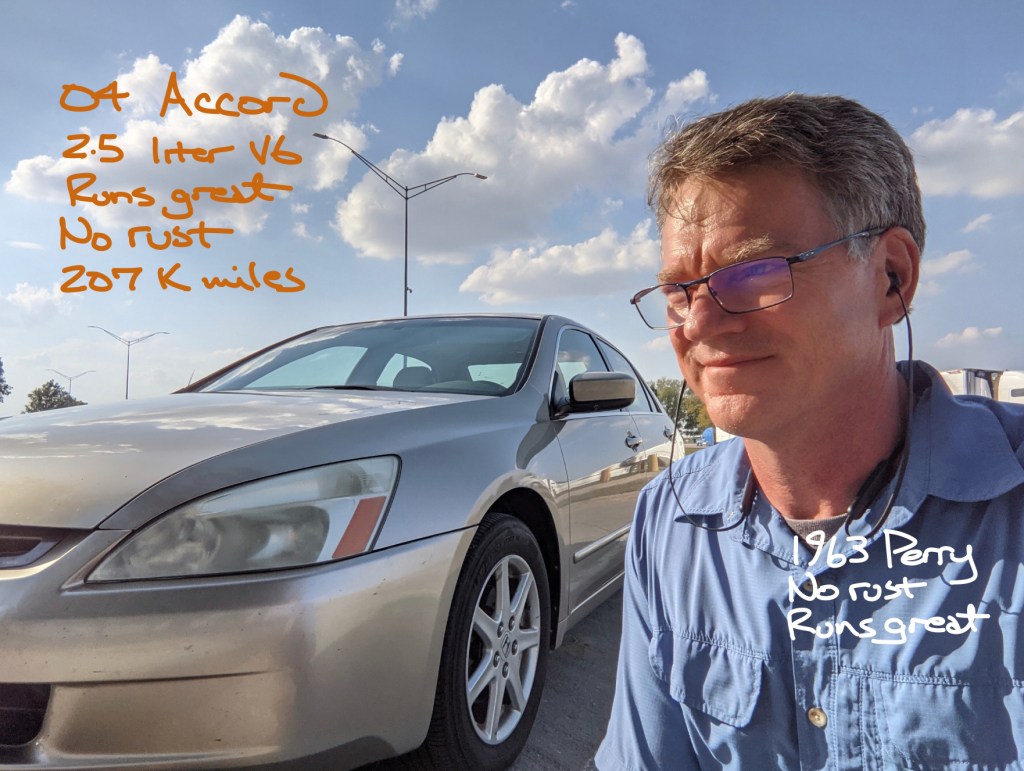
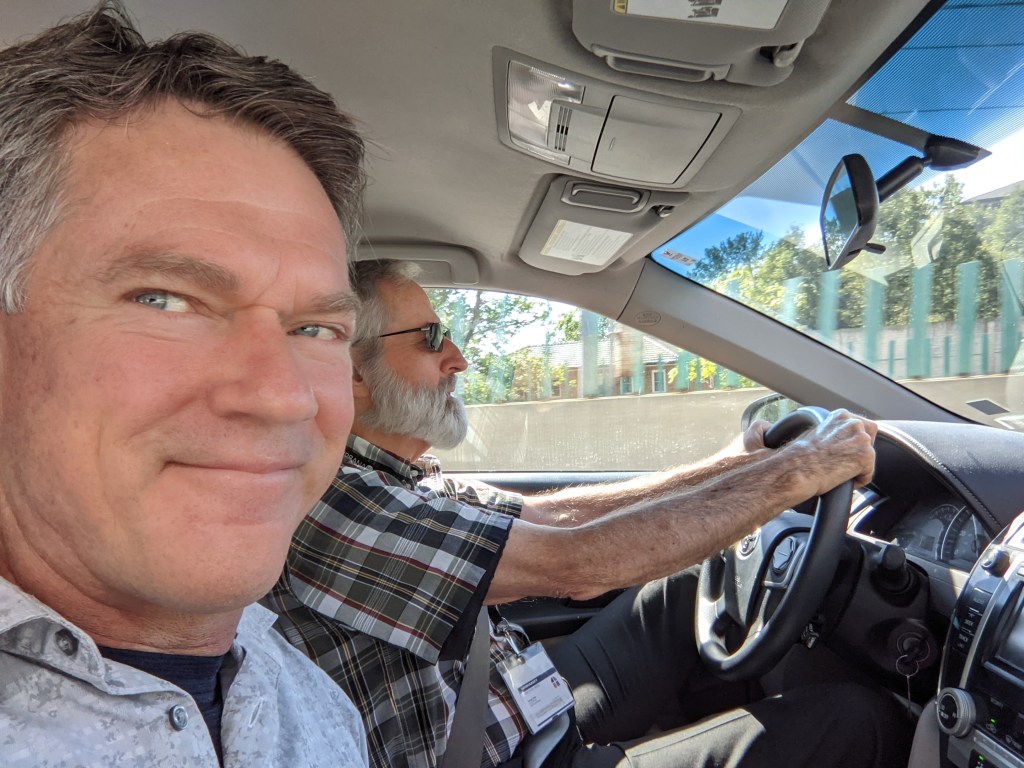
A couple more snapshots from recent supervisory road-trips. From September 23rd through October 1st my circuit ride included Omaha to Lawrence to Manhattan to Beatrice and back to Omaha. Home for one night. Omaha, St. Louis for two nights, home for two nights. Ames and Iowa City overnight, home in time to ring-in PSL season. Felt like the old days to get in my own car, drive off into the sunset and put the miles on an expense report. IV would rather us not rack up all those miles on our own vehicles, but there has been quite a shortage of rental cars of late. My 17 year old Accord and I enjoyed our time together. 207K and still purring like a kitten! We’re a match made in heaven, well…
George has more miles on him than I do, but he still runs GREAT… hardly any rust!
This seldom happens anymore. Two staff workers, get in a car and drive to campus! [I know, sounds like a line a stand-up comedian would say] George Stulac is our GFM staff member in St. Louis who leads several faculty bible studies in the St. Louis area. Three groups connected with Washington University, a group at Forest Park Community College and a group at Lindenwood. We were on our way to Lindenwood in St. Charles, MO.
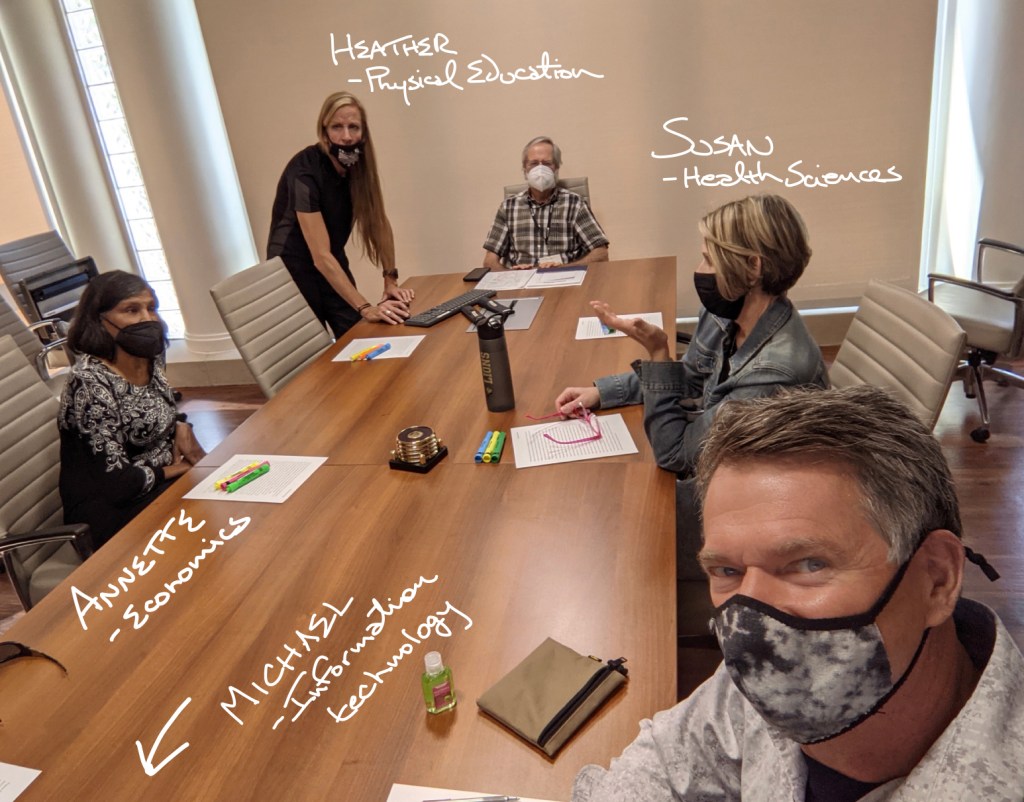
George has been studying 1/2 Samuel in his faculty groups. He uses manuscripts. Comes to campus with photo-copies and colored markers. Faculty love George. One woman just blurted it out right after meeting me. “Your George’s supervisor? I hope you’re not here to take him away! He’s the best. We love this man and how he leads our group.” The Lindenwood group just decided this past fall to increase the length of time their group meets. “We want 90 minutes to be together each week. One hour isn’t enough!”
The next few years of ministry for George are critical. His work with Wash-U faculty is unique. The Carver Project is a new faculty ministry at Wash-U that George helped found. He continues in a Spiritual Formation role as the leader of their Faculty bible studies. He also leads the Carver Fellows in their annual retreat. As an alumnus of Wash-U and a former pastor for a number of years, George is not only the perfect GFM staff member, but George is also pretty hard to replace! He would love to have some overlap between his years at Wash-U and other staff who could eventually replace him!
Pray for George’s groups and for his leadership. Pray for God to raise up more staff for faculty ministry in the St. Louis area. Pray for the kingdom of God to come to many academic departments at Wash-U, St. Louis U, Lindenwood and Forest Park.
I say this partly so I can relive the fun of doing Silas and Haleigh’s wedding back in July. But there are two other weddings I ought to mention so I don’t flood this post with pictures of my kids (and OH, I am so tempted).
Josh Ho and Bethany Panian
Here’s a wedding coming in the not too far off future for one of our staff at Washington University. Joshua Ho is a scientist who works for Bayer in St. Louis. As a student he was formerly a leader in GCF (Graduate Christian Fellowship) at Wash-U. He graduated a couple of years ago and got a local job specifically so he could help staff GFM. Josh plans to pass the patent bar exam and work in science patents longer term. But along the way he met Bethany, got engaged back in July, and will be getting married later this year.
I’m grateful to have Josh on our team. As a volunteer, his path to being on our team was very efficient! He and Linda Tuch are both volunteer staff who together work with graduate students at Wash-U. Linda and Josh make a terrific staff team because they both are insiders to the university – Josh, a former student and Linda, the spouse of a faculty member in the law school. They currently keep three things going in the student fellowship. They help students connect with each other for prayer. They facilitate bible study. And they help students plan and execute events (on-campus and off campus).
How are my newly-weds doing?
I think the coolest thing your kid can ever ask you to do is officiate his/her wedding. It dawned on me, in this my last-kid wedding, that one of the best things about being pastor-dad is the view I get. I get the best view in the whole place. Among so many fun moments in Haleigh and Silas’ wedding was this one.
I got to watch these two read their vows to each other. Way better than all my pastoral, dadly verbiage were their words of promise to each other. I think when you’re the one standing 18 inches away you can see it on their faces. They meant every syllable. And they were really good words they gave each other. I long for more marriages to get made just like this. I hope I get to keep doing this with other couples!
Haleigh and Silas came back from their honeymoon and started classes a week later! They live on campus in a third floor efficiency 2.2 miles from our home. They are settling into married life, studying, jobs, campus fellowship and church. Its so fun to get to see them, hear how things are going and process life with them. Silas is trying to figure out how God can use his degree to build up the church and do the mission of Jesus. He’s got so many gifts. And he’s now got a terrific partner to follow God with. Pray for them as they keep settling in at UNO. Pray for God to lead them to the people he wants them reach out to. Pray for Christian community for them. Pray for them to follow God’s leading and stretch their faith.
One last wedding I should mention.
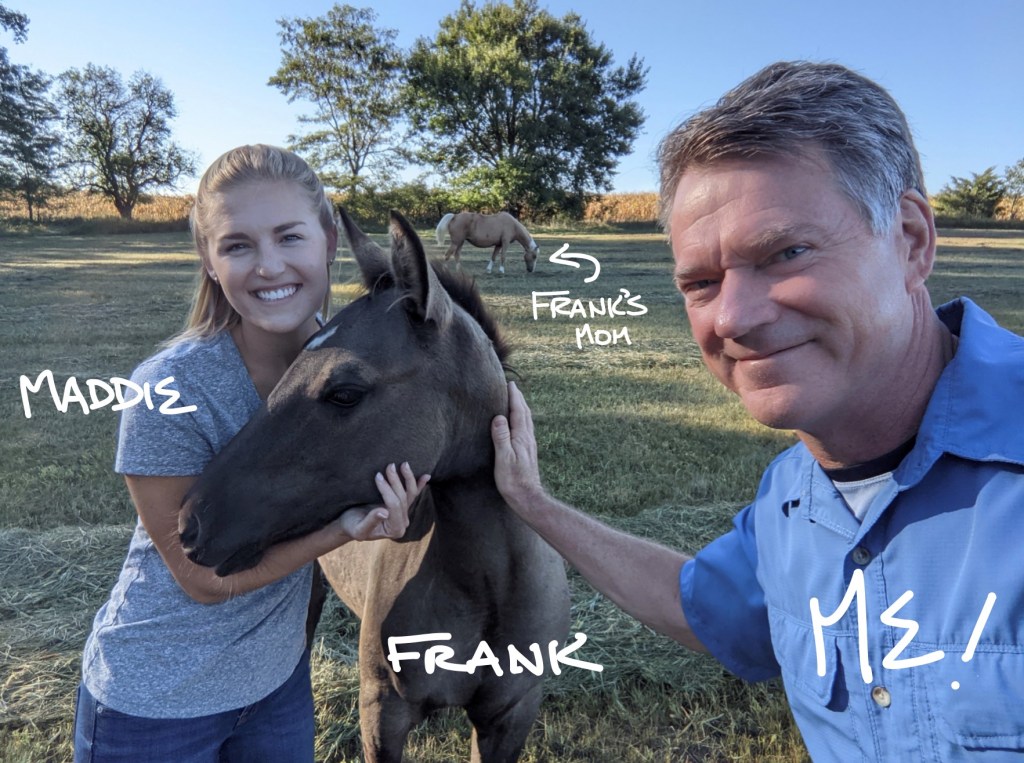
On my way back from Kansas campus visits two weeks ago I stopped through Beatrice, NE. Maddie is one of my Occupational Therapy students at Creighton. Last year near the end of the semester I was on the phone with Maddie when she asked me, “Do you do weddings?”
Beatrice was on my way from Manhattan KS to Omaha. It was so fun to see her family’s acreage and their horses. I got to meet her new colt, Frank (and his mom). I’ll be doing Maddie’s wedding as well as her premarital counseling with Cade. It was a really nice surprise to be asked to do a wedding. I was pretty sure I was done with weddings when I married off my last child. I don’t think that’s true. Not at all. So glad you thought of me, Maddie!
More on my St. Louis and Iowa campus visits in coming posts. Also, more RE- studies will be getting developed. The next four will be in the New Testament. Can’t wait to get them all out there!
Looks like the pandemic has given me permission to make campus visits again. Last week – three days in Kansas to see Jake, George and Mark. This week, St. Louis, with Josh, Linda and my other George. Later this week – Iowa, Chad, Tom and Kevin. Why do we do this? Can’t you just supervise people via zoom and call it good?
Showing up matters. In the next few posts I’ll give you a glimpse into my staff members’ worlds, the opportunity for ministry they embody in their work and how they are impacting their campuses. In this post, I give you George Gardner.
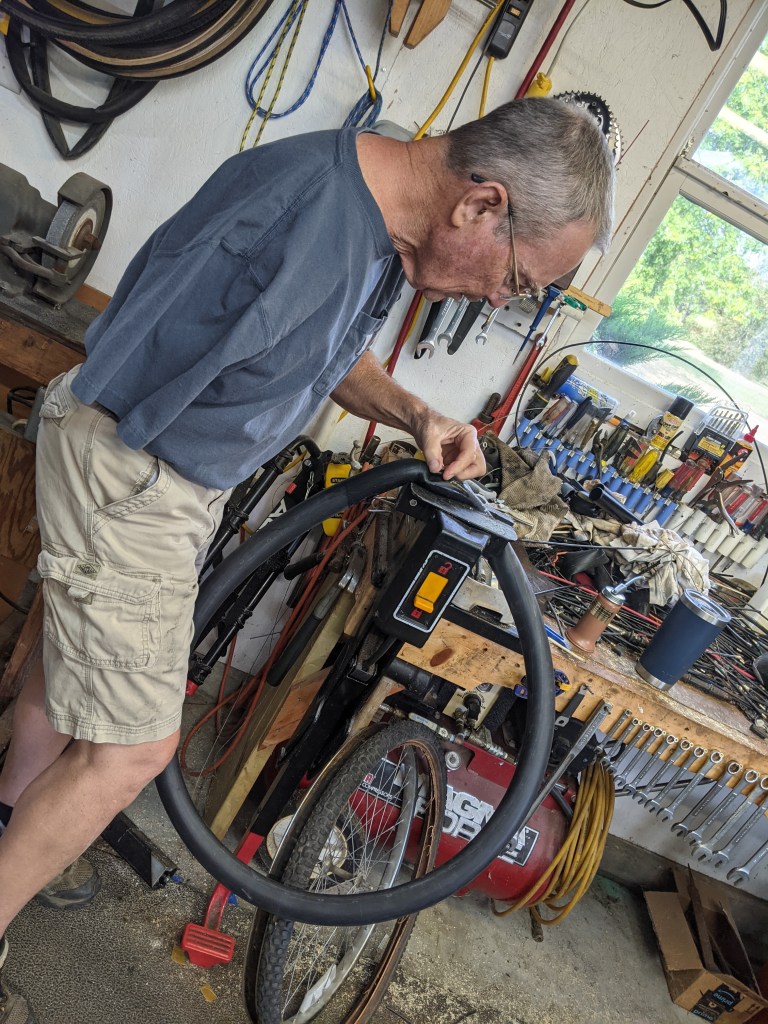
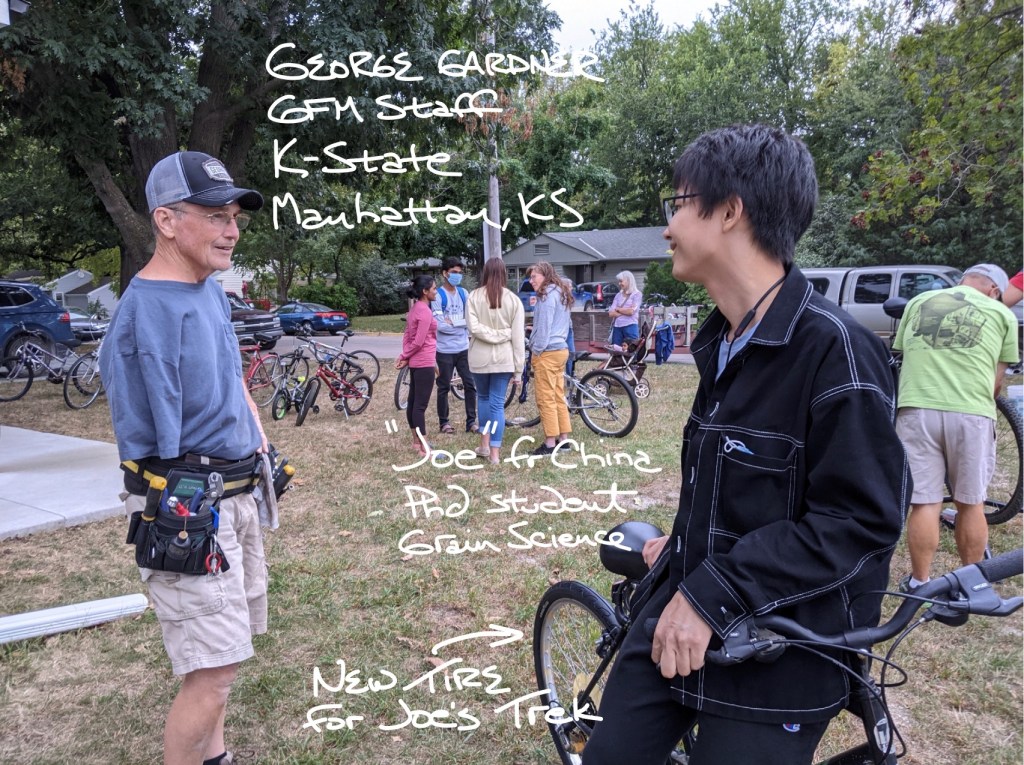
George and Sharon live in Manhattan, KS and do GFM ministry through the avenue of International Students. George was an engineer in a former life before God called him to ministry. His style of doing ministry is to connect with students through bicycles, then bring them into community rich in friendship and bible study.
My visit to Manhattan was my first opportunity to join George and Sharon at Bike Nite – their weekly bicycle repair outreach at a ministry on K-State’s campus. I love what I experienced! You would too!
Students need transportation. Students need friendship. George and his team create the perfect storm of welcome, serving and networking. George has a team of volunteers from his church who show up shortly after George’s truck and trailer arrive. They assemble into work-stations on the lawn. Then, as if called supernaturally by the Holy Spirit bike-piper, internationals come from every direction with or without bikes.
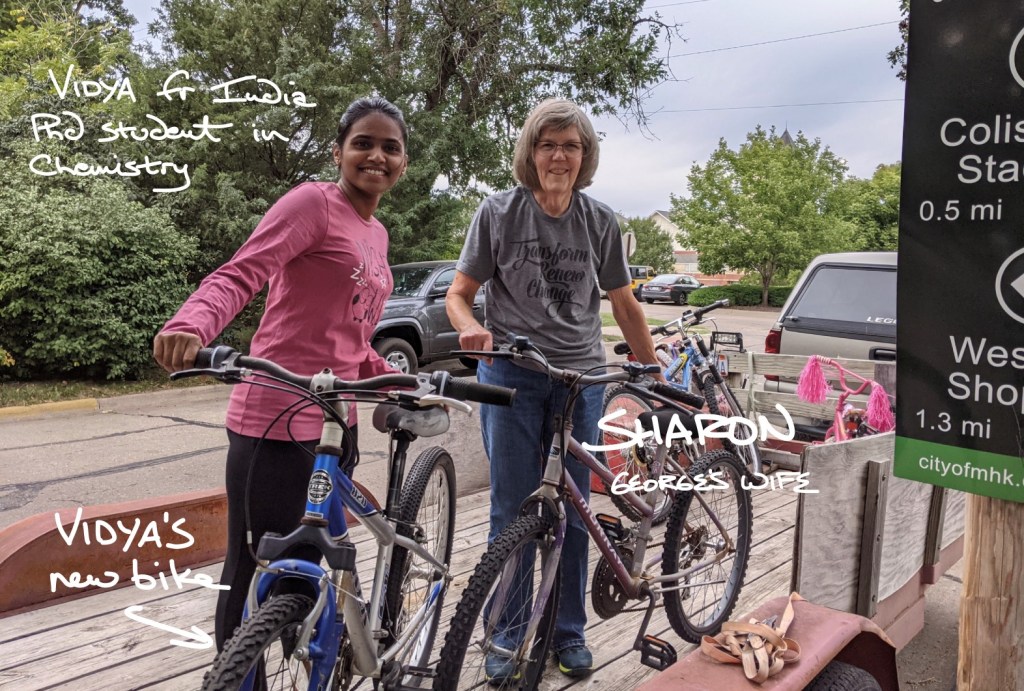
Think about what it would take to reach out to Vidya if we were to engage her in her home country. Yet, Vidya and her family have done all the work to get her to this country, into a PhD program here in one of our communities. Vidya showed up last week requesting a bike – she didn’t have one. George and Sharon took down her name and request, introduced her to others and told her to come back this week and they’d have something for her.
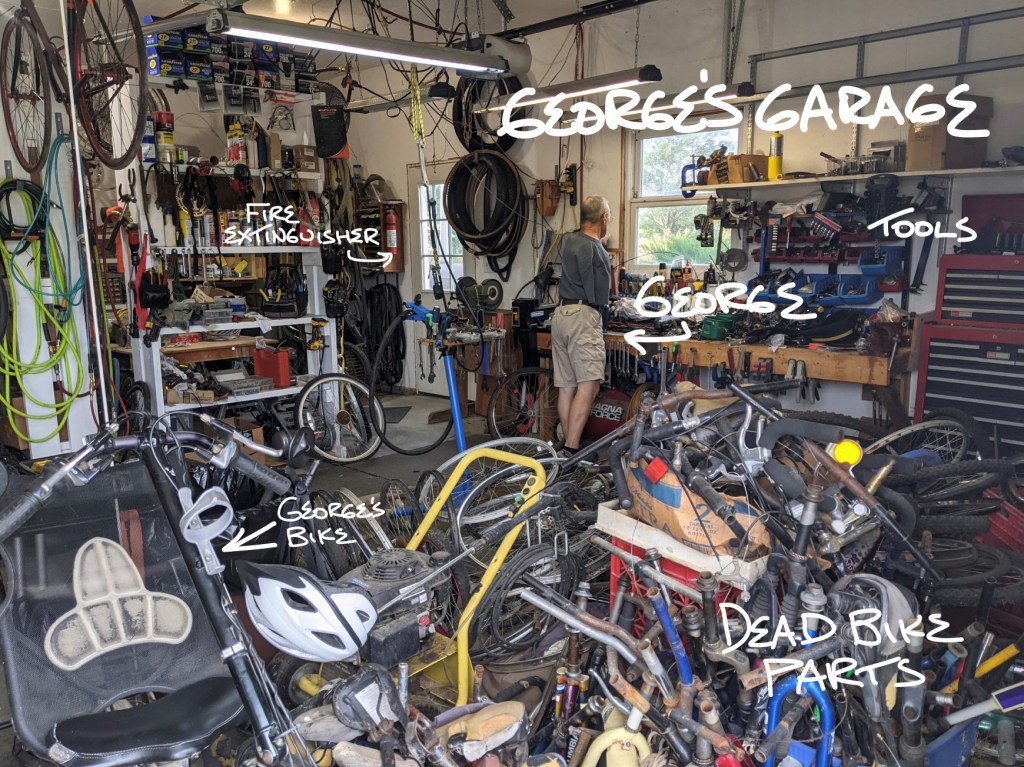
Meanwhile George retreats to his magical bike repair garage at home. Using parts from hundreds (literally) of bike carcasses assembles at least three options for Vidya to choose from when we arrived. Vidya was the first student to show up at 5:58pm last Friday. It was a beautiful thing to see her pick out her new best friend (a used Trek mountain bike).
Vidya also met Dileep (another student from India) as well as Ashlyn – an American student volunteer in another ministry George is partnered with. Sharon invited Vidya to the brunch and bible study that meets in their home on Saturdays.
Presence. In a word, presence is why supervisor’s show up when and where staff do ministry. We get to see connection happening. Connection between our staff and their people. Connection between those who are present and the community they are forging. Connection between Christians and non-Christians. I don’t get to see all that in a zoom session. On site I get to see so much more I can affirm our staff for. I get to see staff using their gifts and personalities first hand.
Pray for Vidya. Pray for her to stay safe on that bike as she travels from her dorm to her Chemistry lab every day. Pray for her friendships with Christians on campus. Pray for those friends to share their faith with her. Pray for Vidya to attend George’s Brunch and Bible (Sharon is as good with food as George is with bikes). Pray for her to see Jesus and keep coming back for more.
More on my travels in coming posts. Thanks for your prayers for me!
In your opinion, what word(s) have I left out above? I’m sure I missed something you would have included.
When God renews his people, sometimes he just has to get them moving again. People get stuck for all kinds of reasons, but being trapped in one place, going nowhere isn’t what God wants. And its a good thing because we absolutely hate it ourselves. We all abhor the claustrophobia of something pinning us in place.
When was the last time you realized you were going nowhere? Physically, we can get shut down with sickness or injury. More often it seems we lock-up emotionally. We manage to look busy on the outside, but on the inside we’re impaled, writhing in bitterness, confusion or pain.
Try this.
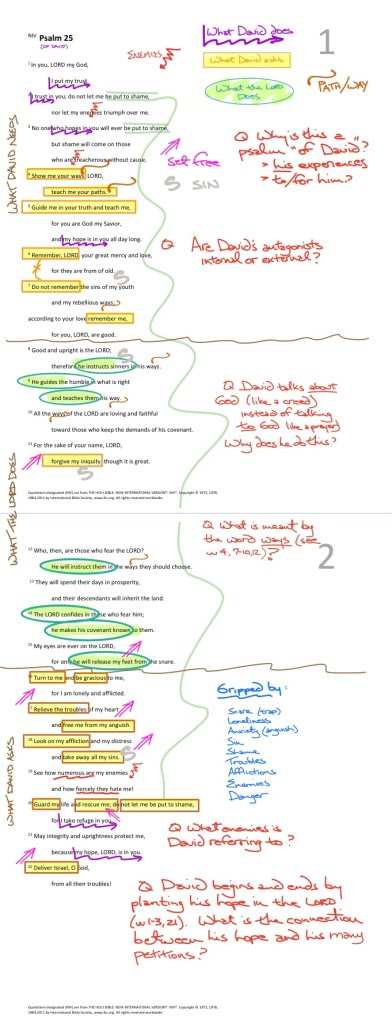
In Psalm 25, David struggles with immobility of his own making as well as being pinned down by enemies from the outside. What follows is a list of things internal and external that can power us down. Rank them in the order of personal familiarity. Give a #1 to the top antagonist then descend to the one that threatens you the least. The order I’ve put them in is totally random.
The pandemic and its many ripple effects
A bad relationship with a lot of painful experiences that go with it
Job loss
A personal enemy who is seeking to harm, get revenge or block me
A sickness or medical condition
Not being the right age – too old or too young
A job or career that I cannot flourish in but can’t get by without
My own poor choices and the fall-out from them
An accident that I fear has permanently damaged me
An addiction or other self-sabotaging tendency
Of course this isn’t a complete list. Your number one might not even be there. But no one I know ever lives life perpetually upward and onward without at some point getting squashed in place like a bug under someone’s shoe. It may or may not be where you’re at right now, but Psalm 25 has good news for us. By now you know the drill…
David knew what it was like to get stuck. He mentions at least two kinds of antagonists. Enemies. And sin. But the common denominator is the need for freedom. Notice how the poem is comprised of three stanzas. It begins with hints of David’s predicament, then transitions to a creed-like sketch of God and his resources, and finally a deluge of petition for the last seven verses.
Some questions to help you explore and learn.
Stanza 1 – What David needs (vv 1-7).
1- David right away mentions enemies, shame and defeat. If you know a little about his life, what might he be thinking about?
2- Sin and shame always walk hand in hand. God is Holy, so why is David seeking him so earnestly if he’s convinced of the sin and rebellion of his own ways?
3- What is shame like in your experience? What does it feel like, and what does it make you want to do?
When you are experiencing shame, does the thought of being with God attract you or repel you? Explain.
4- The word PATH or WAY appears multiple times in this psalm. How is David using that idea in Psalm 25 – what does he mean by the term?
Stanza 2 – What the LORD does. (vv 8-15).
5- List everything David says God DOES with people. There are at least seven things. What is David showing us about God?
6 – Notice the repeated emphasis on the LORD teaching and instructing sinners. How can the failure and shame of sin be the starting point of learning and growth in a life of following God?
7 – Verse 14 seems out of place. What is odd about God confiding in sinners (especially in light of David confessing his sin to God)? Have you ever experienced a connection with God like this? How did it impact you?
8 – What does verse 15 say about finding freedom instead of being trapped? What alternative means do we sometimes seek to achieve our own preferred outcomes?
Stanza 3 – What David asks of the LORD (vv 16-22).
9- David lets loose in this section. This is a classic example of petition. David asks for ten things in this stanza. List them. What do you notice?
10- Lets make one more list. Notice the many antagonists implied or stated in David’s petitions. Loneliness, anguish, enemies, etc. List as many as you can.
On your list, put an EX by everything that is an EXTERAL threat to David. Put an IN by everything that is eroding David from the INSIDE out. What common denominators do you notice? Which one or which ones have you in their grip today? Why?
11- Prisoners often talk about what they would do if they could just “get out of this place.” If God were to give you release from any number of your afflictions what could you do with that new-found freedom? Where would you go that you currently can’t get to? How would it feel?
Bookends.
I often mention bookends in teaching the bible. A bookend study is when you look at the opening chapter of a book. Then you skip to the end and look at the closing chapter. Then you ask, “How do the bookends create an appropriate container for the whole story?”
The “bookends” show us the most important thing Psalm 25 teaches about freedom and release. If you read the first couple of verses and the last couple of verses, David begins and ends with a statement about hope. David’s hope is placed squarely on the LORD and no where else. I put my trust in you. (v1) May integrity and uprightness protect me, because my hope, LORD, is in you. (v21).
No matter how much of a mess life became for David, he had the wisdom to burn the bridges to false hopes. David knew he would get nowhere without the LORD taking notice of him and releasing him from every snare. He doesn’t trust his own tricks for getting out of trouble. He doesn’t fight the trap (the more you fight, the deeper the hook is set). He doesn’t seek revenge on his enemies. He petitions the LORD. He hasn’t always known these things – they’ve been hard-fought lessons his whole life long. Psalm 25 is a masterpiece of disciple-making wisdom.
Much of God’s renewal in us is simply this: God getting us to stop fixing our own predicament and come to him. We’ve grossly underestimated the power of sin. We’ve lied to ourselves about just how stuck we are. Psalm 25 helps us stop pretending and start asking God for the freedom only he can give. Consider reading and praying through Psalm 25 once a day for an entire month. Let scripture lead you out of your pride and your pain and into the arms of the LORD who confides in you, longs to be gracious to you, who will guard and protect you, and will forgive and release you!
The alarm needs to fit the danger it forewarns. I was driving a newer car the other day. A rental. I didn’t realize it had a safety feature that beeps, flashes a light, vibrates and partially takes over the steering if you are drifting out of your lane! I was clueless the first time it engaged (just about lost my coffee). The warning fit the threat. If my driving at that moment continued unchecked, I could have been rammed by a vehicle rapidly closing in on me from behind.
Imagine if the designers of Timzrental would have programmed their safety feature to softly suggest “you might want to check your mirrors” (in a soothing British accent). Or worse yet, sent me a text message later in the day recommending I “mind my mirrors better next time”. It would spare my ego in the moment, but fail brilliantly to keep me out of danger.
In RE-moment number three, Yahweh steps in with what he considered an appropriate alarm. A rude siren through an obedient prophet named Hosea. The warning fit the threat. Before we open Hosea a quick word about the threat. And a quick word about the warning.
The worst sin.
I know you’re not supposed to say what sins are worse than others. Maybe that would imply some people are worse sinners than others. But let’s not make this about the sinner. Let’s talk about the sin. If sin were cancer what could we observe about it? First we’d have to admit not all cancers are equally fatal. What’s the worst cancer you can think of? Wouldn’t it be the one that does the most damage in the most stealthy manner? Before you knew you were sick, you’re chances of beating the dammed stuff would be just about zero?
The best clue about the worst sin rests with God’s greatest pleasure. Take whatever it is that is God’s greatest favor and spoil it for him. Block God from getting what he most wants. That’s the worst thing. Here it is:
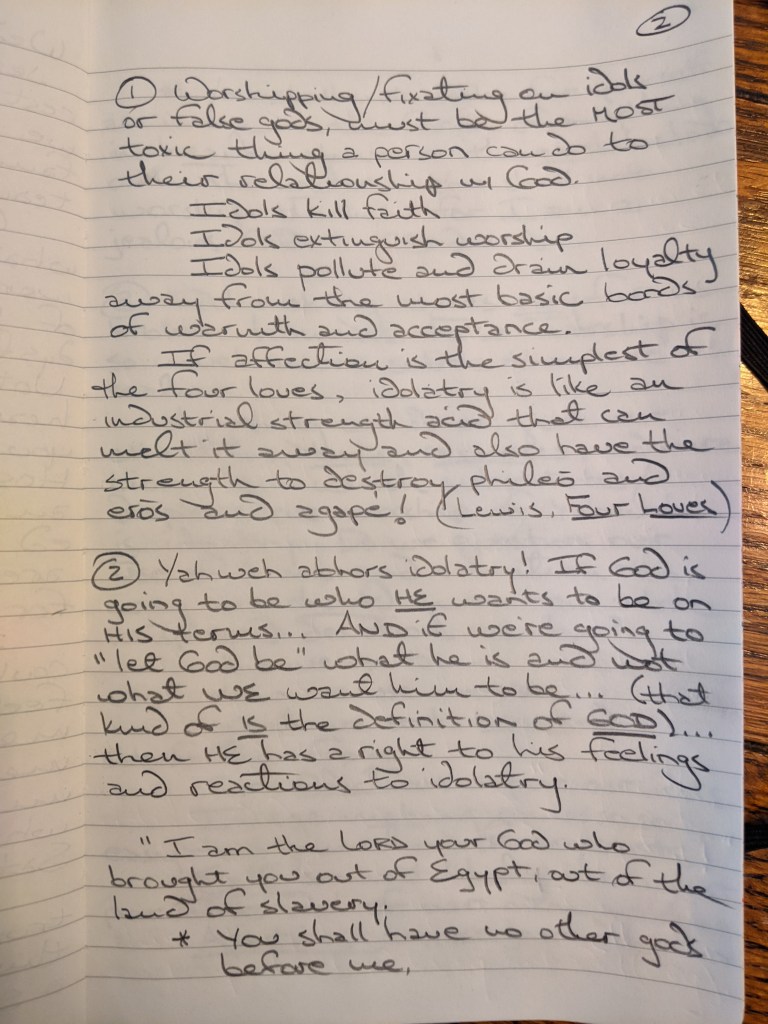
“Hear O Israel the LORD our God, the LORD is one. Love the LORD your God with all your heart, with all your soul, and with all your strength.” Deut 6:4
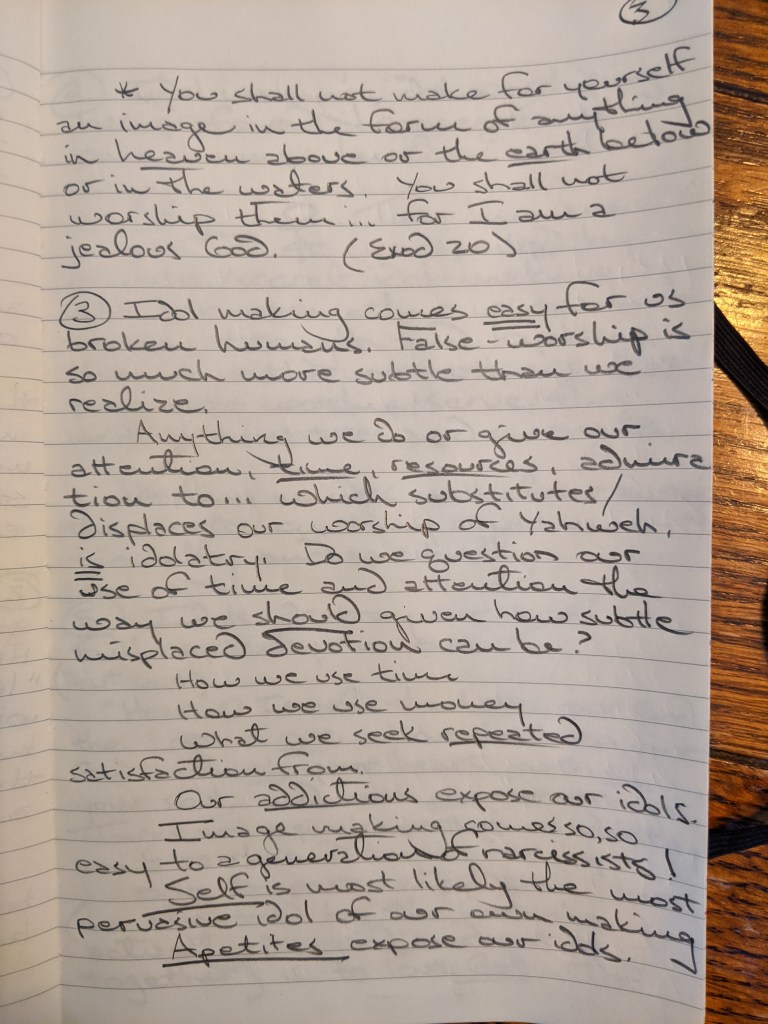
“I am the LORD your God who brought you out of Egypt, out of the land of slavery. You shall have no other gods before me. You shall not make for yourself an image in the form of anything in heaven above or the earth beneath, or in the waters below. You shall not bow down to them or worship them; for I the LORD your God, am a jealous God…” Deut 20:2-5
This is the core. Destroy this and you destroy Yahweh worshippers! In the Old Testament. In the New Testament. In the Church. You and me. The fastest way to damage your relationship with God is reject his love in favor of your own objects of devotion. Rejecting and replacing God thru idolatry – the most dangerous threat!
The loudest alarm.
The medium for a warning with such dire consequence can’t be something easy to ignore. If it were a sound it would be sharp, ear-piercing, obnoxious. Something visual? It would have to stab your retinae. If it were verbal let’s just say it wouldn’t be nice to hear.
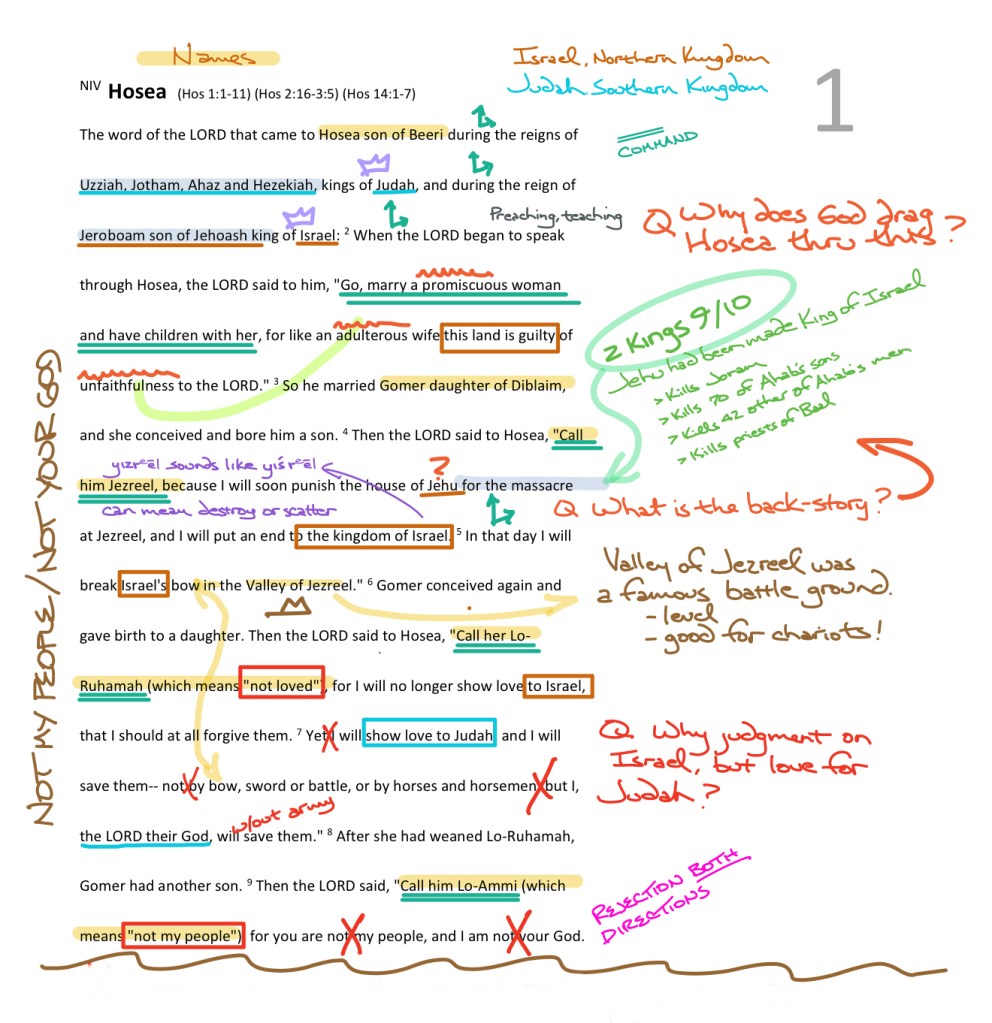
God shouted his lungs out over Israel’s idolatry. But here the medium he picked wasn’t primarily verbal. He reached into his communicator’s toolbox and pulled out Hosea. No kidding. He used Hosea. “Go, marry a sexually unfaithful woman, Hosea. And introduce her to the tribes of the northern kingdom. After you do that, let me do the talking – they’ll get the message loud and clear!”
Book-ends
By now you know the drill. Click here to download a fresh copy of the manuscript:
My scrawlings below will ruin it for you purists. We’re going to attempt to get a feel for the entire book of Hosea by looking at the beginning and the ending. At the top of the manuscript you’ll see the three selections we’ve chosen. As you scroll down below, you’ll find a series of inductive questions. I wrote about why I picked this moment to consider in the previous blog.
1- Do you agree with the statement: “The most spiritually dangerous sin is and has always been idolatry.”? What idols do you see when you look at our world today? What forms of idolatry seem to have a draw even for Christians today?
2- The prophets were supposed to give God’s word to his people. If you were Hosea, how would it feel to you being told to marry a woman like Gomer and to raise a family with her? Why do you think Hosea is willing to do this (compare him with Jonah who actually fled in the opposite direction he was commissioned to go)?
3- Hosea is ministering to the Northern Tribes of Israel in the closing years before Assyria destroys their capital city of Samaria (722 BC). The exile was an act of severe judgement by Yahweh for their unfaithfulness. Skimming chapters 4 and 5 will give you vivid picture of their rejection of God’s word and their preoccupation with Baal worship. Why has their idolatry come to such an extreme point of failure?
4- What do the names of the children reveal about what is happening between Yahweh and Israel?
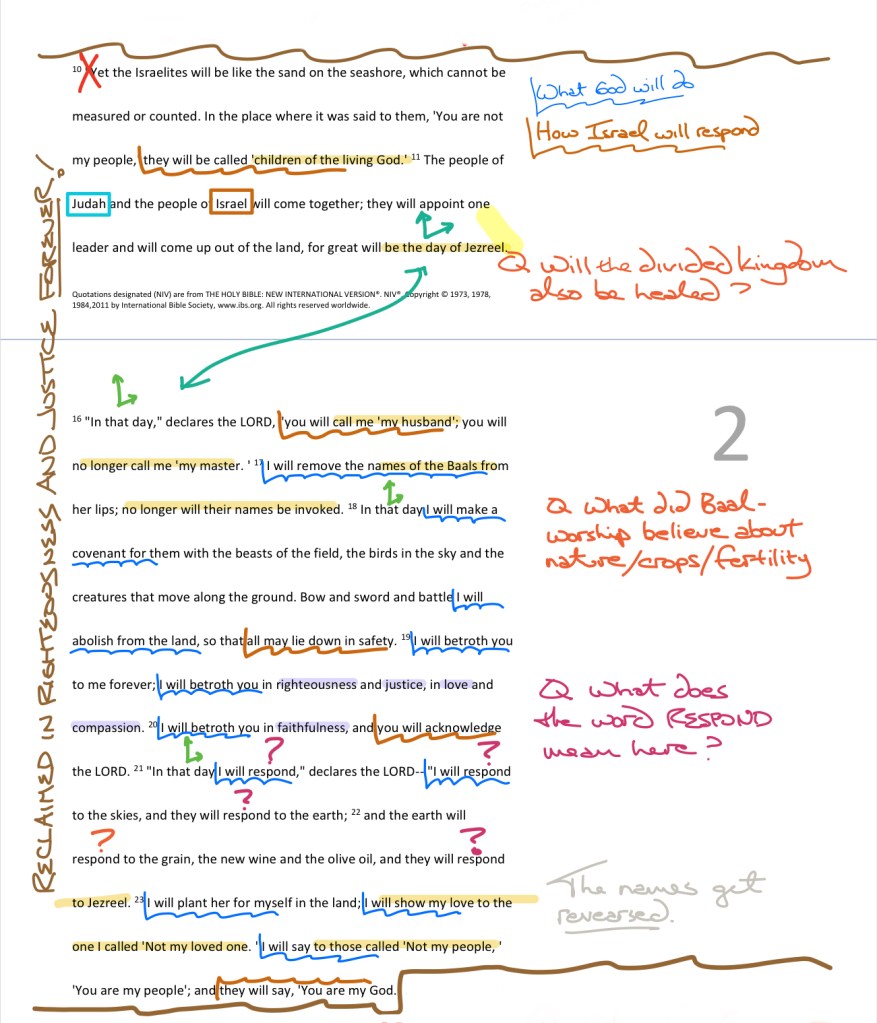
Reading books like Hosea and Isaiah, one notices right away that messages of pending judgment and punishment are situated right next to messages of hope and promise! Emotionally it can be quite a challenge to put yourself in the story. Hosea chapter 2 is such a lift. “In that day” (actually the day of Jezreel or day of judgment) Yahweh says his people WILL be restored (not merely punished).
5- List everything Yahweh will eventually do for his people through (and in addition to) this coming act of judgment on them.
6- The LORD’s acts of healing and restoring are all cast in marital and familial terminology (my children, my husband, covenant, betrothal, etc). How do terms like this describe what it means for Yahweh to reclaim his chosen people?
7- Baal worship was a system of trying to please a pagan deity with sexualized acts of worship. A happy Baal meant that their crops and flocks and families would all be fruitful and multiply? How does this help us see why the LORD can tolerate no other gods before himself?
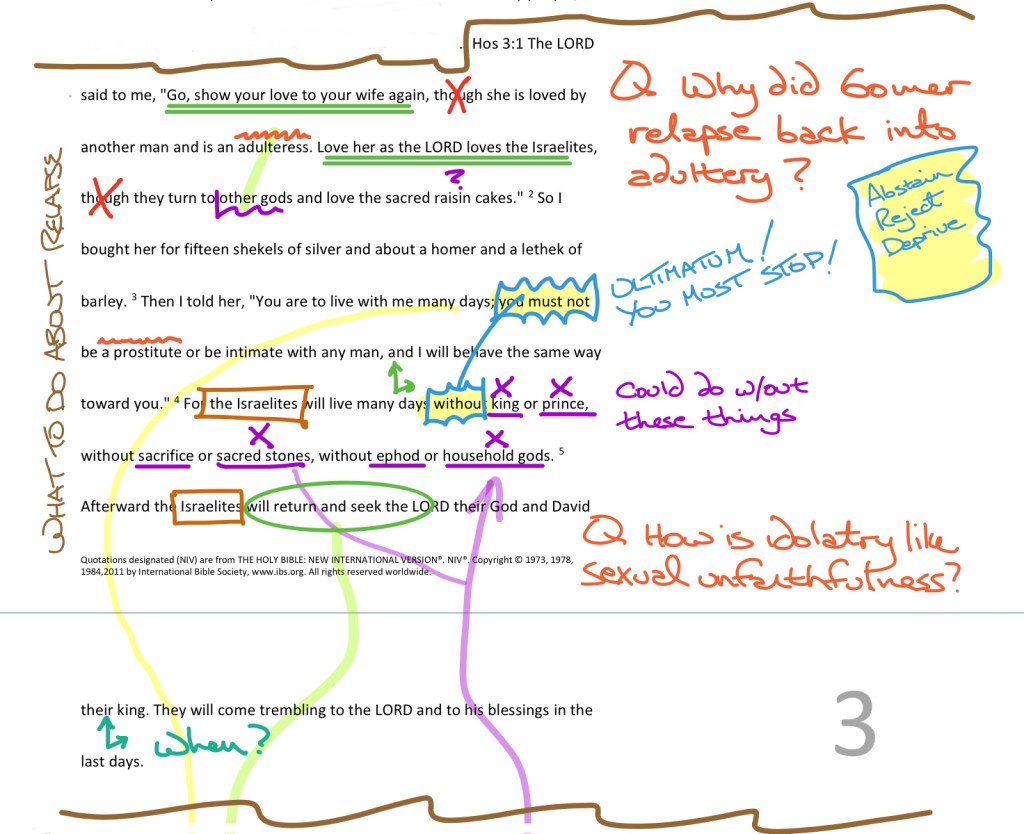
The Hosea and Gomer story comes back center-stage. It’s the classic relapse chapter. Remember that the story of Hosea’s family is telling the story of Israel and Yahweh.
8- Gomer has been rescued from a life of promiscuity (most likely prostitution). Why after being given a stable family identity (husband and three children) would she return to a life of sexual unfaithfulness – likely involving abuse and addiction?
9- Abstinence, deprivation, a season of radical estrangement – how is dealing with Gomer’s unfaithfulness similar to what Yahweh will impose on Israel via the exile? What gives Yahweh the right to require Israel to sever ties with all other gods?
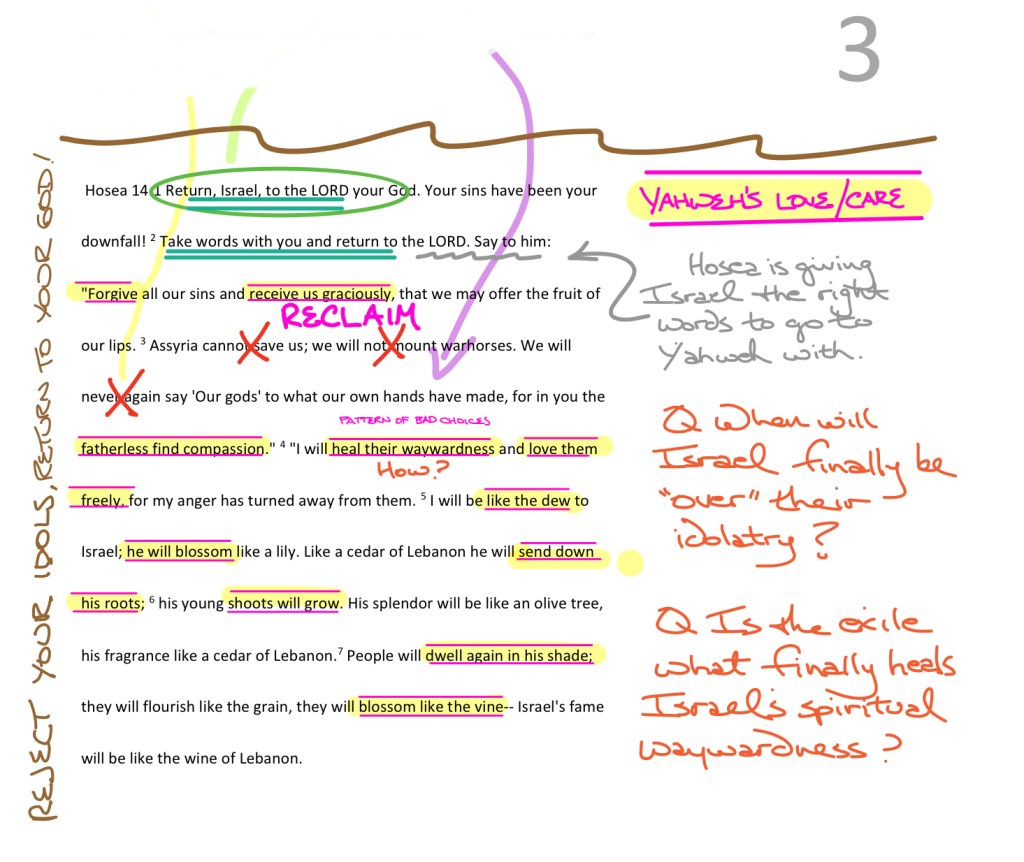
The pathway of healing for Israel means not only will the LORD reclaim his people from their idolatry, but they also will reclaim Yahweh as their God. The identity and ownership once again will flow both directions. God will love and care for his people. God’s people will worship, serve and bless him.
10- Israel vows to never again give the devotion Yahweh rightfully deserves to something of their own making. Does idolatry still work the same way today? Explain.
11-Anger is a clue to idols. Not only does idolatry anger a God who loves us and longs for our good, anger is what people experience when our idols are exposed. Consider this quote from Tim Keller’s book Counterfeit Gods:
“When anything in life is an absolute requirement for your happiness and self-worth, it is essentially an ‘idol,’ something you are actually worshiping. When such a thing is threatened, your anger is absolute. Your anger is actually the way the idol keeps you in its service, in its chains. Therefore if you find that, despite all the efforts to forgive, your anger and bitterness cannot subside, you may need to look deeper and ask, ‘What am I defending? What is so important that I cannot live without?’ It may be that, until some inordinate desire is identified and confronted, you will not be able to master your anger.”
Is there an idol or a false god in your vicinity that leaves its fingerprints on you through your anger or other strong emotions? Explain.
12- Since idols can be almost anything, what is the best way to discern which things in our life, though in and of themselves might be good, have become an idol we must part with? In your experience, what is the best way to put an idol to rest?
13 – What forms of God’s goodness and care do you most long to enjoy without interruption? Would you say that your life is firmly in God’s grip of safety and care, or are you experiencing estrangement or waywardness? Why?
We’ll keep the series coming at you here! Hope you can join us.
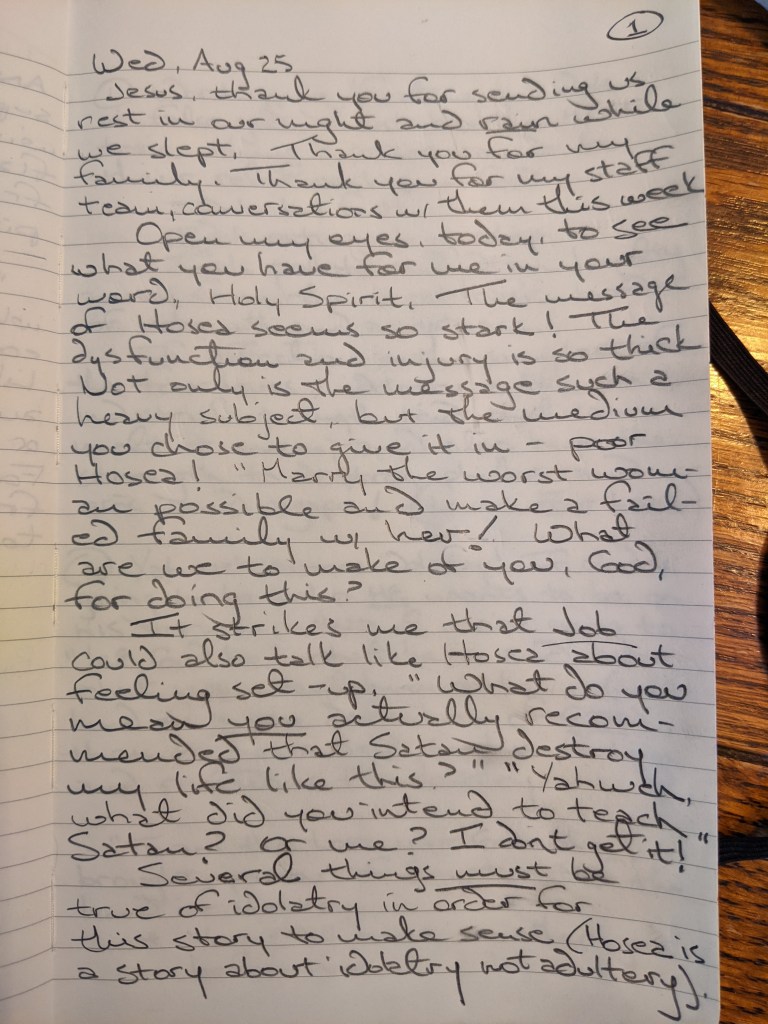
So today I’m just putting this out here on the blog with no push notification. That means readers will on their own have to scroll down here to read this. It was so good for me to process this particular study in the series I’m developing. If haven’t noticed yet, I’m writing a series of bible studies on God RE-making, RE-newing and RE-building what the world manages to to tear apart. I’ve made a map for the RE- series that includes 12 stopping points in scripture. This week I’ve reached the first point in these studies that has given me pause – can I really take people here? Hosea, the prophet of God told to marry a prostitute!
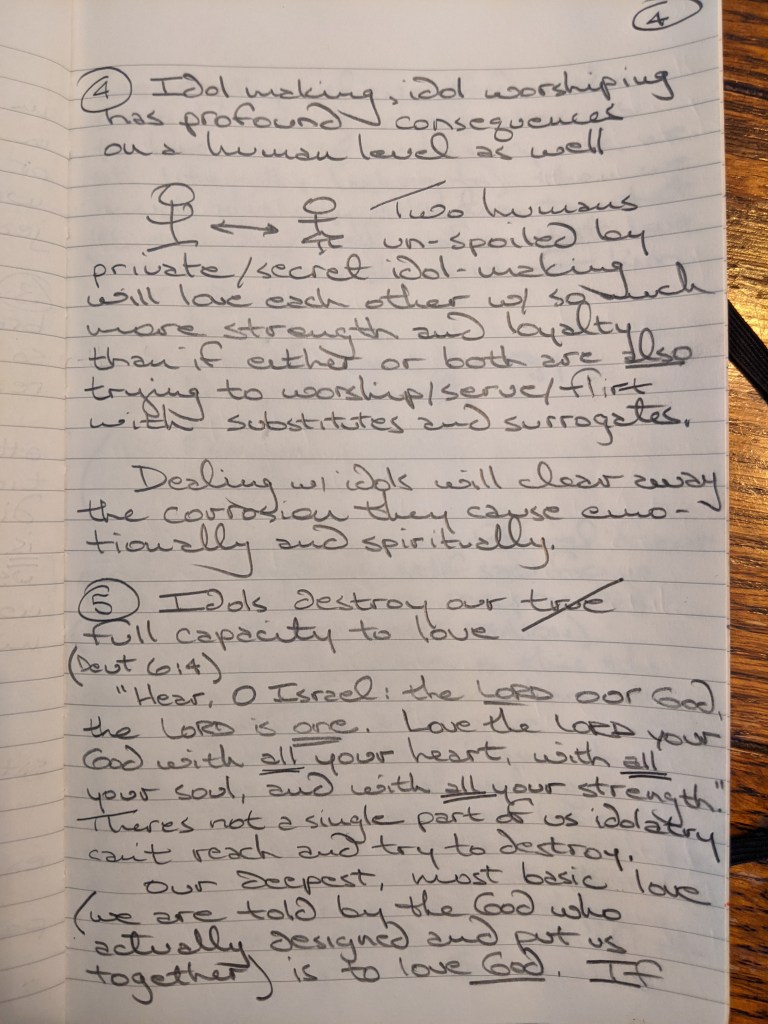
When you realize that Hosea isn’t about adultery as much as it is idolatry, then the challenge seems somehow different. Adultery always sizzles! But no one really seems to want to talk about idols. I convinced myself today in my quiet time that we really should delve into Hosea as precarious as I’m sure it will turn out to be. In this post I reveal a few of my musings and the basic argument that convinced me. Hosea should be a RE- moment we look into because idol-making is more toxic and destructive than we realize. After we get further into the story you can tell me if you agree!
By the way these are just shots from my front porch quiet time journaling this morning. Enjoy.













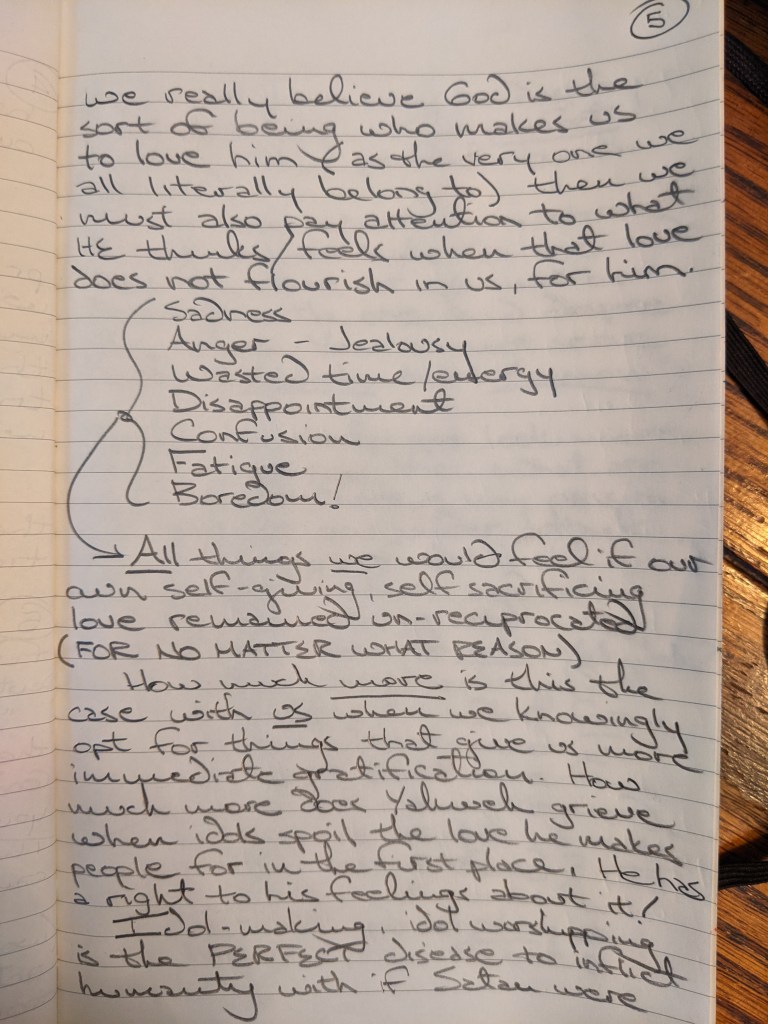

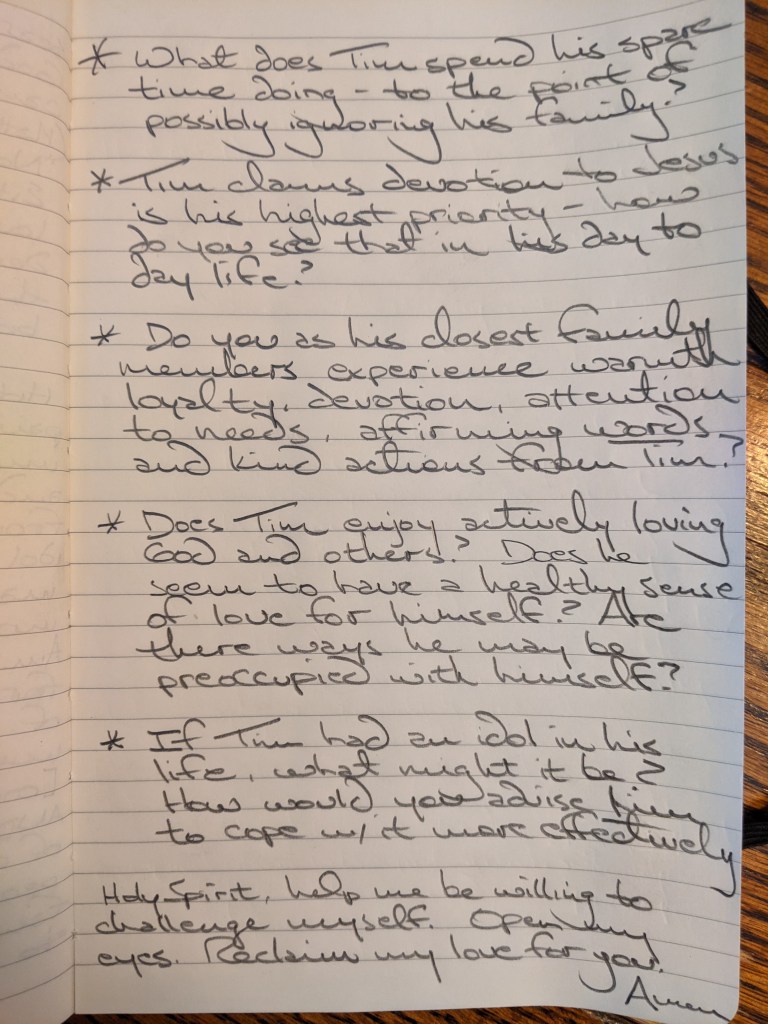
 PBR
PBR 