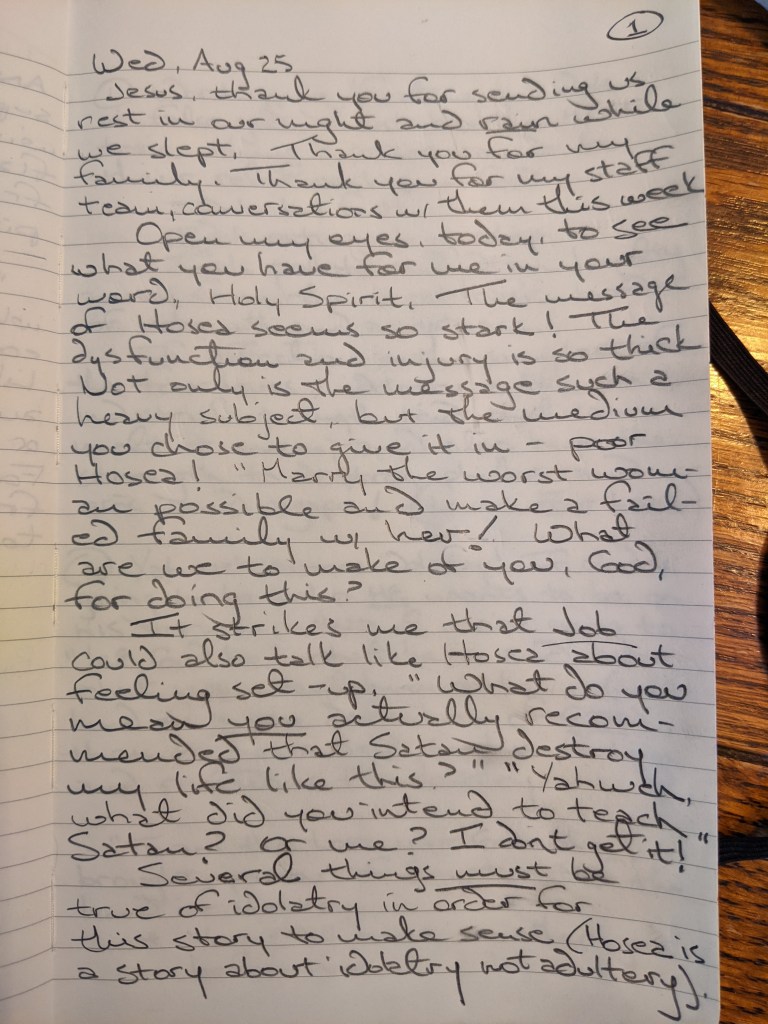
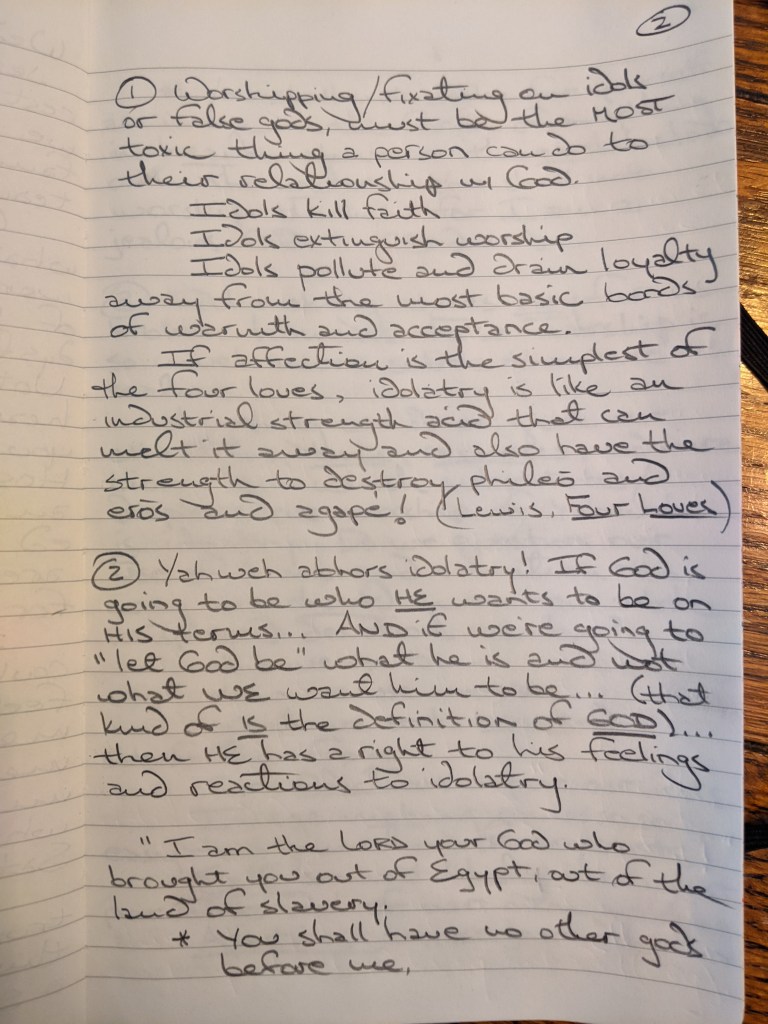
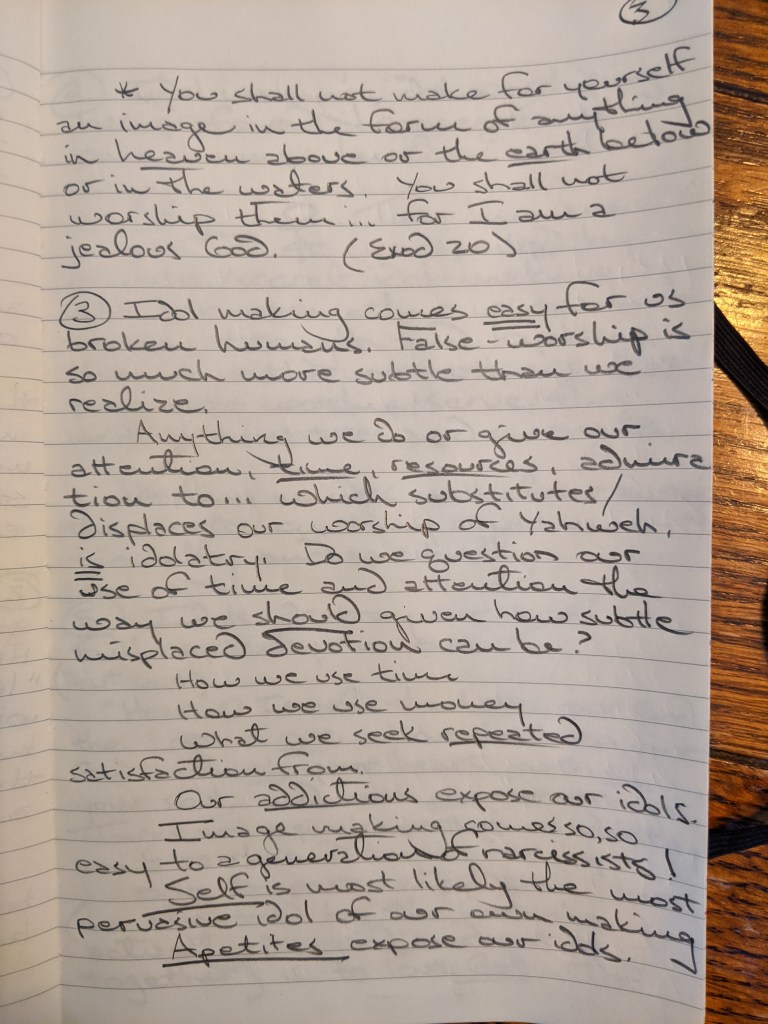
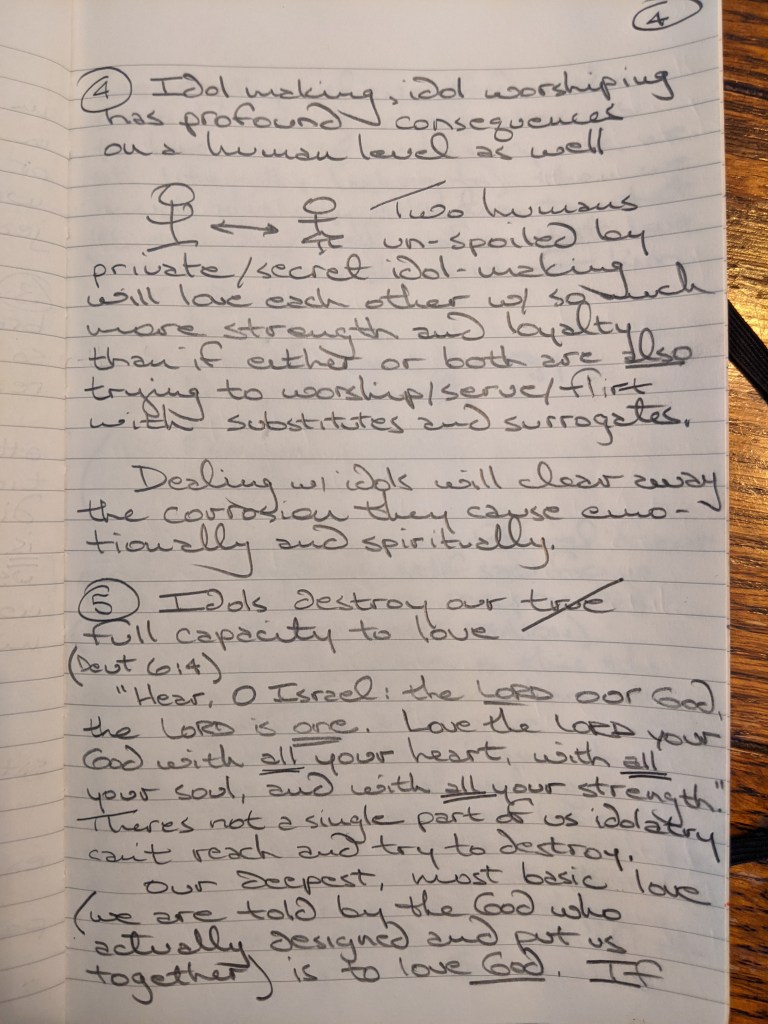
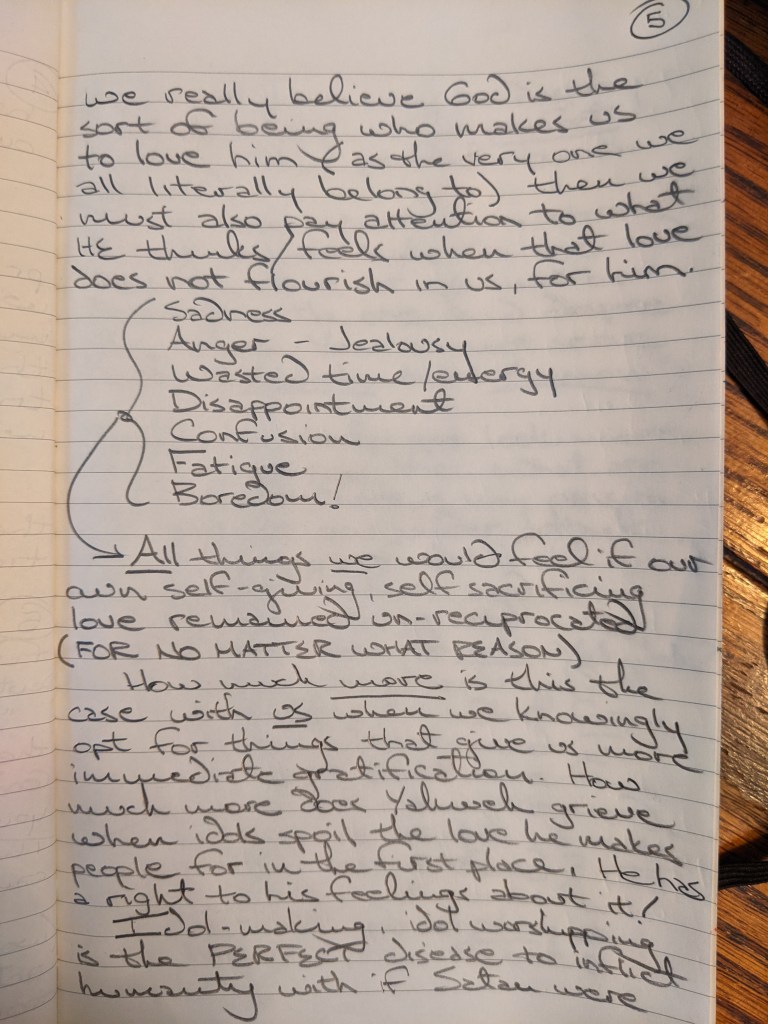
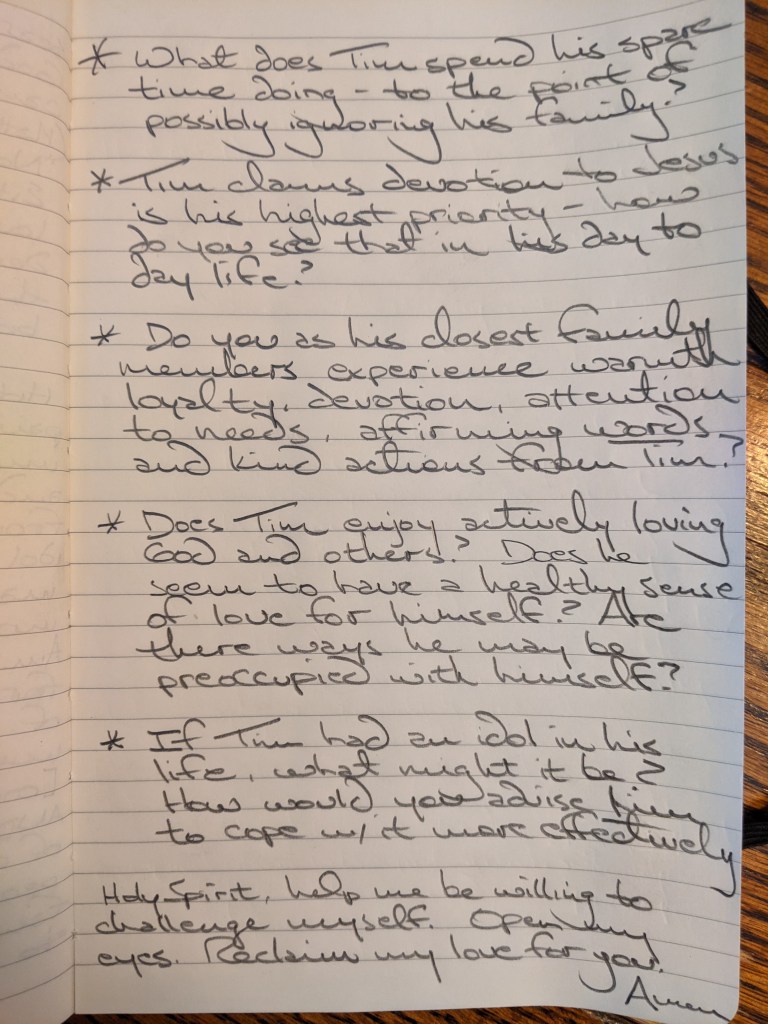
So today I’m just putting this out here on the blog with no push notification. That means readers will on their own have to scroll down here to read this. It was so good for me to process this particular study in the series I’m developing. If haven’t noticed yet, I’m writing a series of bible studies on God RE-making, RE-newing and RE-building what the world manages to to tear apart. I’ve made a map for the RE- series that includes 12 stopping points in scripture. This week I’ve reached the first point in these studies that has given me pause – can I really take people here? Hosea, the prophet of God told to marry a prostitute!
When you realize that Hosea isn’t about adultery as much as it is idolatry, then the challenge seems somehow different. Adultery always sizzles! But no one really seems to want to talk about idols. I convinced myself today in my quiet time that we really should delve into Hosea as precarious as I’m sure it will turn out to be. In this post I reveal a few of my musings and the basic argument that convinced me. Hosea should be a RE- moment we look into because idol-making is more toxic and destructive than we realize. After we get further into the story you can tell me if you agree!
By the way these are just shots from my front porch quiet time journaling this morning. Enjoy.
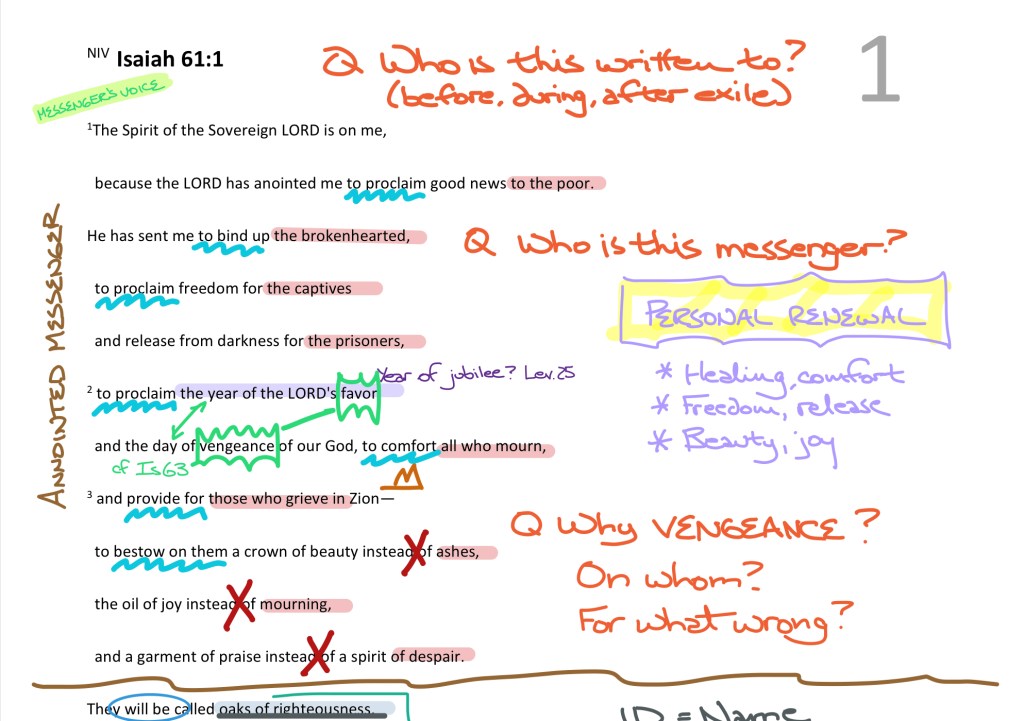
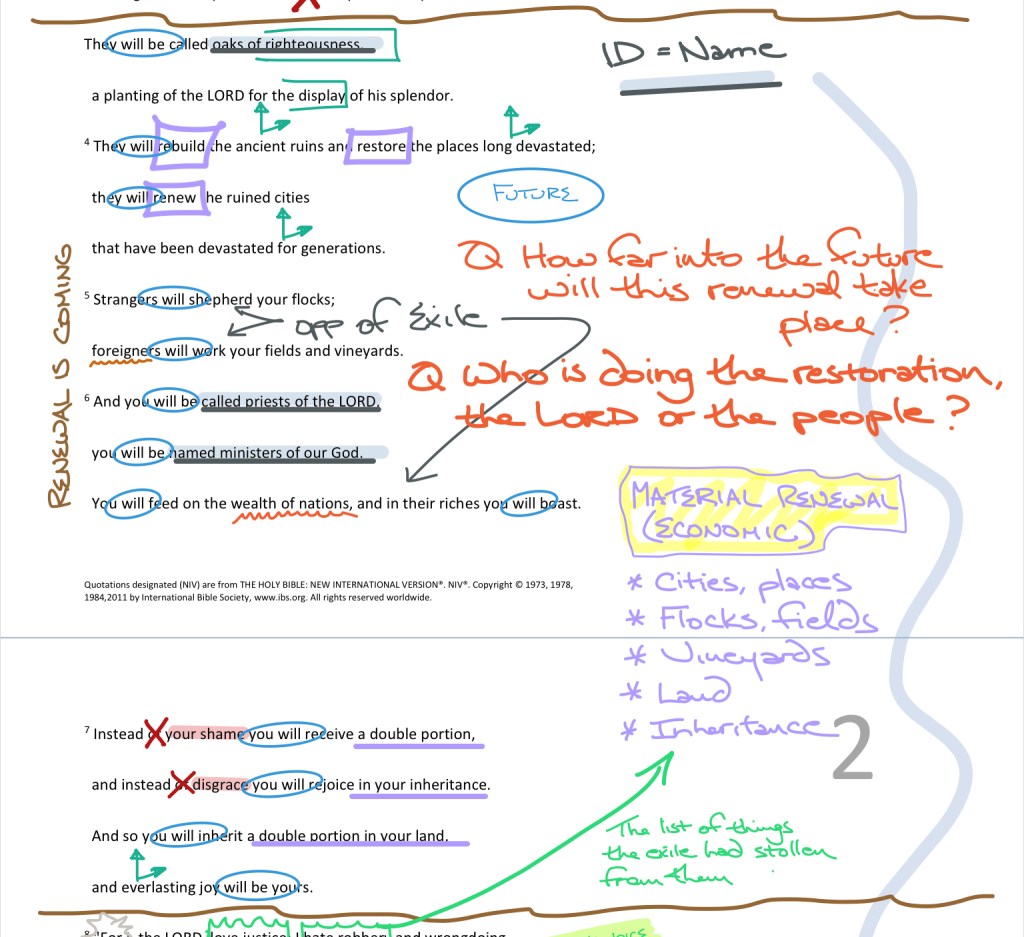
God’s heart for Renewal springs from his commitment to Justice. We’ll see in Isaiah 61 that God concerns himself not only with the personal renewal of people spiritually, but he cares about their material needs in the process. The same God who comes bringing healing and freedom, also brings vengeance and judgment against the very things that have devastated his people. Finally we’ll consider how God’s renewal brings a redefinition of identity. God’s people are transformed in how they are recognized from the outside looking in. God’s justice, via renewal, imprints a new image on his people and displays it for the world to see. That image is Righteousness.
1- Name a few places in our world right now that could use God’s renewal like it is described in vv 1-3. What people groups in your own community are experiencing oppression, pain or brokenheartedness? Has your path ever taken you to a place like this – explain?
2- Why does the Messenger talk about the LORD’s favor and the LORD’s vengeance (v.2)?
3- The Spirit of the Lord empowers the Messenger to make an announcement about renewal. In addition to his proclamation, the Messenger will demonstrate his message with his actions? What will he do in addition to what he will say?
Isaiah himself lived at a time when the Northern Kingdom of Israel was being swept into exile by the Assyrians. He could have witnessed the fall of Samaria in 722 B.C. Yet this oracle portrays restoration set in a time long after the fall of Jerusalem by the Babylonian Empire (586 B.C.).
4- Why is the Messenger reassuring God’s people of such material restoration when the devastation of the exile will be so complete and take so long to realize? How will those reading Isaiah’s prophecy be impacted by a vision like this?
5- The rebuilding, restoring and renewing seems to happen through the efforts of the people themselves? What is the Lord’s part? What is the people’s part?
6- In our RE-series, our first study was from Ezra chapter 3 – the period of time when the exiles are coming out of captivity and re-inhabiting their lands (538-516 B.C.). What might Isaiah’s message mean to them as they were permitted (even blessed) to return?
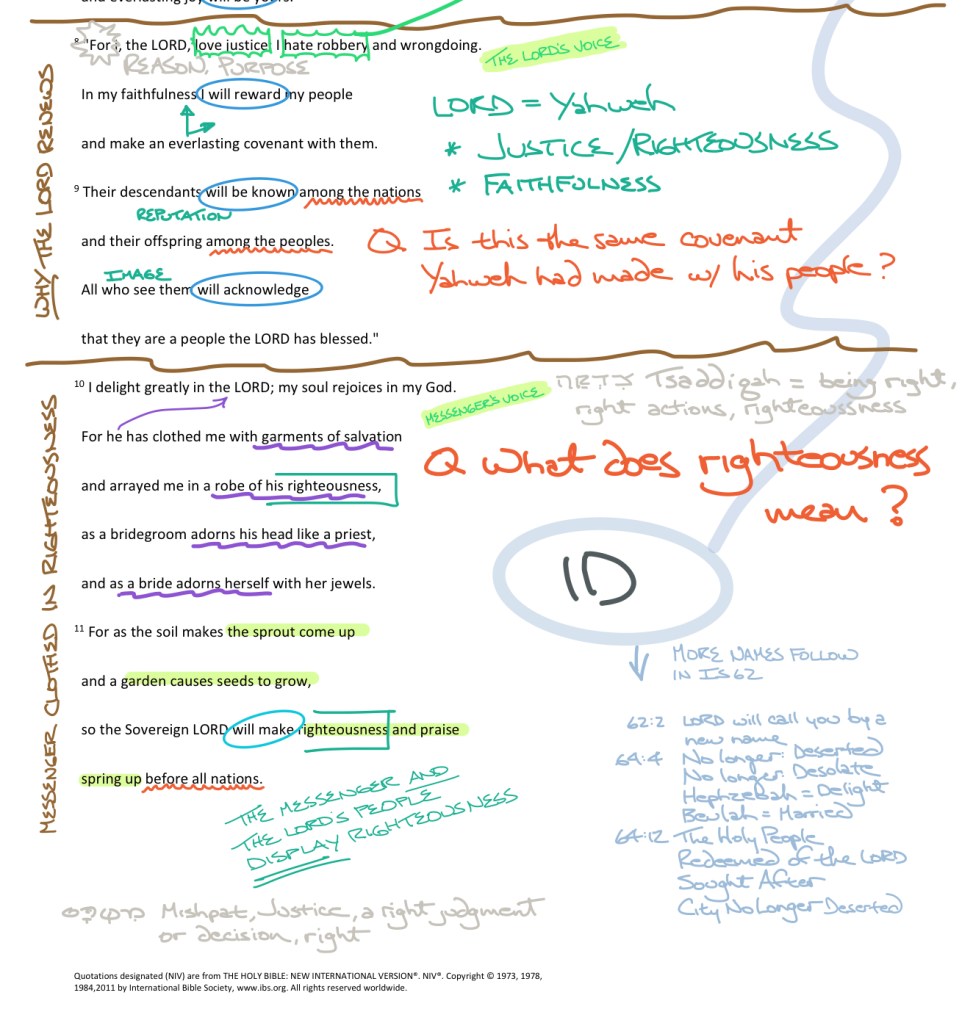
The LORD himself is speaking now. We learn why he desires renewal and restoration for his people. Oddly it has to do with reputation. The nations will see who Yahweh is by looking at the Israelites. Rather than being an oppressed and scattered people, he desires them to be Oaks of Righteousness displaying his attributes.
7- Describe the connection between God’s renewal and God’s justice. Is God the same today with his people, the Church? How does the Church make God’s justice visible today?
8- Righteousness is what the Messenger displays to all who look at him (vv 10-11). It’s how he’s dressed from head to foot. Righteousness in the Hebrew language connotes right actions, doing and being right. What does it mean then that righteousness will be what the Messenger and God’s people will cultivate among the nations?
9- How do God’s people cultivate Righteousness in our world today? In society? In the Church?
A new identity
Oaks of Righteousness. Priests/Ministers of the Lord. The renewal the LORD wants to bring his people lifts their identity out of the pit of the exile and sets it on a new path. The oracle of Isaiah 61 actually continues through the end of chapter 62. The re-branding continues. No longer Deserted, you’ll be called Delight. No longer Desolate, you will be called Married. The Holy People. Redeemed of the LORD. Sought After. City No Longer Deserted.
10- Why is a transformed identity so important to God’s idea of renewal for his people? Why do names matter?
11- Are believers today aware of their reputation “among the nations”? How can our commitments to justice and righteousness affect how Jesus is seen and received in our culture today?
The Gospel writers each have their own way of portraying Jesus’ first miracles. It was as if John interviewed people at Cana. “We hear that Jesus worked his first miracle there at a wedding. What did he do?”
“It was incredible, the host of the wedding ran out of wine, Jesus just took 6 stone jars of water and made them into the best wine anyone had ever tasted! He saved the reputation of that bride’s family as well as the owner of the vineyard.” It was just incredible!
Mark interviewed people from Capernaum where Jesus began his teaching ministry in their synagogues. “What was happening, there, Peter?”
“It was unbelievable! There were people in the synagogue possessed by evil spirits and he drove them out. People were coming with all kinds of diseases like leprosy or paralysis and he healed them one after the other. He come to my home not far from the synagogue where my wife’s mother was sick and getting worse. He just picked up her hand and she got up out off the bed with no effort, completely restored!”
And then there was Luke. Luke tracked down people from Jesus’ hometown of Nazareth. “I’m writing an orderly account of the life and ministry of Jesus. I heard he also came to your town during his first Galilean tour. How did it go? Did he work any miracles?
“Well, he DID technically work a miracle, but none of the ones we were hearing about. It quickly became a problem. He did all these amazing things in Capernaum, but just stared us down after reading the scroll of Isaiah in our synagogue. We took him out to the precipice and were about to cast him down. That’s when the miracle happened.”
Jesus’ first Miracle in Luke’s Gospel
“Jesus said to them, “Surely you will quote this proverb to me: ‘Physician, heal yourself!’ And you will tell me, ‘Do here in your hometown what we have heard that you did in Capernaum.'” “Truly I tell you,” he continued, “no prophet is accepted in his hometown…
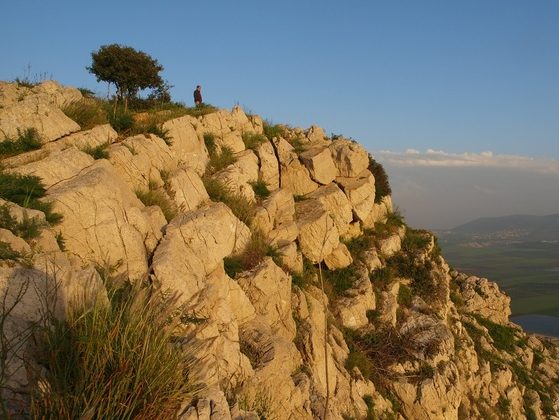
When you visit the Holy Land today, this is were you’ll be taken – Mount Precipice, Nazareth.
“All the people in the synagogue were furious when they heard this. They got up, drove him out of the town, and took him to the brow of the hill on which the town was built, in order to throw him off the cliff. But he walked right through the crowd and went on his way.” (Luk 4:23-30 NIV)
Jesus supernaturally quelled his deranged hometown. That was the only miracle he worked at Nazareth that day. What did Jesus say about Isaiah 61 that could have ignited mob violence? Why does Luke begin Jesus’ ministry like this? Isaiah’s prophecy is a famous redemption oracle about God renewing his people. Maybe the Nazarite response shows us that God’s idea of renewal isn’t what everyone wants. Let’s dive in and see why.
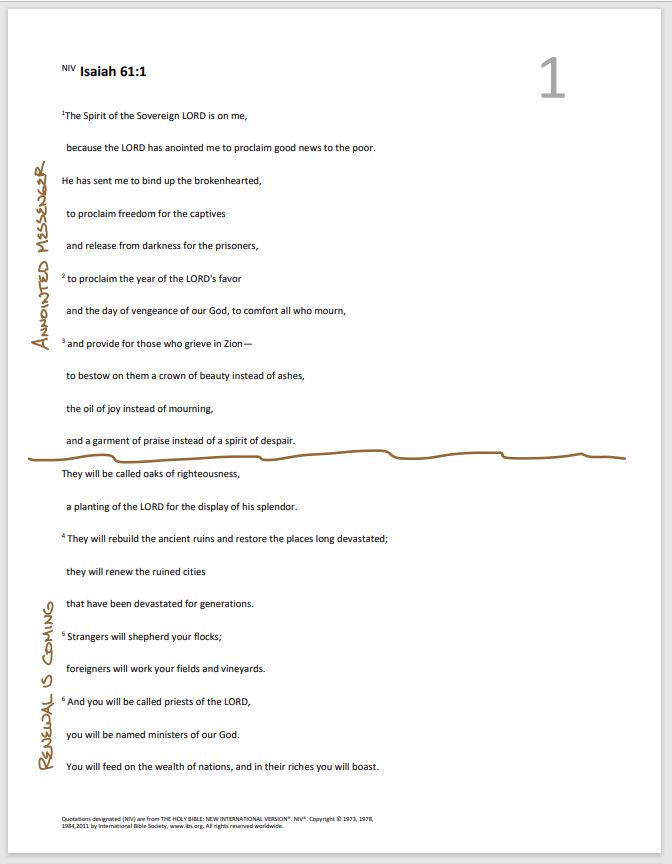
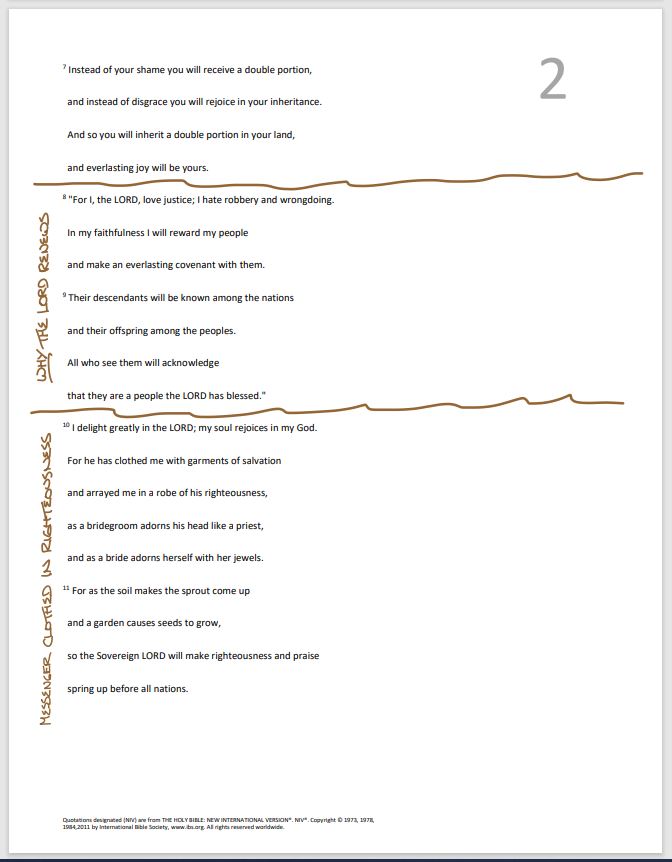
Click here for a clean copy of the Isaiah 61 Manuscript.
I’ve divided the chapter into 4 sections. I did this because of the change of voice in vv 8-9. The messenger (evangelist) is speaking in the fist part. The LORD himself declares his intentions. Then the messenger returns to his oracle starting in vrs 10. Here are a few questions to get you started:
1- What do you notice about the anointed messenger’s intended audience?
2- List everything the messenger is commissioned to do.
3- What do you make of the vivid contrast in vrs. 2? What seems to bring together the ideas of FAVOR and VENGEANCE?
In the next section (vv.3-7) notice what renewal will bring to God’s people.
4- There are several identity statements. List them. How would you describe the impact of renewal on what these people will become?
5- In addition to renewed identity, what will God’s people do and experience with the new life they’re being given?
6- What challenges exist for people who have been deprived for generations (not merely for many years)?
Vv. 8-9 is the LORD, Yahweh himself speaking.
7- What is motivating the LORD’s redemptive actions?
8- There is another change in voice in v.10. What else do we learn about the anointed messenger in this last section?
Grab a copy of the manuscript and get a friend or two to read it with you. What do you think of Isaiah 61? We’ll finish our study in the next post. Remember to write your questions in the margins as you scribble up your manuscript.
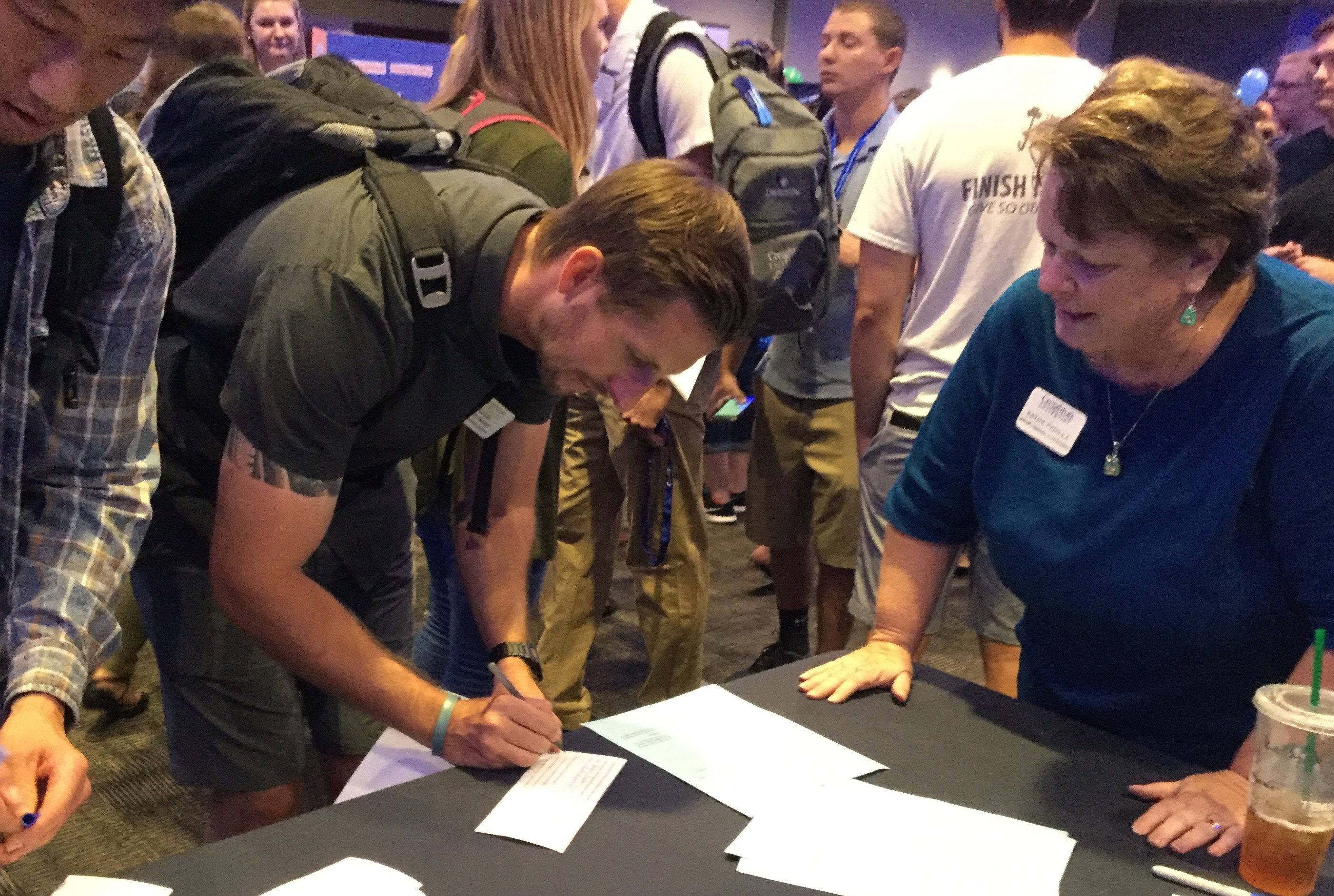
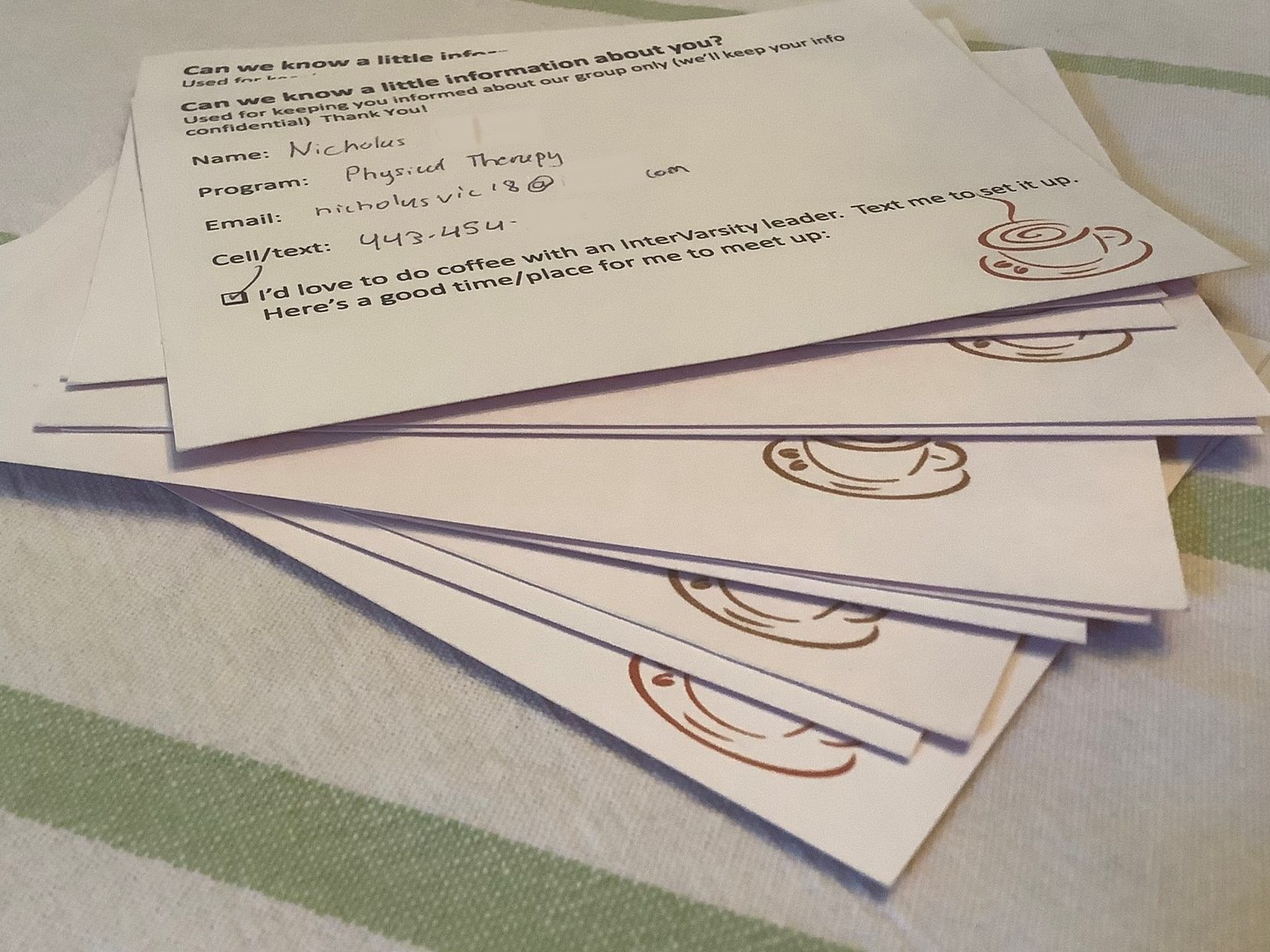
All around my four-state area ministries are re-starting this fall. Faculty groups as well as Grad student groups are regathering, face to face in most places. Here’s what it typically looks like. At Creighton for example our professional student group is focused in the School of Pharmacy and Health Professions (Pharmacy, Occupational Therapy and Physical Therapy). Kathy Padilla is the best person I’ve ever worked an information table with! This year we had loads of very lively conversations at the end of which we had a stack of 19 contact cards. And that’s how it gets started.
Kathy is an InterVarsity alum, supporter and leader in our local faculty ministry. She teaches Spanish at Creighton and is the faculty advisor for our GFM group and our undergraduate chapter. She loves meeting students. She loves InterVarsity. And she loves Creighton University.
Pray for Kathy as she restarts her new year. Faculty at Creighton are relieved to be using only one platform this semester – face to face, in-person classroom instruction! After three semesters of turmoil and the complexity of being sometimes in-person, sometimes on-line, she’ll get to hear her students parse Spanish verbs live and up-close.
Pry also for this stack of cards! For the students whose names are on them, that is. This is what we have to re-start our fellowship this fall at Creighton. Last year we were a virtual community of at most 10 students. I met with three of those students for leadership, encouragement and prayer. The rest we met up with via our zoom bible study in the book of Ruth. We’re hoping to rebuild in-person community this fall. We’ll be meeting on the first and third Thursdays of the month. We’ll meet in-person for the first gathering, share some food and enjoy being together to do our bible study. The second meeting of the month will be virtual via zoom. We’re hoping to include distance students and alumni at our virtual gatherings.
Pray for me as I work through the list of people we met. I’m hoping to connect one on one before our bible studies get started. The biggest challenge with professional students in programs like Pharmacy or OT is TIME. Their programs are very demanding and all-consuming of their energy and attention. Pray that GFM will become a source of community they deem worthy to work their other commitments around!
RE- studies
So where are the rest of those RE- study guides Tim? They are in the works. I’ve been generating the entire series in rough outline form. So far I have identified 13 RE-moments I think will work well. They’ll be rolling your way soon. Isaiah 61 – RE-new, Psalm 85 – RE-vive, Mark 5 – RE-claim. And on and on. They’re coming!
Please keep us in your prayers as we get things going here in the rest of the month of August! Thanks so much.
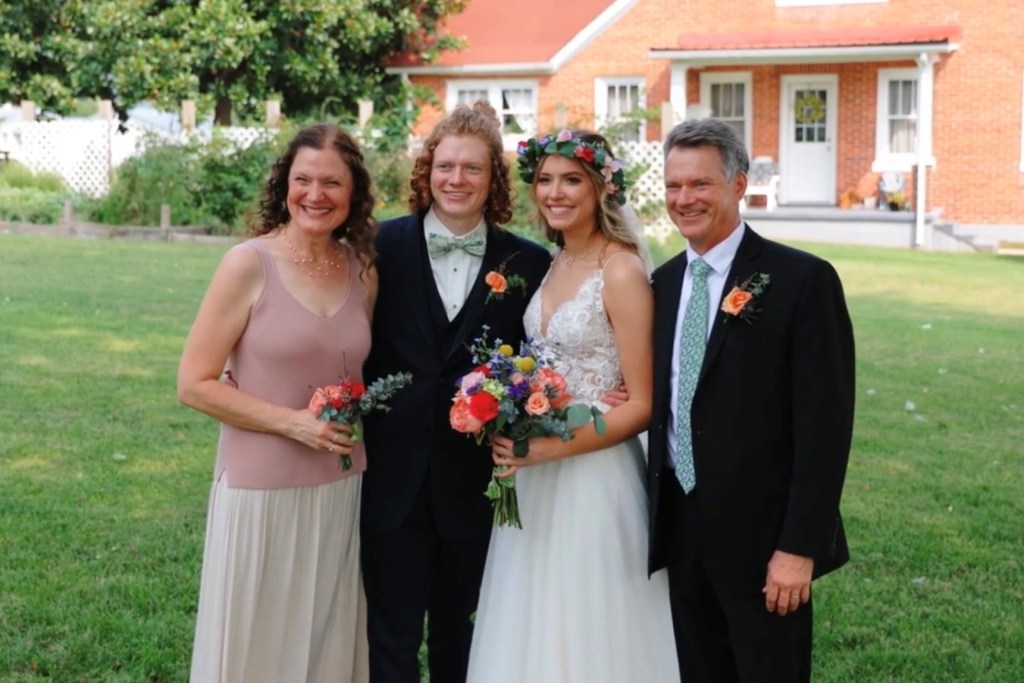
The wedding was FABULOUS. That’s all I can say about it right now. Welcome to the Perry fam, Haleigh!
Christians have a tendency to overlook the value of the Old Testament because we assume we don’t need to understand it. We live on this side of the incarnation. “This side of the cross.” Jesus was the fulfillment of the Old Covenant. There’s not much we can learn from an ancient faith steeped in a sacrificial system we no longer need.
RE-starting in Ezra 3 is all about understanding the book of Leviticus! The passage at hand begs the question – “If remaking the altar was how Joshua and Zerubbabel began again, what happened at that altar, day after day, year after year?” Let’s take a look at some of the details. What message might Ezra have for you and me today? I’ll summarize some of the background information as we go but feel free to download the following resource:
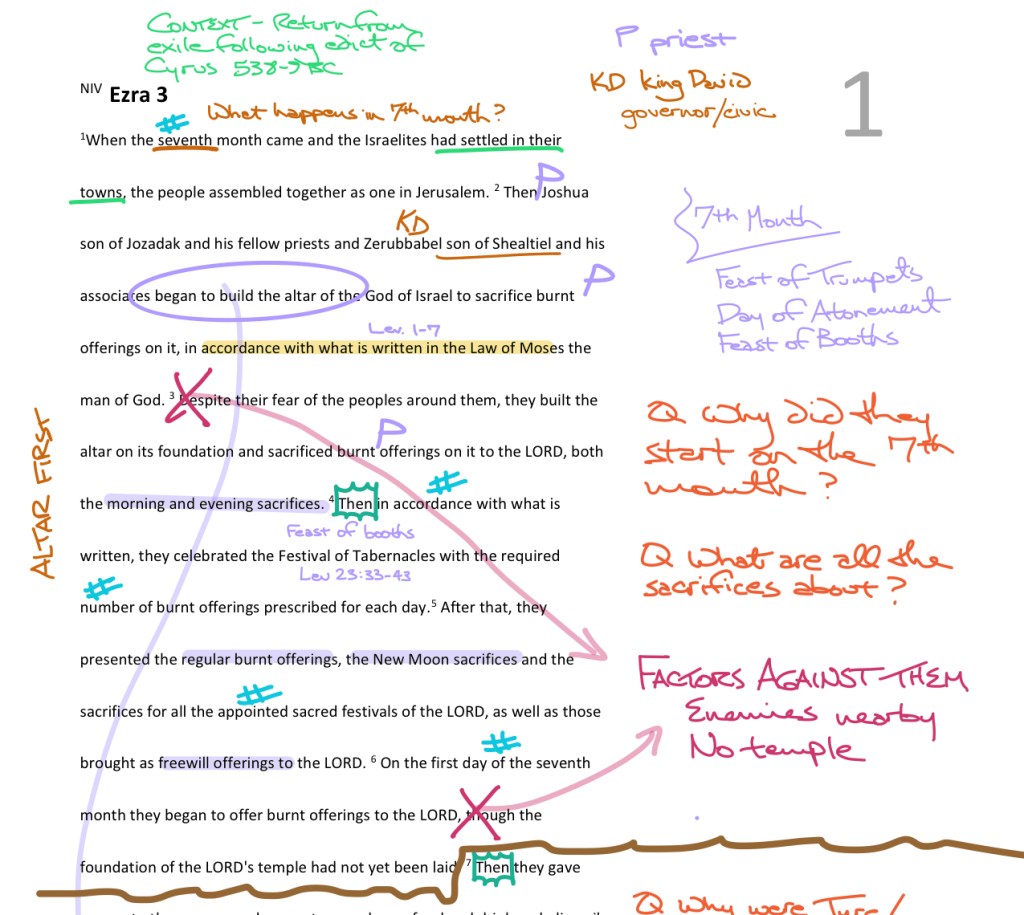
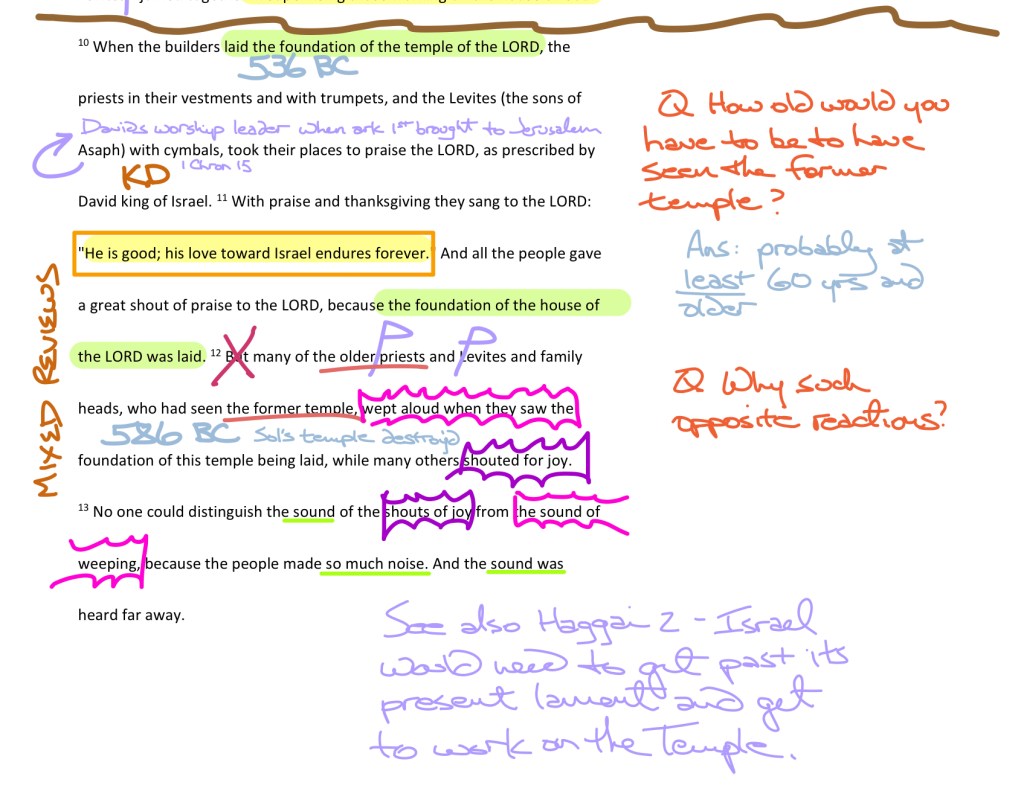
Do you know how to mark-up a manuscript? In my last post you’ll find a link for downloading your own clean copy of Ezra chapter 3. In this post I’ll show you mine, which is marked up all over (I mark things up electronically using the Noteability app). I’ve broken the chapter into three paragraphs and titled those sections. Ezra 3 is packed with references to the Jewish worship calendar and the daily priestly duties at the altar (see the background information for helpful details). Bear in mind that in 536 B.C. there was no temple. Only the footprint. It would be a little like showing up at your church on Sunday, but with no walls, no atrium and no fellowship hall. Just the foundations shorn to the ground. No roof, no pews (or padded designer theatre seats) no sound system, lights or smoke machines! Just a small scrap of platform where the stage used to be and maybe a charred table where the communion elements might have sat. Joshua restarts everything by remaking only the altar and restarting their worship calendar!
The Altar First (vv 1-6)
1) Who are the principle leaders – why are they leading the efforts to Re-start (see background information)?
2) Ordinarily, celebrating the Feast of Tabernacles would happen at a fully functioning temple and would require a lot of equipment and formality. Joshua is pulling this off with nothing but the altar in place (compare this to the Feast of Tabernacles celebrated when Solomon first built and dedicated the temple cf. 1 Kings 8). Why go ahead with the celebration without a temple?
3) The seventh month seems like an odd time to restart your worship calendar. The Feast of Tabernacles commemorated Israel’s wilderness experience following the Exodus. They lived in tents and ate the food Yahweh provided (manna and quail). They knew Yahweh was with them because he too dwelt with them in the tabernacle those 40 years. Why might this timing make sense to a people returning to their homeland from a 70 year exile?
4) The exiles’ Re-start was further complicated by the presence of people who didn’t welcome their return. Have you ever noticed how starting and re-starting things can bring a cascade of unforeseen challenges? How do you cope with resistance and set-backs when life already feels halting and fragile?
The Temple Next (vv 7-9)
5) What is the rationale for restarting the sacrificial functions at the altar seven months before starting to rebuild the temple? Why would the altar seem a more important starting point than the temple (which created structure for the sacrificial system)?
6) There are two streams of leadership and supervision – the civic office of Zerubbabel (royal descendant here functioning as a governor) and the priestly structure of Joshua and the rest of the Levites. How do these reflect the varying needs of a people restarting their homeland identity?
Mixed Reviews (vv 10-13)
7) The dedication of the temple’s reconstruction is an incredible occasion! The younger generation who had been born just before or any time since the temple’s destruction, knew nothing of Solomon’s temple except what they’d been told about it growing up. It seems they easily affirmed God’s goodness and love toward Israel (v 13). What might they be thinking and feeling during this special celebration? What would fill them with joy and hope?
8) The older generation – especially the priests and Levites were not thinking about the future. They were still lamenting the past. Was this appropriate? Why or why not?
Twenty years further into the future,
Israel was just about to complete the rebuilding of the temple in 516 B.C. What many suspected when the foundations were laid came true in their view of the remade temple. “This is just not what it once was.” The prophet Haggai has a firm but gracious word for God’s people:
(Hag 2:1-9 NIV) 1 On the twenty-first day of the seventh month, the word of the LORD came through the prophet Haggai: 2 “Speak to Zerubbabel son of Shealtiel, governor of Judah, to Joshua son of Jozadak, the high priest, and to the remnant of the people. Ask them,3 ‘Who of you is left who saw this house in its former glory? How does it look to you now? Does it not seem to you like nothing?4 But now be strong, Zerubbabel,’ declares the LORD. ‘Be strong, Joshua son of Jozadak, the high priest. Be strong, all you people of the land,’ declares the LORD, ‘and work. For I am with you,’ declares the LORD Almighty. 5 ‘This is what I covenanted with you when you came out of Egypt. And my Spirit remains among you. Do not fear.’ 6 “This is what the LORD Almighty says: ‘In a little while I will once more shake the heavens and the earth, the sea and the dry land. 7 I will shake all nations, and what is desired by all nations will come, and I will fill this house with glory, ‘ says the LORD Almighty. 8 ‘The silver is mine and the gold is mine,’ declares the LORD Almighty. 9 ‘The glory of this present house will be greater than the glory of the former house,’ says the LORD Almighty. ‘And in this place I will grant peace, ‘ declares the LORD Almighty.”
Personal Application
I believe Ezra 3 shows us at least two challenges these Exiles have for you and me today. I’ve labeled them and written a few process questions you can select from to journal about or discuss with your small group.
The Tension between Lament and Remaking.
1-Think of an area of your life, the life of the Church, or our culture that is in decline, disrepair or abandonment. As you wrestle with exactly what is broken and account for what has been lost, what is your posture toward God and your future? Are you plagued by fears? Depressed? Stuck in lament only? Lament is appropriate when loss must be faced. It’s a disservice to what was valued to not mourn. But lament cannot be your only approach. Share with your group one place of renewal you long for. What is your posture toward it currently?
2- Is there an area of growth, improvement or reform that you feel energized by the Holy Spirit to work towards? Perhaps you’re like the younger generation coming out of exile who didn’t know what the former glory was like. Your posture is more open to the future. You are eager to do the work. Share with the group one way you are experiencing growth and blessing in spite of the brokenness around you. How is your creativity being tapped into? What gifts and skills can the Holy Spirit evoke in you as you move forward? What are your hopes focused on and how can you talk about them with others?
The Tension between the Altar and the Sanctuary.
1- Jesus is the fulfillment of the entire Old Covenant sacrificial system. He came as the incarnate Word. He was our great high priest as well as the Lamb of God who takes away the sin of the world. It’s tempting to say we just don’t need to understand the temple and the altar. But Jewish believers knew what the altar meant (see the article on altar on the last pages of the resource document). It was the place where God would accept sacrifice for sin. It was the place where first-fruits of each year’s harvest would be offered to God. It was were the morning and evening sacrifices were given for the sin of the people. How do you understand the idea of Altar today in your relationship with Jesus? Of course Jesus died for our sins. But you, personally and daily, how do you account for that? Do you have a place and a space where you regularly meet Jesus and abide in him (John 15)? Share with your group or process in your journal. When you look at the altar of your spiritual life, is it in good working order? Are you meeting God and bringing your sin to him in confession? What are your “thank offerings” like? What do you give God in the time you set apart to be with him?
2- What kind of communal worship life do you have with other believers? If the altar is a representation of your personal worship what does sanctuary with others look like? Your church building might not be lying in ruins, but is it a healthy place to worship God? What are the weekly, monthly and yearly rhythms like – do they rival the rich spiritual and tangible corporate life of our Old Testament forebears? Without bashing, how do you feel about the corporate worship and witness of your church? What impact of salt and light does your church or fellowship make on others? How is your church handling our culture’s current crisis of reconciliation and justice? What fears or attitudes might be holding you back? Are you freely lending your gifts and resources to the body of Christ?
So that was RE-start 01 and 02. The exiles show us the way forward from painful devastation. Their powerful starting point focused on the very heart of their worship life with Yahweh. Remake the altar first – that’s the place where sinners bring their lives and their gifts to a God of grace who delights to meet them there.
We’ll post another RE- moment next week. Blessings and Peace.
Things break. Things wear out. They get old and stop working. They get damaged and have to be fixed or replaced.
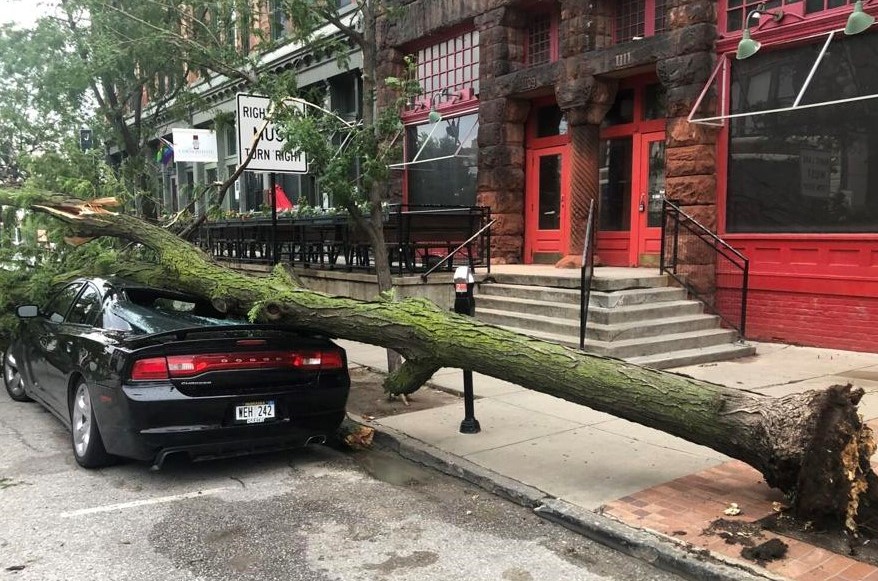
Over the weekend a ferocious wind storm molested our city. 90 mile per hour winds. Three days later parts of our city are still without electricity. Cheryl and I walked through our park last night. Entire trees were toppled or snapped off at the base like a #2 pencil. On my way to church I passed at least three homes with huge trees puncturing their roofs – even a brick home with a crushed exterior wall!
Where do you begin to remake things? Do you fix it? Do you throw it out and start all over? Can you do anything with it all? Depending on the scope of damage, you just stand staring with your mouth open till you can wrap your mind around it all.
Welcome to RE- It’s a new thing here on PBR. In the weeks ahead RE- will become an entire series of blog-post bible studies exploring what happens when things break down and have to be RE-made. If there’s one thing I hope RE- shows us it’s this: God is a relentless creator. He cringes when his stuff gets trashed and can bring as much power and ingenuity to re-making as he did to creating in the first place. And we’re the ones who benefit the most. We can’t forget that we are one of the biggest reasons RE- has to happen at all! Humanity is a sort of natural disaster, let’s be honest. At 90 miles per hour we can do a lot of damage in a short amount of time without even knowing it!
In each of these studies, we’ll look at God doing a work of RE-. God remakes, restarts, renews, replaces, revives, regroups, redirects. He never gets his thing out-trashed by us or Satan. He is stubbornly resourceful. Hopefully we’ll see why God is this way and appreciate anew his patience and wisdom. Maybe we’ll see something of ourselves in these studies. Humanity has it seems an endless proclivity to wreck things. We damage things a lot, but God renews his grace, invites us into his remaking and refuses to abandon us.
Ezra 3
So where do you begin remaking something that’s been totally trashed? In scripture there are countless RE- moments. RE-01 is a classic – but maybe not the one you’d think of first. I’ll try to keep RE- fresh for readers. It would be easy peasy to lunge for something like The Flood – everything gets flushed and God starts over with Noah. Let’s start somewhere else.
Israel: a broken nation. Almost everyone instantly knows who it was that rebuilt the walls of Jerusalem once God called his people out of exile. Nehemiah, humanly speaking, was the project manager for revitalizing the city in the midst of haters and trashers who scorned Israel’s rebirth.
Restart before Rebuild. Sixty-ish years before Nehemiah arrived on the scene a much more humble (and more foundational) initiative was started by Joshua and Zerubbabel. Not the famous Joshua, BTW. Almost no one gives these two the seat they deserve at the table of salvation history. Their passion was the soil Nehemiah’s vision would grow out of. But they weren’t rebuilders. They didn’t care about walls, water or waste! Local trashers didn’t distract them. Their idea of remaking Israel was to restart the entire worship-calendar of God’s people. “If we restart our worship life, everything else can follow from that.”
The Altar first. At this point, I’d like to pass you off to the narrative itself. Ezra-Nehemiah is a book in the Old Testament we usually think of as two books. It’s one. Ezra records when and how the exiles first make their way back to their homeland and their capital city. Below you can get a clean copy of the Ezra 3 Manuscript. You inductive bible study fans will know exactly what to do with this. Download. Print. Grab your highlighters and colored pencils. Tear into it and see what you find.
Look for interesting words. Words or ideas that repeat. Look for contrasts, opposites, strong differences. Use a highlighter, pens, colored pencils. Scribble everywhere! If something is a road-block, identify the barrier – what questions does the passage leave you with? Write those in the huge margin on the right.
As you get started, put yourself into the story:
1) What would your life be like if due to some disaster or cultural displacement, you weren’t allowed to go to church each week, or celebrate Christmas, or Easter, or gather with other Christians for prayer or worship? No Christian radio. No on-line church. What would that do to your faith year after year, after year?
2) Suddenly you were given complete religious freedom again, but all the churches in your city were left in piles of rubble. You are free to assemble, but you have no place to go. What would you need in order to restart your life as a community of worshiping believers?
Find a friend or small group – print them a manuscript and get together around Ezra 3. In the next post, RE-02 we’ll pick up with the process and learn more about RE-starting from God’s formerly exiled people. Meanwhile email me if you need help getting started. I’ll post RE-02 in about a week.
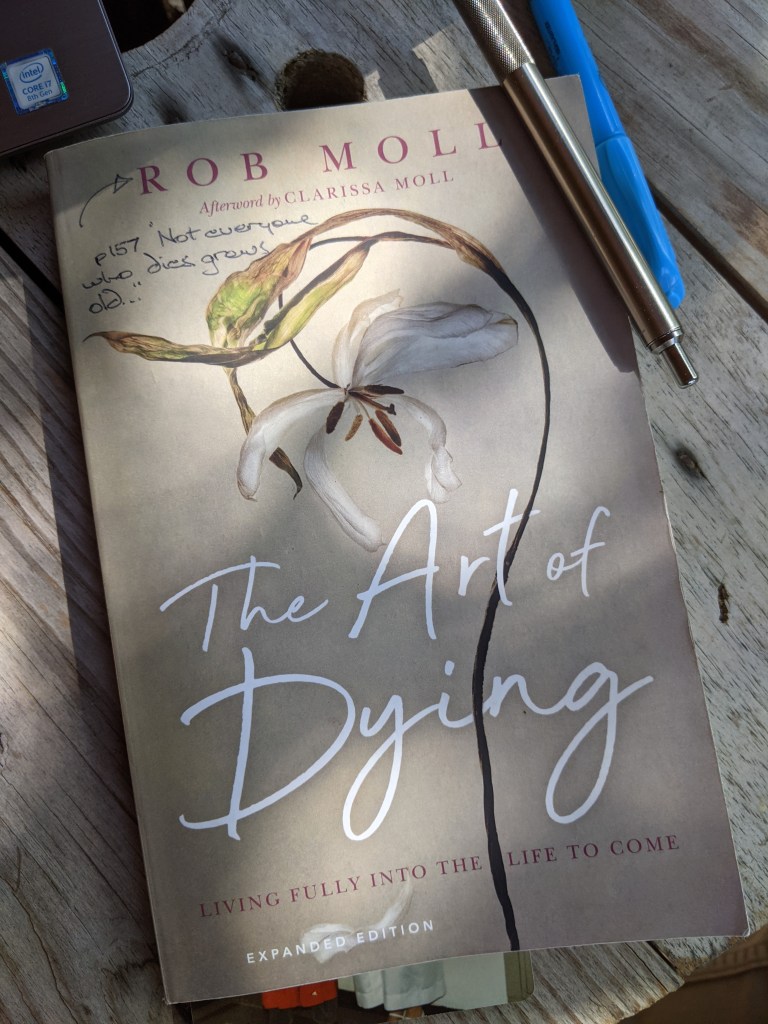
I think it’s safe to say we all want to die well. But Rob Moll is saying something slightly different. “Not everyone who dies grows old. Though we may expect to live to a ripe old age, nothing guarantees it. Younger people die in car accidents, while cancer frequently strikes those who are middle aged. We all need to learn to die well, whatever age we are. Our lives will be enriched by thoughtfully and prayerfully considering our death.”
Rob Moll was a journalist and Christianity Today editor who wrote the book, The Art of Dying. It’s the best book I’ve read in a while – originally published in 2010 it was re-released after Rob’s death in 2019 from a fall while hiking in the mountains. Rob was one of those younger people who die in accidents. But he was not one of those younger people who failed to think about dying.
Maybe you’ve experienced the death of a friend or loved one recently. When I started reading Rob’s book this spring I wrote a list on the inside fly-leaf.
Micaela Schneider, Dec 2019
Steve Walters, Feb 2020
Jon Lee, Oct 2020
Diana Metz, Feb 2021
Susan Darlington, Apr 2021
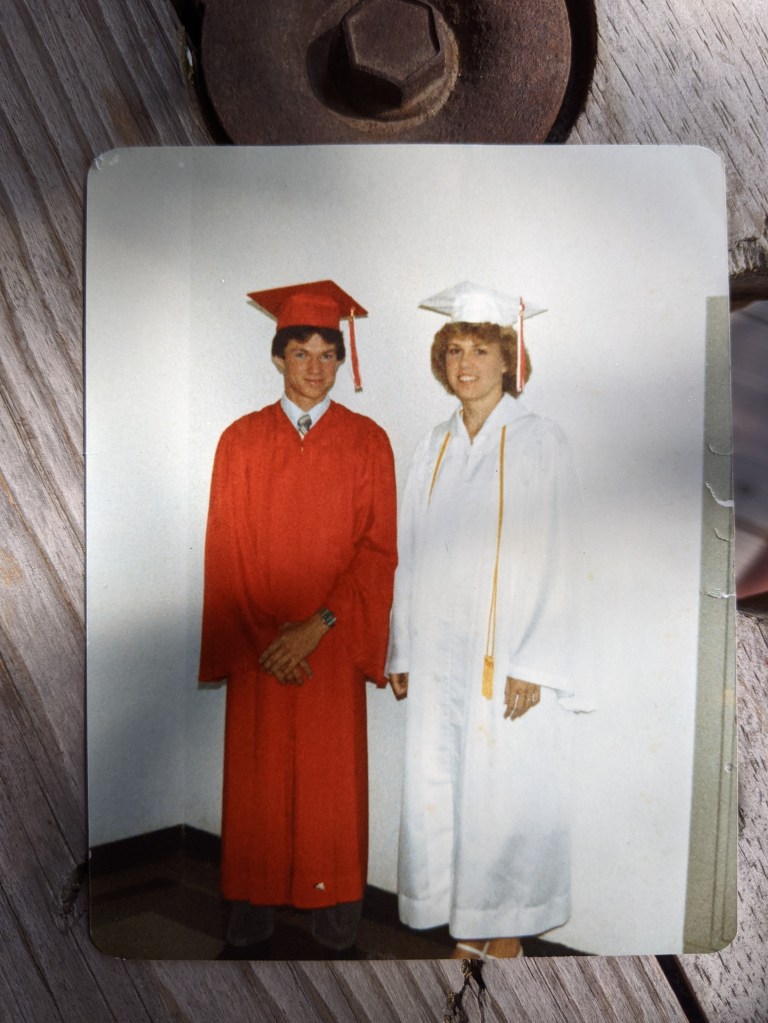
These five loved ones are why I’m not only reading Rob’s book, I’m doing what his book asks readers to do. These are all people who died too soon. A friend’s daughter taken in an auto accident, a former team-mate of mine at Christ Community (four years older than me) passed away from cancer, two high-school classmates of mine (both my age) – one dropped to his death on the floor suddenly from a cardiovascular event while retrieving his mail, the other a rare cancer took her life in less than a year. The last person on the list, the mom of an in-law of mine, needing an emergency surgery she never awoke from. All these people lived well. Only two had time to think of how they would die while still living.
Me and my neighbor, Diana Camren. Spring 1982. Mt. Zion High School
Rob says in his book that the church has forgotten how to prepare people for death. This is partly because of shifts in today’s culture and partly because of the availability of medical, end-of-life intervention. Till recently he contends, Christians have known how to die well because they thought about it, prepared for it and belonged to communities that knew what to do.
“Death was not just a medical battle to be fought, nor a loss to be mourned. It was a spiritual event that required preparation. The dying performed it in public as evidence of their faith and to provide instruction to others. Rather than waiting for illness to overtake them, these Christians were actively involved in their own dying.”
These five, their surviving family and many others over the years, are my teachers in the school of learning to die well. I am a part of a community that needs to learn what to do with death. I need to learn what to do with death so I can be present with others if/when they face death. I need to learn what to do with death because it seems to be happening around me more frequently the older I get. I need to to learn what to do with death because one day I may need to bring those I love along side me at the end of my life.
Doug, Terry, Janet, John and Lisa – thank you for sharing the life and death of your beautiful loved ones with me. Thanks for showing me the path of courageous lament and grieving. Our world is so much richer because of your loved ones. I hope I learn how to be present and how to bring hope and joy in the midst of loss. I hope I am more ready for my own passing when that time comes.
Thanks for reading and let me know if you’d like a copy of The Art of Dying. I can get it to you for a nice discount. Just hit the link below and email me directly.
“Prepare your heart for your departure. If you are wise, you will expect it every hour. And when the time of departure comes, go joyfully to meet it saying: Come in peace. I knew you would come, and I have not neglected anything that could help me on the the journey.” -St. Isaac the Syrian
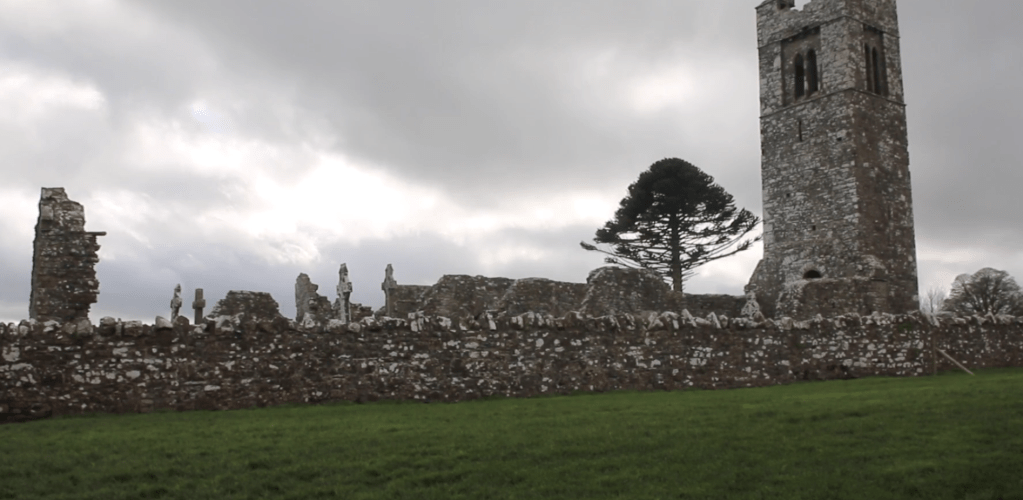
…when you see a picture like this? “I want to be there.” “That has to be Ireland…”
InterVarsity’s study abroad program has developed a growing number of pilgrimage experiences that have sent InterVarsity staff and students to places like Finisterra, Spain. Achingly beautiful places. And equipped with very little gadgetry of what I’d call Christian tourism. Commissioned instead to walk, learn, and do mission.
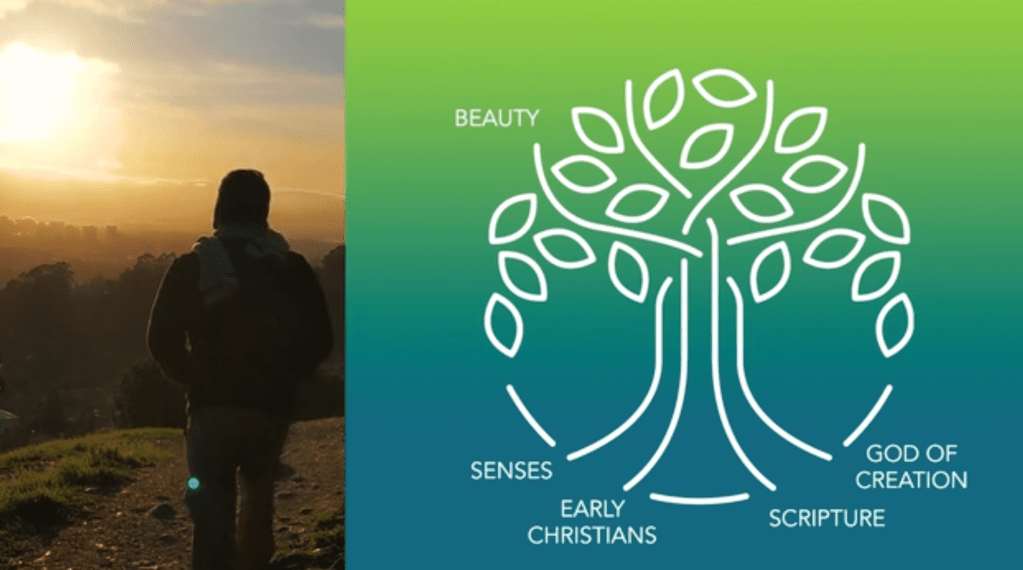
What are you doing in your quiet times with God these days? Can we offer you something different in the month of May? Follow the link above for all the details. The Via Divina is a virtual pilgrimage you can engage from the comfort of your own community and on your own schedule.
What are the critical pieces of the experience?
Two walks a week at your own pace and on your schedule.
Podcasts you listen to while on your walks.
Guided spiritual exercises to help you engage God in your surroundings.
Great questions for you to reflect on.
Access to a community of fellow pilgrims doing the same thing.
Starting the week of May 14th, my staff team will be doing the Celtic Way together. We’ll each soak up the pod-casts while we go on our walks. I’ll try to keep in mind that I’m walking somewhere in Nebraska, not Ireland. And here’s a further perk – because we’re doing it virtually, its easy to make available to you as well.
As a ministry partner, or a donor, or an InterVarsity alumn, or volunteer – you are invited to sign up and take advantage of the Celtic Way. The cost is pretty cheap… And if you let me know you’re doing it, we’ll find a way to connect during the four weeks of the Celtic Way (May 14th thru June 11th). Everything you need to know is at the link above. There’s an eye-catching video that takes less than 2 minutes to watch. Careful – it will ruin you for wanting to travel.
More one the Celtic Way in the weeks ahead. Back to my back-yard office. It’s actually about as nice as it can possibly be in Nebraska today (sunny and 83 at the moment).
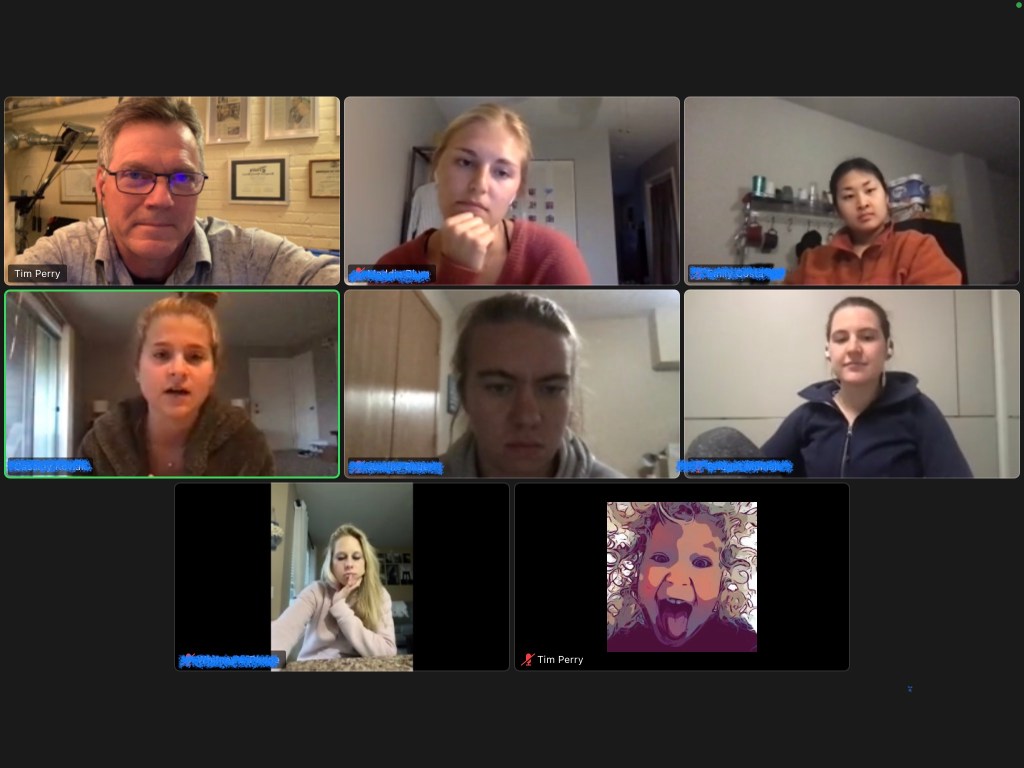
So I got an education Wednesday night this week. I was with our Creighton Occupational Therapy students helping them process their year. It was their last small group meet-up before the end of the semester. I’d sent Maddie and Emily a few questions last week – they’d turned them into a power-point presentation. Off we went for an entire hour!
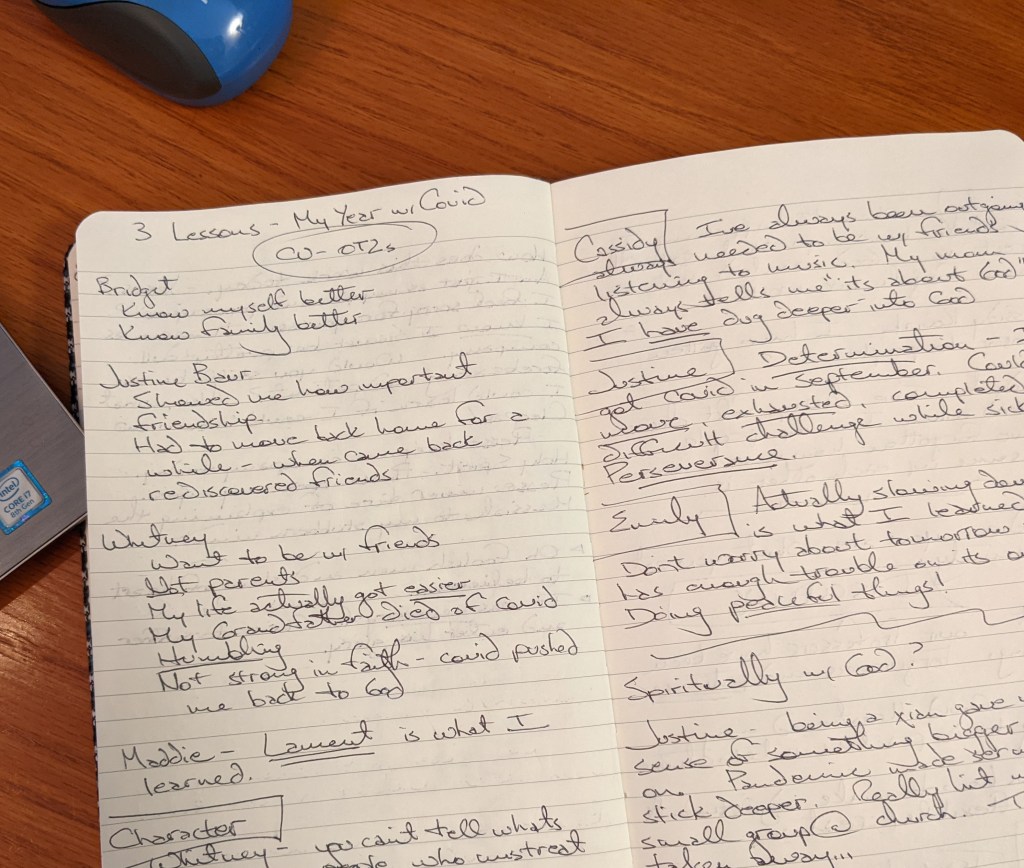
Here were a few insights they had – see if any of this sounds familiar to you (paraphrasing a bit here):
“I learned the meaning of the word lament. Taking inventory of loss. Expressing grief. Feeling sorrow and empathy for the state of the world around me.”
“I know myself and my family better after this year. I hated being confined, but the extra time with my family actually made me appreciate them more.”
“My empathy tank got a real work out! After a while you realize these aren’t just numbers of Covid cases or numbers of deaths. The numbers are people. Death is real.”
“I actually got Covid! I felt awful, yet had to keep pushing my self to accomplish my work. I didn’t think I had that much determination in me!”
“I lost my grandfather this year to Covid. I’ve been angry and disappointed with God to be honest. I’ve gone deeper into God, but I haven’t liked what he’s allowed to happen.”
“Presence! I’d forgotten how important it is to just be present with people. When you can’t fix things you learn what it means to just be present with people.”
I was curious to see how they’d answer this… “What’s one thing your teachers have modeled for you that you hope will be true of your leadership?” Teaching became quite a challenge this year as you could imagine. “Our professors have had to put up with a lot of adjustments. I was pretty worried about how well I was learning procedures in practicum when we couldn’t actually be in the same room with my teachers. But they were great examples of being creative and flexible. They were patient and forgiving.”
Conversations like this are happening everywhere around me. Maybe you’re noticing that too. When you realize how strange a pandemic is bear in mind the adage “familiarity breads contempt.” We hate this thing, let’s be honest. But don’t let the scale of Covid’s menace keep you from learning valuable skills and insights. Be a champion of processing your experiences. And serve others by asking simple questions like these.
Faculty Meet and Greet – April 17
Tomorrow we’ll be hosting a virtual meet up with exactly the same agenda! My Year with Covid – Three Lessons Learned. We’ll flip the audience this time – and see what the professors are learning! Pray for our gathering – we’ve invited about 30 faculty members here in Omaha and across the state. Pray for a good turn out.
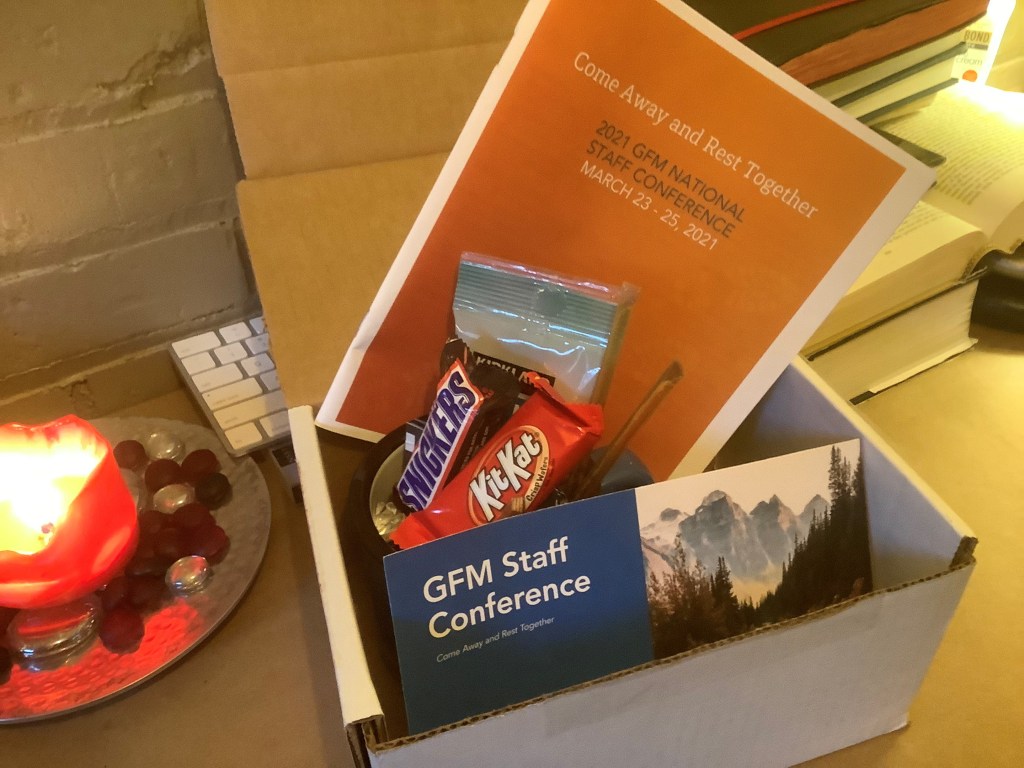
This box arrived about a week ago. A box like this always means a virtual conference is soon to follow. This week Graduate Faculty Ministries has its annual National Staff Conference. Usually we do this in Mundelein, Illinois at the University of St. Mary of the Lake each spring. Covid cancelled our event last year. Covid has virtualized our event this year.
This year, our staff team will participate in a Digital Camino as a part of our Virtual Mundelein. What is a Camino? I’m just learning about these myself. The Camino de Santiago is a spiritual pilgrimage taken on foot over a 500 mile trek -historically thought to be the very missionary itinerary of the Apostle James to the destination of Finisterra on the far northwestern coast of Spain.
“Traditionally, a peregrino (Spanish for pilgrim) would begin their journey to Santiago from their front door, eventually converging with one of several ancient pathways in northern Spain. On a Digital Camino, you can join the tradition via five audio-guided walks done on your own, accompanied by times of fun & reflection with fellow peregrinos.”
So a Digital Camino is a virtual experience undertaken by a home-bound peregrino through the use of a pod-cast. InterVarsity staff and students have done the actual Camino De Sontiago in connection with our study abroad programs. Many of them have become guides for peregrinos travelling digitally! Last summer over 400 GFM faculty members took part in the Digital Camino. This week, I’ll be doing my first!











 PBR
PBR 