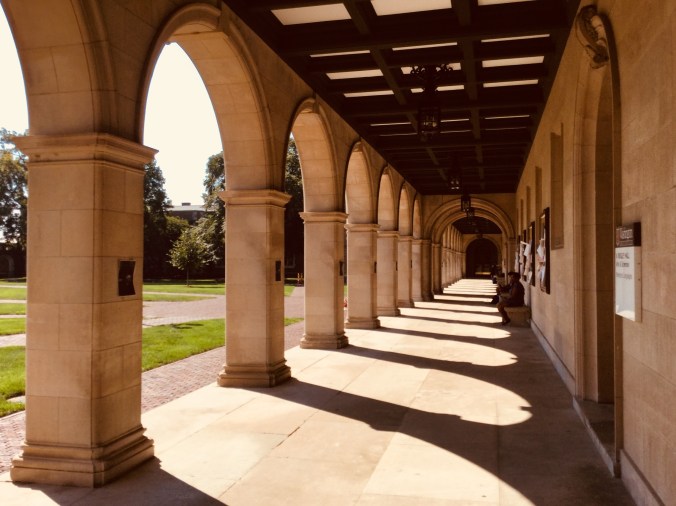
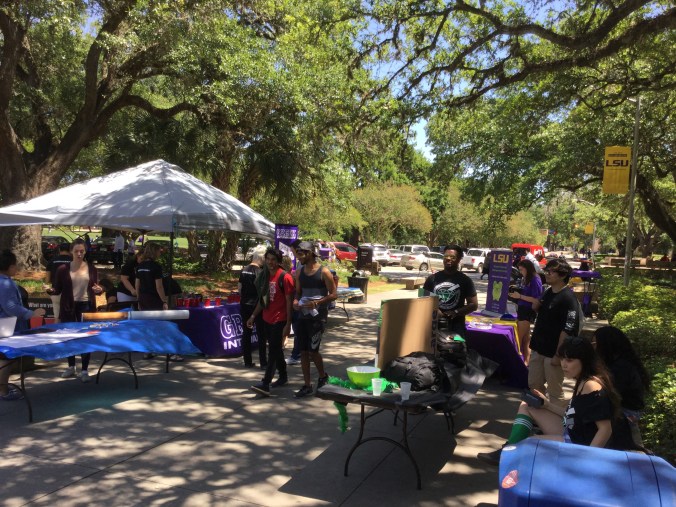
I am coming to you from the campus of Washington University in St. Louis, Mo. At the moment I’m enjoying some Kaldi’s at Kayak Coffee on the corner of Skinker and Forest Park. I’m on a two day visit to my GFM staff here in St. Louis. I just spent a full day with George Stulac yesterday. Here was the line-up:
11:00 Coffee with Abram Van Engen – Assoc Professor of English. We talked about Abram’s work with the Carver Project and ways InterVarsity GFM can collaborate effectively with it. George has been very instrumental in building a network of Christian faculty members at Wash-U.
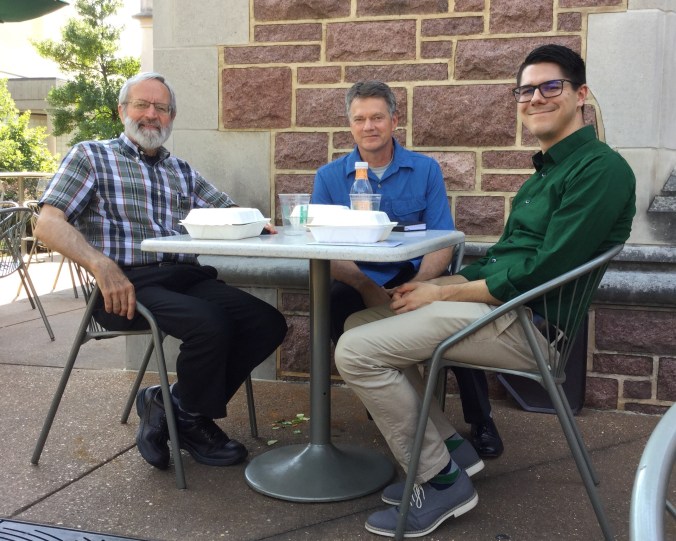
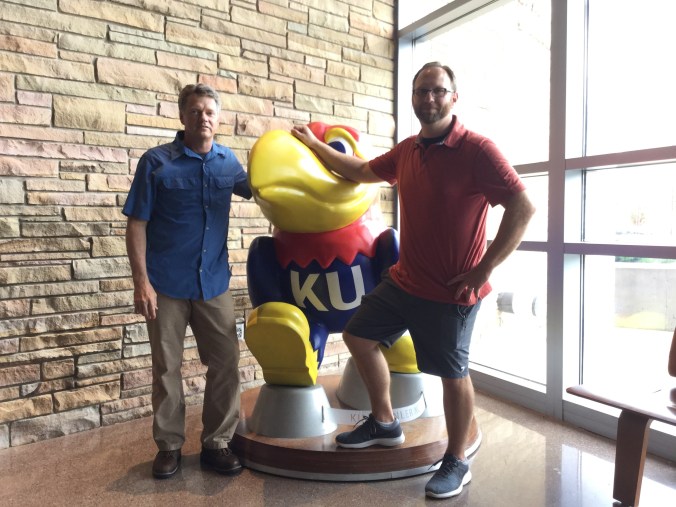
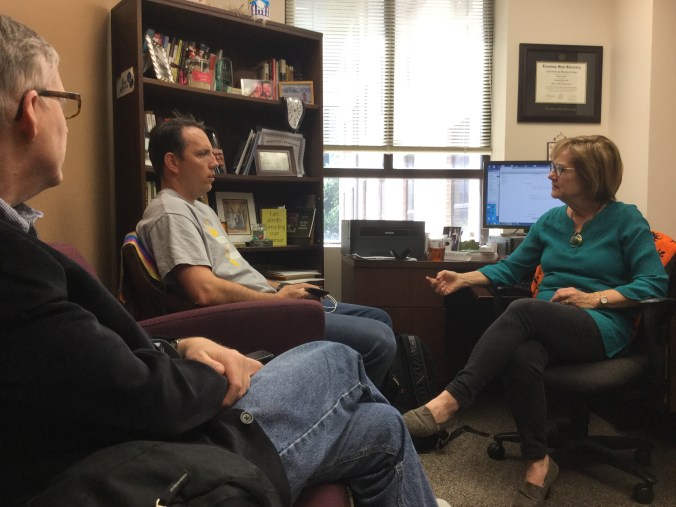
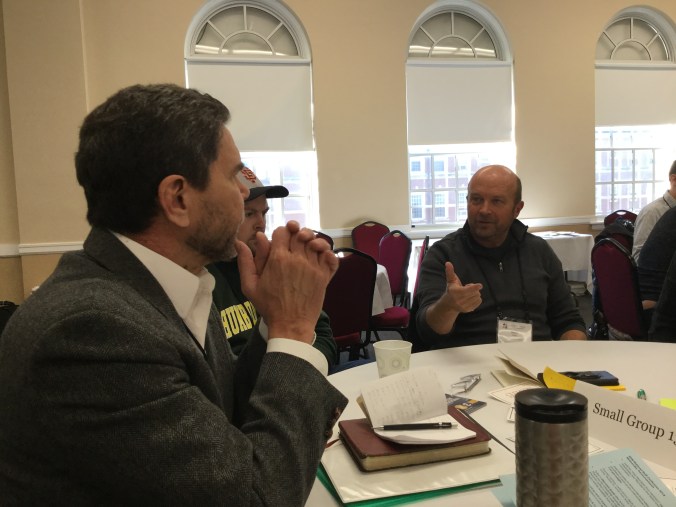
12:00 Lunch with Taylor Cyr, a new instructor in the philosophy department (on the right in the pic above). Taylor and his family are new to Wash-U and the St. Louis area. He’s also a fairly new PhD teaching and researching in a non-tenure track program. George met Taylor at a lecture on campus, found out he is a Christian and struck up a friendship with him. It’s so fun to see George in action with his relational and pastoral gifts.
1:30 Back to George’s place for a conversation with Will Chu – Area Director for the undergraduate IVCF work in Missouri. Conversation was about collaboration between undergrad and graduate/faculty work. I’ll have to write more on this later, but a huge are of concern for my role is keeping our two broad ministry divisions in effective partnership on campuses we share.
3:00 Over to Forest Park Community College for a gathering with faculty for bible study and prayer. Two professors in IT/Cyber Security met with George, caught up and spent time praying about some looming challenges in their departments.
6:00 Dinner with George and his wife Barbara. Catching up with how the Stulac family is doing, care for aging parents, kids, grand-kids.
Around the edges
Every time I travel, I’m asking the question, how can I “enjoy the ride?” Things that make travel more enjoyable are things like:
- good coffee
- time with friends and family in the area (Thanks Joel and Katrina, Steve and Lisa for good rest and time catching up with you).
- making the most of being out of town: I’ll be traveling through Columbia on my way back to Omaha tomorrow. Hoping to stop in and say hello to one of the local undergrad IV staff members at Mizzou. We have no GFM work at Mizzou
- more good coffee
- a rental car that doesn’t leave me smelling like an ash-tray. This time I got a KIA Soul. The best KIA – it’s a small car that actually feels comfortable to sit in! Thanks Enterprise.
- fun texts from my family and Poppy pics and videos!
- A chance to catch a few interesting photographs – gonna go on a prayer walk with George later this afternoon. Have to see if something catches my eye. Wash-U is a beautiful campus!
The rest of my day…
Lunch with a Wash-U graduate interested in a year of volunteer staff on his way to grad school. Another conversation with George talking about his Annual Ministry Plan for 2018/19. Dinner with a bunch of Wash-U graduate students over at Ryan and Keli Weed (two other GFM staff here in St. Louis). I’ll crash tonight with my family here in St. Louis and head back to Omaha tomorrow morning.
Off to Iowa next week!


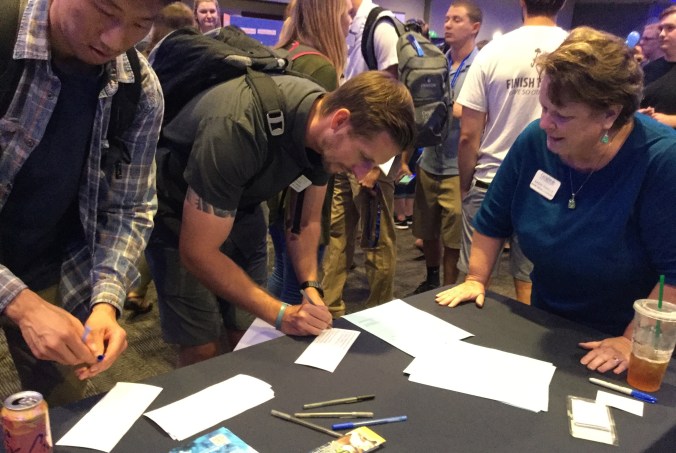 Yes they do. Just not as much as undergrads.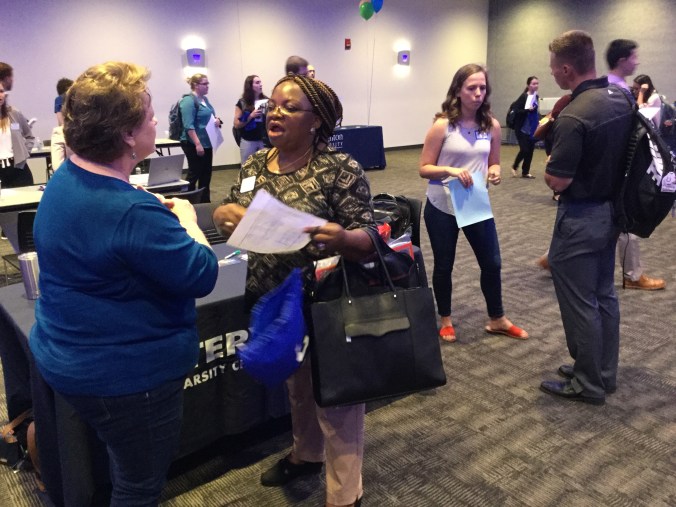
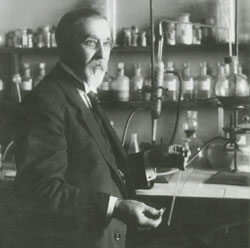 When you look at this guy’s picture what goes through your mind? Probably not “Oooo, that’s the guy who invented that catchy cheer they use down in Lawrence!” That’s the dude! Looks more like a chemistry professor. That’s because that’s what he was. According to his granddaughter (and KU librarian) Prof. E. H. S. Bailey and a group of students in the science club devised the cheer circa 1886. It’s unclear if they invented it for sporting events or interscholastic science fairs!
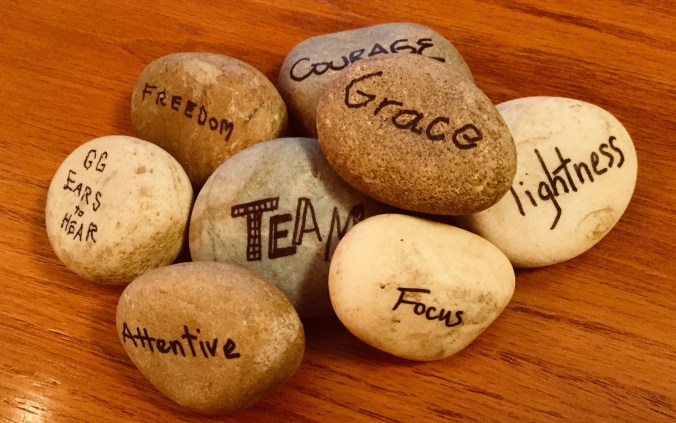
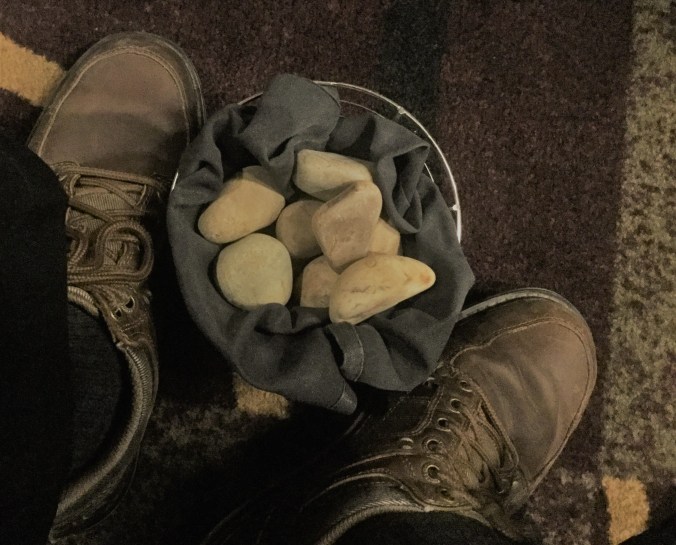 I’m sitting at my first national staff director meetings since joining GFM. A wire basket of rocks sits under the seat in front of me. “How cute, we’re going to do something gimmicky with these before the night’s over – I just know it.” I keep having the same on-ramp experience: the first Mundelein meetings since I left IV in 06, the first Regionals since Great Lakes West meetings in Wisconsin. Management meetings used to be in Madison, now they’re in Milwaukee. Tom Lin had just given us a stirring call to the 2030 Vision. It was now process time. All heads bowed. All journals open. Nothing but the sound of pens scratching paper in a room of about 200 IV staff directors.

 PBR
PBR 